### Chaebol & Business Groups: A Deep Dive into Asian Business Landscape
In the vast and vibrant landscape of Asian economies, one cannot overlook the pervasive influence and impact of chaebols and business groups. These conglomerates, predominantly based in South Korea, Japan, and other Southeast Asian countries, have played a pivotal role in shaping the region's economic growth and development. This article delves into the concept of chaebols and business groups, elucidating their core characteristics, relevance, and practical implications through real-world examples.
#### What are Chaebols and Business Groups?
Chaebols and business groups are large, diversified business conglomerates that dominate the economic landscape of several Asian countries. These groups typically encompass a wide array of industries, ranging from manufacturing and construction to finance, retail, and technology. In South Korea, these conglomerates are known as chaebols, while in Japan, they are referred to as keiretsu or zaibatsu. In other Southeast Asian countries, they are simply called business groups or conglomerates.
These groups are characterized by their intricate web of cross-shareholdings, interlocking directorates, and complex relationships with financial institutions, suppliers, and distributors. This unique structure enables chaebols and business groups to exercise significant control and influence over their respective domestic markets and, in some cases, even international markets.

*A typical chaebol structure showing cross-shareholdings and interlocking directorates.*
#### Relevance and Practical Implications
Chaebols and business groups have been instrumental in driving the rapid industrialization and economic growth of Asian countries. They have contributed significantly to the development of critical industries, job creation, and technological advancements. However, their influence and dominance have also raised concerns regarding market competition, corporate governance, and income inequality.
The practical implications of chaebols and business groups are multifaceted and far-reaching. They have played a crucial role in shaping the economic, political, and social fabric of Asian societies. By examining real-world examples, we can better understand their impact and the lessons they impart.
#### Case Studies: Samsung and Salim Group
##### Samsung (South Korea)
One of the most prominent and influential chaebols in South Korea is Samsung. Established in 1938 as a trading company, Samsung has since expanded its operations to encompass various industries, including electronics, construction, shipbuilding, and finance. Today, Samsung is a global technology powerhouse, with its smartphones, semiconductors, and display panels commanding significant market shares.

*Samsung Electronics products and innovations.*
Samsung's success can be attributed to several factors, including its relentless pursuit of innovation, investment in research and development, and strategic diversification. However, the chaebol structure has also played a critical role in Samsung's growth. The group's cross-shareholdings and interlocking directorates have enabled Samsung to leverage its resources, expertise, and market presence across various industries.
Nonetheless, Samsung's dominance has not been without controversy. Critics argue that the chaebol structure stifles competition, perpetuates cronyism, and hinders corporate governance. Moreover, the close ties between chaebols and the government have led to allegations of corruption and favoritism.
##### Salim Group (Indonesia)
The Salim Group, founded by Sudono Salim (also known as Liem Sioe Liong) in the 1950s, is a prime example of a successful business group in Southeast Asia. Originally established as a small trading company, the Salim Group has diversified into various sectors, including food, telecommunications, banking, and real estate.
The Salim Group's success can be attributed to its ability to navigate Indonesia's complex political and economic landscape, as well as its strategic partnerships with multinational corporations. The group's close relationship with the Indonesian government has also been instrumental in its growth, as it has provided the Salim Group with access to lucrative contracts and protection from competitors.
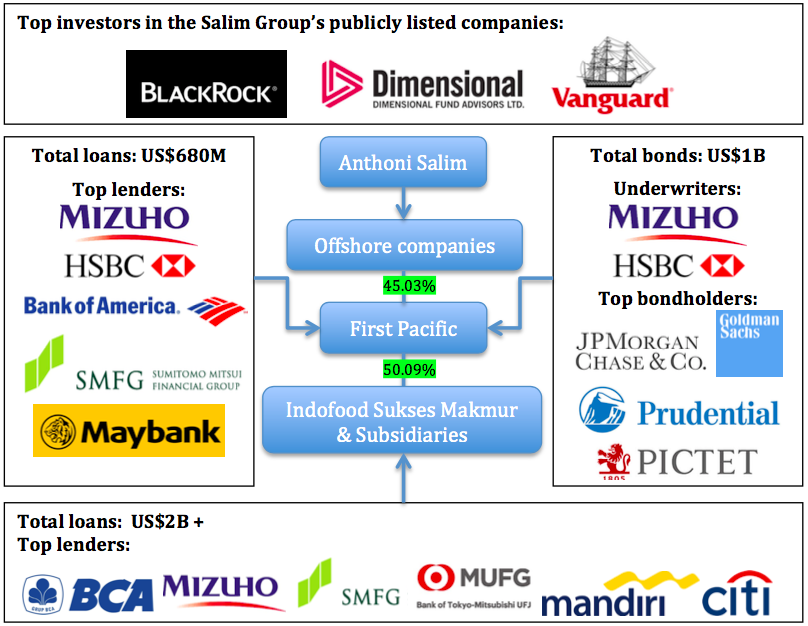
*Diversity of industries within the Salim Group.*
However, the Salim Group's rise has not been without controversy. Critics argue that the group's close ties with the government have led to preferential treatment and the stifling of competition. Moreover, allegations of corruption and cronyism have plagued the group, raising questions about its business practices and ethical standards.
#### Key Insights and Further Exploration
Chaebols and business groups have been instrumental in shaping the economic landscape of Asian countries. They have contributed significantly to industrialization, technological advancements, and job creation. However, their dominance and influence have also raised concerns regarding market competition, corporate governance, and income inequality.
To further explore the topic of chaebols and business groups, students can delve into the following areas:
1. Comparative analysis: Investigate the differences and similarities between chaebols, keiretsu, and business groups in various Asian countries. How do these conglomerates adapt to their unique cultural, political, and economic environments?
2. Corporate governance: Examine the challenges and potential solutions for improving corporate governance in chaebols and business groups. How can these conglomerates balance the need for family control with the demands of shareholders and stakeholders?
3. Government policies: Analyze the role of government policies in shaping the growth and development of chaebols and business groups. How have governments fostered or hindered the growth of these conglomerates?
4. Globalization and competition: Investigate the impact of globalization and increased competition on chaebols and business groups. How have these conglomerates adapted to the challenges and opportunities presented by global markets?
5. Social responsibility and sustainability: Explore the role of chaebols and business groups in promoting social responsibility and sustainability. How can these conglomerates balance their economic objectives with their social and environmental responsibilities?
By delving into these areas, students can gain a deeper understanding of the complexities and nuances of chaebols and business groups, as well as their implications for the global economy.
Last updated: 2024-03-20
Related Books

Related Knowledges