### The Five Asian Tigers: A Study of Remarkable Economic Growth
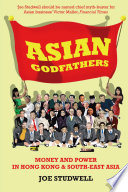
The term "Five Asian Tigers" refers to the extraordinary economic growth and transformation experienced by Hong Kong, Singapore, South Korea, Taiwan, and Singapore during the latter half of the 20th century. The term itself first appeared in a 1989 report by the Hong Kong Trade Development Council, though the underlying phenomenon had been underway for several decades prior (Studwell, 2007). The growth of these nations revolutionized the world's understanding of economic development and provides an object lesson in how smart policies and strategic focus can create rapid and broad-based economic progress. Few books weave the story of the Asian Tigers as beautifully as Joe Studwell's "Asian Godfathers", making it an invaluable starting point for analyzing their success.
There are three key components that contributed to the success of the Five Asian Tigers. These are:
1. Effective land reform
2. Export-led growth
3. Strategic industrial policy
#### Land Reform
The post-WWII period in Asia was marked by political instability, poverty, and food scarcity. Resolving these problems required not only strong political will but a clear understanding of the underlying issues. This was notably on display in Taiwan and South Korea, where the governments recognized that agricultural productivity was a crucial factor for triggering wider economic progress. By democratizing land ownership and empowering smallholder farmers, both countries were able to significantly improve food security, reduce rural poverty, and create a foundation for prosperity that could be extended into manufacturing and services in later years.

#### Export-led Growth
A second critical factor in the Asian Tigers' success was their embrace of export-led growth strategies. This, again, was most notable in Taiwan and South Korea, where governments prioritized the development of industry capable of competing on the global stage. Their approach focused on investing in strategic sectors – such as electronics and shipbuilding – in which their nations enjoyed comparative advantage and could thus competitively supply world markets.
The importance of export orientation is encapsulated in the so-called "Flying Geese Paradigm," a pattern of East Asian industrial development where emerging economies emulate and eventually surpass the manufacturing base of developed countries. This dynamic has persisted for decades and continues to serve as an essential feature of the economic relationship between East Asia, the United States, and Europe.
#### Strategic Industrial Policy
A third critical pillar of the Asian Tigers' success lay in targeted and proactive industrial policies. Hong Kong and Singapore opted, in large part, for market-led growth while South Korea and Taiwan used a greater degree of government intervention to foster the rise of key industries.
In the case of South Korea and Taiwan, states provided various forms of support and protectionism for their domestic industries, providing them with a “breeding ground” to grow behind tariff walls, with the confidence that they were building a competitive edge before exposure to foreign competition (Studwell, 2007).
In each of these cases, the state worked closely with domestic and international businesses, providing access to credit, technology, knowledge, and subsidies. This close relationship between the state and major corporations – often family-owned – earned these businessmen the moniker of “Asian Godfathers.” However, it is crucial to differentiate between the developmental roles of these businessmen in Taiwan and South Korea, as opposed to their counterparts in the Philippines, Indonesia, or Malaysia, where similar arrangements have perpetuated crony capitalism with far fewer overall benefits to society.

#### Examples and Applications
Two examples of the Five Asian Tigers illustrate the principles at work adeptly. These are South Korea and Taiwan, which, as mentioned, aggressively followed the three components detailed above.
South Korea:
Prior to the 1960s, South Korea was considered one of the poorest countries in the world. Facing the devastation of the Korean War and rampant poverty, the Park Chung-hee regime (1961-1979) initiated a program of state-led industrialization centered on the development of heavy industries such as shipbuilding, steel, and electronics.
This was accomplished through a series of five-year plans, aggressive investment in state-owned enterprises, and tight control over labor and financial markets. This allowed South Korea to nurture domestic champions (Samsung, Hyundai, LG, etc.) and the creation of a robust manufacturing base that quickly transitioned into services and knowledge-based industries.
Taiwan:
Like South Korea, Taiwan followed a similar path to rapid industrialization. Taiwan, however, had the advantage of being relatively further along the development curve due to the legacy of Japanese occupation and a more pro-Western orientation that positioned it favorably to attract both capital and technology.
Taiwan's economic strategy, under the Kuomintang regime, focused on electronics and high-tech manufacturing, supported by pro-active government investment, the deliberate cultivation of a science and technology workforce, and a focus on achieving global standards for quality and productivity across various industrial sectors.
#### Concluding Remarks
The experience of the Five Asian Tigers reveals several key insights for students of development economics, business strategy, and public policy. Among the most crucial are the importance of strategic government intervention in the economy, the need for export-led growth, and the potential for land reform to create the conditions for prosperity. These elements, combined in varying degrees and forms in each of the individual Tigers, remain relevant today for scholars and policymakers.
Exploring these issues further requires examining the nuances of individual countries' circumstances and the ongoing evolution of regional and global economies. It also entails considering the limitations and unintended consequences of the Asian Tigers' models, including their impact on income inequality, political legitimacy, and environmental sustainability. Encouraging students to delve deeper into these topics not only builds on the foundational understanding provided by the Asian Tigers but offers a richer and more nuanced lesson in the complex interplay of economic, political, and social forces that continue to shape our world.
#### Additional Resources
- Studwell, J. (2007). Asian Godfathers: Money and Power in Hong Kong and Southeast Asia. Grove Atlantic.
- Rodrik, D. (2013). The Past, Present, and Future of Industrial Policy. NBER Working Paper No. 19317.
- Amsden, A. H. (1989). Asia's Next Giant: South Korea and Late Industrialization. Oxford University Press.
- Wade, R. (1990). Governing the Market: Economic Theory and the Role of Government in East Asian Industrialization. Princeton University Press.
- Kim, L. (2017). The Miracle: The Epic Story of Asia's Quest for Wealth. Penguin UK.
- World Bank. (1993). The East Asian Miracle: Economic Growth and Public Policy. Oxford University Press.
Last updated: 2024-04-07
Related Books
Related Knowledges