### The Intricacies and Implications of Family Businesses: A Deep Dive into 'Asian Godfathers' by Joe Studwell
#### Introduction
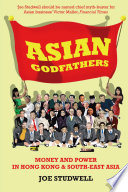
In his seminal work, 'Asian Godfathers', Joe Studwell provides a comprehensive and meticulously researched analysis of the fascinating yet enigmatic world of Asian family businesses. These businesses have played a pivotal role in shaping the economic landscape of Asia and have been instrumental in driving the region's unprecedented growth and development. While the term 'godfathers' might imply a connection to organized crime, Studwell uses it metaphorically to describe the powerful, secretive, and often mysterious tycoons who control much of Asia's wealth and influence.
Family businesses are the backbone of Asian economies, encompassing a diverse range of industries and sectors. Yet, despite their prevalence and significance, they remain largely under-researched and misunderstood. This essay aims to shed light on the core concepts and practical implications of family businesses in Asia, with a particular focus on Studwell's findings.
[](https://www.stewart.com/en/insights/2022/media_1a08dac649f7b677d2c2896b4b9d31421f86b55a3.jpeg?width=750&format=jpeg&optimize=medium)
*The economic impact of family businesses in Asia*
#### The Dominance of Family Businesses in Asia
Family businesses account for a substantial portion of the region's GDP, employment, and assets. These businesses often start as small, family-run enterprises that gradually expand and evolve, eventually becoming influential conglomerates. In many cases, these conglomerates maintain a strong family presence at the helm, with subsequent generations taking on leadership roles.
Studwell's research reveals that the dominance of family businesses in Asia can be attributed to several factors:
1. **Cultural Factors:** Confucian and Asian values, such as filial piety, loyalty, and respect for elders and authority figures, have fostered a conducive environment for the growth of family businesses. These values facilitate the intergenerational transfer of wealth, knowledge, and power.
2. **Regulatory Factors:** In many Asian countries, the legal system and regulatory environment have historically been more favorable towards family businesses, offering them various advantages in terms of taxation, access to credit, and protection from foreign competition.
3. **Economic Factors:** Family businesses have been able to capitalize on various economic opportunities and market inefficiencies in Asia. This includes taking advantage of low-cost labor, abundant natural resources, and the region's burgeoning consumer base.
[](https://figures.semanticscholar.org/cf9c029f4d81b904d45f56dcb90bc25aea2115b8/222-Figure5.6-1.png)
*Cultural, regulatory, and economic factors influencing Asian family businesses*
#### Case Studies: Examples of Family Businesses in Asia
##### The Ayala Corporation (Philippines)
The Ayala Corporation is a prime example of a successful family business in Asia. Established in 1834, the company began as a mercantile firm focused on trading and export. Over time, it diversified into various sectors, including real estate, banking, telecommunications, and electronics.
Despite its growth and diversification, the Ayala Corporation has managed to maintain a strong family presence and control over the years. The company is currently led by Jaime Augusto Zobel de Ayala, the sixth-generation scion of the founding family. The Zobel de Ayala family maintains a significant stake in the company and has been instrumental in shaping its strategic direction and growth.
[](https://c8.alamy.com/comp/2MCWTK6/the-headquarters-of-ayala-corporation-and-ayala-land-inc-at-tower-one-in-the-financial-district-of-makati-philippines-on-wednesday-nov-24-2021-ap-photoaaron-favila-2MCWTK6.jpg)
*The Ayala Corporation headquarters*
##### The Tata Group (India)
Another compelling example of a successful family business in Asia is the Tata Group, based in India. Founded in 1868 as a trading company, the Tata Group has grown to become one of India's most prominent and respected conglomerates, with interests spanning various sectors such as steel, automotive, telecommunications, and hospitality.
The Tata Group's success can be attributed, in part, to the leadership and vision of its founders and subsequent leaders, who have managed to balance traditional Indian values with a commitment to innovation and corporate social responsibility. Under the stewardship of Ratan Tata, the company expanded its global footprint through strategic acquisitions, including the purchase of iconic British brands such as Jaguar Land Rover and Tetley Tea.
[](https://upload.wikimedia.org/wikipedia/commons/0/01/Bombay_House%2C_Tata_Group_Headquarters_in_Mumbai.jpg)
*Tata Group global expansion*
#### Practical Implications and Applications
Family businesses in Asia have several practical implications and applications for students, researchers, and practitioners. By understanding the unique characteristics and challenges of family businesses, stakeholders can develop tailored strategies and frameworks that help these enterprises thrive in an increasingly competitive global landscape.
1. **Succession Planning:** Given the intergenerational nature of family businesses, succession planning is a critical consideration. Identifying and grooming the next generation of leaders is crucial for ensuring the long-term viability and sustainability of these businesses.
2. **Corporate Governance:** Family businesses often face unique governance challenges due to the overlapping nature of ownership and management. Developing robust corporate governance structures and practices can help these businesses navigate potential conflicts of interest and promote transparency and accountability.
3. **Innovation and Adaptation:** As the business environment evolves, family businesses must remain agile and responsive to changing market conditions. This includes embracing innovation, adopting new technologies, and exploring new business models.
4. **Corporate Social Responsibility:** Family businesses often have a deep connection to their communities and stakeholders. This presents an opportunity for these businesses to engage in corporate social responsibility initiatives that enhance their reputation, build strong relationships with stakeholders, and contribute to the broader social and economic development of their communities.
#### Conclusion
Family businesses are an integral part of the Asian economic landscape and have played a pivotal role in shaping the region's growth and development. These businesses offer valuable insights into the complex interplay of culture, regulation, and economics.
By studying the success stories of family businesses such as the Ayala Corporation and the Tata Group, students and practitioners can better understand the unique characteristics, challenges, and opportunities associated with these enterprises. Furthermore, by applying the lessons learned from these case studies, stakeholders can develop targeted strategies and frameworks that help family businesses thrive and navigate the complex and rapidly changing global business environment.
Ultimately, a deeper appreciation and understanding of family businesses in Asia hold the key to unlocking their full potential and facilitating the continued growth and development of the region.
#### Further Exploration
For those interested in further exploring the topic of family businesses in Asia, the following resources and literature provide a valuable starting point:
1. *The Family Business Map: Assets and Roadblocks in Long-Term Planning* by Alden G. Lank,Scott T. Maitland, and R. Tyler Corder
2. *The Family Business Leader: Fill Your Leadership Void and Thrive in a Multi-Generational Business* by Russ Haworth
3. *Next Generation Success in Family Business: A Leadership Development Guide for Enterprising Families* by Tom Davidow
4. *Family Business Governance: Maximizing Family and Business Potential* by Craig Aronoff, John L. Ward, and Stephen L. McClure
5. *The Challenges of Asian Family Businesses: From Generation to Generation* by Koon P.N. and Wong S.K. (Eds.)
6. *Family Business in Asia: Asian Institute of Management Working Paper Series*
7. *Family Business Network (FBN) International: Resources and Events*
8. *Asia Society: Family Business and Philanthropy*
9. *Family Firm Institute (FFI): Research and Professional Development*
These resources provide a rich source of information, insights, and best practices for students, researchers, and practitioners interested in the field of family businesses in Asia.
Last updated: 2024-12-17
Related Books
Related Knowledges