# Understanding the Difference Between Price and Value: A Key Concept from The Intelligent Investor
[](https://www.investopedia.com/thmb/1PGUoi5diBREI34IBZoCSphcRfA=/1500x0/filters:no_upscale%28%29:max_bytes%28150000%29:strip_icc%28%29/bengraham.asp-ADD-V1-85a6ac15b8bd4be7af14e7037f1c2443.jpg)
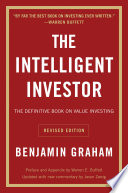
*Benjamin Graham, author of The Intelligent Investor*
In his seminal work, *The Intelligent Investor*, Benjamin Graham emphasizes the significance of distinguishing between price and value. These two terms, while seemingly synonymous, have different implications for investors. As Graham notes, investors must be able to discern the true value of an investment from its market price to make informed, rational investment decisions. This concept is crucial for those seeking to become successful, long-term investors.
## Price vs. Value: The Core Concept
Price refers to the market's perceived value of an investment, typically reflected in the stock's trading price. On the other hand, value constitutes an investment's intrinsic worth—the present value of its expected future cash flows.
[](https://i.pinimg.com/originals/a6/d8/15/a6d8153cc74f2808263d96515c7e7beb.png)
*Price vs. Value infographic*
When the price is lower than the value, the investment is considered undervalued, offering a potential margin of safety—a key concept also introduced by Benjamin Graham. Conversely, when the price is higher than the value, the investment is overvalued.
The distinction between price and value is integral for investors because rational investment decisions should be based on value rather than price. Investors who conflate price and value risk succumbing to the volatility of market prices and making emotionally charged investment decisions that could ultimately harm their portfolio.
## The Importance of Understanding Price and Value
Understanding the price-value dichotomy can protect investors from two common pitfalls:
1. **Buying (or Selling) Based on Market Sentiment.** Overreacting to market fluctuations can lead investors to make irrational decisions. A "value-based" approach, rather than a "price-based" approach, can help keep emotions at bay and encourage investors to view market volatility as an opportunity rather than a threat.
2. **Missing Out on Undervalued Opportunities.** Being able to recognize when an investment's value surpasses its price can create potentially lucrative bargains. By concentrating on the underlying business and its fundamentals, rather than market price, investors may uncover undervalued assets that generate long-term wealth.
### Real-World Examples of Price vs. Value
**Example 1: The Dot-Com Bubble**
During the dot-com bubble of the late 1990s, many internet-based companies saw their stock prices soar, regardless of their fundamental value. The expectation of substantial future profits resulted in astronomical market valuations, with some stocks trading at hundreds of times their actual value.
[](https://upload.wikimedia.org/wikipedia/commons/8/84/Nasdaq_Composite_dot-com_bubble.svg)
*Dot-Com Bubble chart*
Investors who focused on the market price rather than the companies' intrinsic value were enticed by the rising share prices and accumulated overvalued stocks in their portfolio. By contrast, value-oriented investors recognized these stocks' inflated prices and eschewed investments in such companies, seeking better returns from firms with more reasonable valuations.
The ensuing collapse of the dot-com bubble demonstrated that the underlying business fundamentals—not market exuberance—should drive investment decisions. Investors who understood the distinction between price and value were better protected from the bubble's aftermath.
**Example 2: Post-Financial Crisis Bank Stocks**
In the wake of the 2008 financial crisis, bank stocks plummeted as investors feared widespread defaults and collapsing financial institutions. Consequently, many bank stocks’ market prices sunk below their intrinsic value, presenting an opportunity for investors seeking undervalued assets.
[](https://www.atlantafed.org/-/media/Images/cenfis/notes-from-the-vault/2009/090809a.jpg)
*2008 financial crisis bank stocks chart*
Savvy investors who took a deep dive into the underlying value of these banks—assessing the quality of their loan portfolios, their business models, and long-term growth prospects—discovered firms trading well below their inherent value. By investing in these undervalued stocks, these investors capitalized on the distinction between price and value and profited as markets recovered and stock prices slowly returned to their intrinsic levels.
## Conclusion
Understanding the difference between an investment's price and value is crucial for rational investment decision-making and building long-term wealth. By concentrating on the underlying value of an investment instead of its price, investors can avoid succumbing to market sentiment and emotional decision-making.
The concept of price vs. value provides investors with a cognitive framework for analyzing prospective investments and assists them in identifying undervalued (and overvalued) opportunities. The importance of this distinction becomes especially poignant during times of market volatility, when separating the financial "wheat" from the "chaff" is essential.
Further exploration of price vs. value can include reading about the related topic of margin of safety, considering the role of behavioral finance in investment decision-making, and analyzing market case studies that illustrate the consequences of conflating (or distinguishing) price and value.
Armed with the knowledge of the price-value dichotomy, investors can cultivate a value-driven investment strategy, ultimately contributing to the realization of their financial goals.
Last updated: 2024-06-12
Related Books
Related Knowledges