# Defensive Investment Style: A Comprehensive Guide for College Students
## Introduction
[](https://m.media-amazon.com/images/I/91L0La1pwDL._AC_UF1000,1000_QL80_.jpg)
*The Intelligent Investor Book Cover*
In *The Intelligent Investor, Rev. Ed* by Benjamin Graham, the concept of the defensive investment style is introduced as an investment strategy that focuses on generating consistent returns while preserving capital and minimizing risks. By employing a defensive investment style, investors aim to achieve financial success by primarily investing in well-established, financially sound companies with strong fundamentals and a consistent track record of performance, often characterized by their presence in "conservative" industries. This article aims to provide a thorough understanding of the defensive investment style, its implications, and applications for college students.
## Core Concepts and Relevance
[](https://m.foolcdn.com/media/dubs/images/original_imageshttpsg.foolcdn.comeditorialimag.width-880_aFtl9YF.png)
*Concepts of Defensive Investment Style*
The defensive investment style's core concepts revolve around identifying, analyzing, and investing in financially stable companies with the following attributes:
1. **Earnings Stability:** Companies with a consistent history of earnings display resilience in various economic conditions, demonstrating their ability to generate profits regardless of market fluctuations.
2. **Dividend Returns:** As a crucial component of a defensive investment, investors seek companies that consistently distribute dividends, providing a reliable source of income.
3. **Financial Strength:** A strong balance sheet is vital for defensive investments, characterized by low levels of debt, high liquidity, and efficient capital allocation.
4. **Price Stability:** Companies with lower price volatility are preferable, as they offer a more consistent and predictable return on investment.
The relevance of the defensive investment style lies in its emphasis on risk management and capital preservation, rather than focusing solely on maximizing returns. By employing a defensive investment style, investors can create a well-diversified and resilient portfolio that performs consistently in the long term.
## Examples and Applications
### Example 1 - Consumer Goods Stalwart
[](https://www.creditbenchmark.com/wp-content/uploads/2019/03/US-Large-Consumer-Goods-Feb-2019-1.png)
*Example of a Consumer Goods Company*
Consider a well-known consumer goods company with a long history of steady earnings and dividend payments. By examining its financial statements, we find that the company has a strong balance sheet, with minimal debt and a cash reserve to cover its short-term obligations multiple times over. Its stock price exhibits lower volatility in comparison to the broader market, appealing to the defensive investment style.
In this scenario, an investor employing the defensive investment style would consider purchasing the stock at a reasonable price, supported by its financial stability and dividend payments. This investment approach aligns with Graham's principles of the defensive investment style, providing stable returns and diminishing risks associated with market volatility.
### Example 2 - Financially Sound Utility Provider
[](https://www.investopedia.com/thmb/L0aAOEHTKaZdLdK2jvU7mJ61LwA=/1500x0/filters:no_upscale%28%29:max_bytes%28150000%29:strip_icc%28%29/Investopedia_UtilitiesSector-108147c39a004f6ebdb5c0871756c803.jpg)
*Example of a Financially Sound Utility Provider*
Another example of the defensive investment style is a utility company with a consistent track record of profits and dividend distribution. Such companies typically provide essential services like electricity, gas, or water, which exhibit inherent demand, even in challenging economic conditions.
Examining the utility company's financial statements, the investor would look for low debt levels, sufficient liquidity, and effective capital allocation strategies. The stock price of the utility company may exhibit lower price fluctuations compared to the broader market, further attracting defensive investors. By investing in this financially sound utility provider, the investor can enjoy stable income and capital preservation.
## Summary and Further Exploration
In conclusion, the defensive investment style emphasizes core concepts including earnings stability, dividend returns, financial strength, and price stability. College students benefit from understanding the defensive investment style, its applications and implications, and the ways it can mitigate investment risks while preserving capital and generating consistent returns over the long term.
For further exploration, students may consider researching and comparing various defensive investments against more aggressive investment strategies. This comparative analysis can reveal the potential benefits and limitations of the defensive investment style in various market conditions, providing a comprehensive understanding of this vital investment concept.
[](https://pittsburghfoundation.org/sites/default/files/styles/page_hero_style/public/Investment%20strategies%20pie%20charts%201000px%20original_0.png?itok=IVUHmMSa)
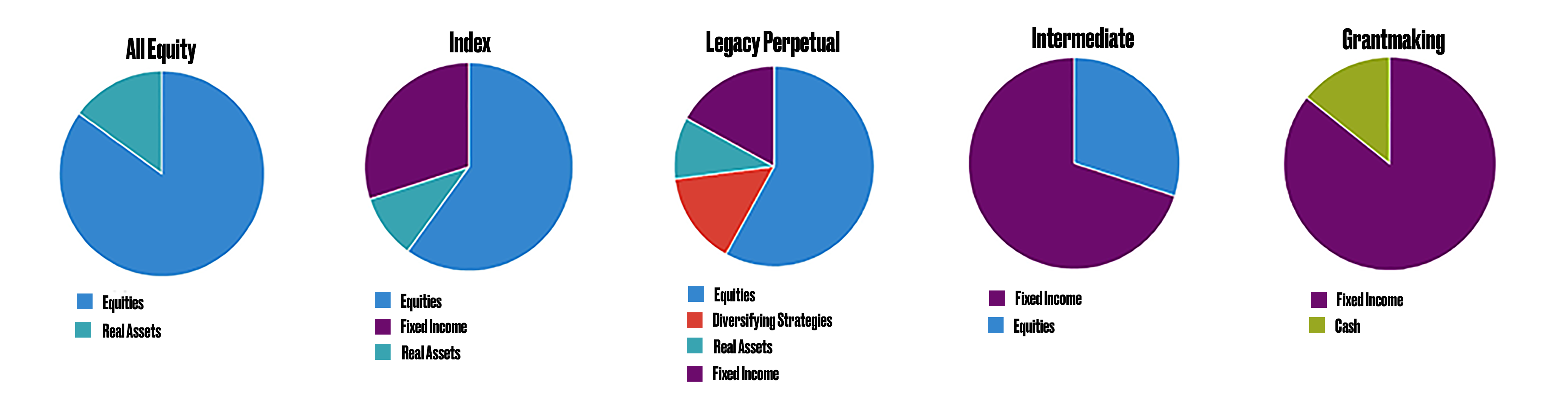
*Investment Styles Comparison Chart*
To gain a deeper understanding of defensive investments and the broader investment landscape, college students can:
- Study various investment styles, including growth, value, and income investing
- Investigate a variety of industries and sectors, understanding their unique risks, rewards, and underlying business models
- Examine financial statements, ratios, and other key performance indicators to evaluate investment opportunities effectively
- Practice analyzing historical market data and forecasting future trends
- Develop a well-rounded investment strategy, incorporating a mix of investment styles, sectors, and asset classes to effectively balance risk and reward, aligning with individual financial goals and risk tolerance.
Last updated: 2024-05-15
Related Books

Related Knowledges