# Extralegal Properties: Unlocking the Hidden Wealth of the Poor
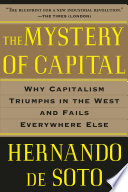
[](https://m.media-amazon.com/images/I/71CpGFnrNeL._AC_UF1000,1000_QL80_.jpg)
*Cover of 'The Mystery of Capital' by Hernando De Soto*
The concept of 'extralegal properties' is a central theme in Hernando De Soto's seminal work, 'The Mystery of Capital.' Extralegal properties refer to assets and resources that are informally owned or managed, operating outside the formal legal framework. De Soto's groundbreaking research reveals that a vast amount of global wealth remains trapped in extralegal properties, primarily in developing countries. In this post, we will delve deeper into the core concepts, examples, and implications of extralegal properties, highlighting their relevance for college students.
## Core Concepts
Extralegal properties are assets that are not officially recognized by the legal system, rendering them "invisible" to formal markets, financial institutions, and the broader economy. These properties can encompass a wide range of resources, such as real estate, small businesses, and natural resources. Extralegal properties often arise due to inefficient legal frameworks, weak institutions, or corruption, preventing individuals from accessing formal property rights and financial services.
[](https://image.slidesharecdn.com/sampleessaytellusaboutyourself-240130123058-eab4023b/85/Sample-Essay-Tell-Us-About-Yourself-34-320.jpg)
*Infographic showing the difference between formal and extralegal properties*
De Soto's research highlights the paradox that, despite the informal nature of these assets, they represent a significant source of wealth for their holders. However, the lack of legal protection and formal recognition hinders the transformation of this wealth into capital, which could spur economic growth and development. Moreover, the exclusion of extralegal properties from the formal economy leads to missed opportunities for both individuals and society at large.
## Practical Implications and Examples
Understanding extralegal properties and their implications is crucial for college students, as it sheds light on the often-overlooked sources of wealth and economic disparities worldwide. Here are two salient examples that illustrate the practical implications of this concept:
### 1. Informal Real Estate and Housing in Urban Slums
In many developing countries, a significant portion of urban housing is informally built and owned. According to De Soto's estimates, around 65-70% of the world's population lacks legal property titles, with the majority residing in developing countries' urban slums (De Soto, 2000). Informal housing arrangements typically involve occupying land without legal permission, constructing homes without proper building permits, and lacking formal land titles.
[](https://www.brookings.edu/wp-content/uploads/2024/02/shutterstock_1745634140.jpg?quality=75)
*Urban slums and informal housing*
The absence of formal property rights prevents these homeowners from accessing financial services, such as mortgages and loans. Consequently, they cannot leverage their properties to generate capital, invest in improving their homes, or start businesses. Furthermore, the vulnerability of informal housing arrangements leaves homeowners susceptible to forced evictions and displacement.
By recognizing and legalizing informal real estate and housing, governments can unlock the vast wealth hidden in these properties. Proper titling and registration systems would enable homeowners to access financial services, spurring economic development and improving living conditions in urban slums.
### 2. Micro and Small Enterprises (MSEs) in Informal Sectors
Extralegal properties are not limited to physical assets but also extend to the vast number of micro and small enterprises (MSEs) operating informally. According to the International Labour Organization, around 61% of the world's employment is informal, with the majority in developing countries (ILO, 2018). Informal businesses often lack official registration, permits, and licenses, leading to exclusion from formal financial services, markets, and protection mechanisms.
[](https://openair.africa/wp-content/uploads/2018/10/Working-papers-13.jpg)
*Micro and Small Enterprises \(MSEs\) in informal sectors*
Informal MSEs face numerous challenges related to limited access to credit, technology, and markets. Moreover, informality reduces these businesses' competitiveness and sustainability, as they cannot leverage formal institutions to protect their intellectual property or engage in legal disputes. By integrating informal MSEs into the formal economy, governments and financial institutions can support these businesses' growth, foster innovation, and contribute to poverty reduction and economic development.
## Conclusion
Extralegal properties represent a significant yet underutilized source of wealth for many individuals and communities worldwide. Recognizing and formalizing these properties can unlock substantial economic potential, improve the living conditions of millions, and contribute to poverty reduction. By understanding the concept of extralegal properties and its practical implications, college students can gain valuable insights into the complexities of global wealth distribution and economic development.
To further explore the topic of extralegal properties, college students can engage in the following activities:
1. Research local case studies of informal housing and businesses and analyze the challenges and opportunities associated with formalization.
2. Investigate the role of technology and innovation in facilitating the recognition and integration of extralegal properties into the formal economy.
3. Explore the impact of policy interventions, such as property title reforms and financial inclusion initiatives, on the formalization of extralegal properties.
By deepening their understanding of extralegal properties and their implications, college students can contribute to the ongoing discourse on inclusive economic development and wealth distribution, inspiring novel ideas and solutions for addressing global challenges.
### References
- De Soto, H. (2000). The Mystery of Capital: Why Capitalism Triumphs in the West and Fails Everywhere Else. Basic Books.
- International Labour Organization. (2018). Women and men in the informal economy: A statistical picture ( Third edition). Retrieved from
Last updated: 2024-06-23
Related Books
Related Knowledges