Property as Collateral: Unlocking the Wealth of Nations
=====================================================
Introduction
------------
[](https://upload.wikimedia.org/wikipedia/commons/d/db/Hernando_de_Soto_%28cropped%29.jpg)
*Hernando De Soto - Author of 'The Mystery of Capital'*
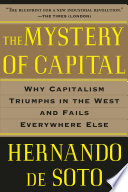
In his groundbreaking work "*The Mystery of Capital: Why Capitalism Triumphs in the West and Fails Everywhere Else*," Hernando De Soto identifies property as collateral as a key factor differentiating successful capitalist societies from those that fail to thrive. The ability to use one's assets – primarily real estate – as security for loans enables economic development and wealth creation. This concept is essential for college students to understand, as it illuminates the relationship between property rights, finance, and economic growth.
The Core Concept
----------------
[](https://www.trustage.com/-/media/images/solutions/business/business-protection/images/business-protection-solutions-infographic---real-estate-collateral-protection.jpg)
*The concept of property as collateral*
In simple terms, property as collateral refers to the practice of using real estate or other assets as security for a loan. This practice enables individuals and businesses to access capital for investment, expansion, or consumption. De Soto argues that the lack of formal property rights in many developing countries hinders the ability to use property as collateral, thereby limiting access to credit and inhibiting economic growth.
Example 1: The United States
----------------------------
In the United States, the well-established system of property rights and titles facilitates the use of property as collateral. Homeowners can borrow against the equity in their homes, providing them with access to credit for various purposes, such as home improvements, education, or business ventures. This ability has fueled economic growth and wealth creation in the U.S., as property owners can leverage their assets to generate income and opportunities.
Example 2: Peru
--------------
[](https://pub.mdpi-res.com/land/land-11-00226/article_deploy/html/images/land-11-00226-g001.png?1643878005)
*Formal vs Informal Property Rights*
Contrast the U.S. experience with that of Peru, where De Soto conducted extensive research for "*The Mystery of Capital*." In Peru, informal property rights and the absence of a unified system for property titles make it difficult for individuals to use their assets as collateral. As a result, many Peruvians are unable to access credit, limiting their ability to invest in businesses, education, or other income-generating activities. This lack of access to credit exacerbates poverty and hampers economic development.
Relevance and Implications
--------------------------
The concept of property as collateral is crucial for understanding the disparities between developed and developing economies. By examining the relationship between property rights, access to credit, and economic growth, students can appreciate the importance of establishing effective legal frameworks that protect property rights and enable the use of assets as collateral.
Unlocking the wealth of nations requires addressing the challenges associated with formalizing property rights and implementing robust systems for titling and registering property. These efforts can facilitate the use of property as collateral, thus unleashing the potential for economic growth and wealth creation.
[](https://media.licdn.com/dms/image/D4D12AQHdIM7-m0nsWA/article-cover_image-shrink_600_2000/0/1682511256189?e=2147483647&v=beta&t=rauaILuIMRNP9NRnCsVBCWQMlcCDolPAAc4KIaPdHHQ)
*Global Economic Growth and Property Rights*
Key Insights and Further Exploration
------------------------------------
Key insights from the discussion of property as collateral include:
1. Property as collateral is a vital component of capitalist societies, enabling access to credit and fueling economic growth.
2. Effective legal frameworks and property rights protections are essential for facilitating the use of assets as collateral.
3. Informal property rights and the lack of a unified system for property titles hinder the ability to use property as collateral, thereby limiting access to credit and inhibiting economic development.
To further explore the topic of property as collateral, students can:
* Research the impact of property rights reforms on economic growth and wealth creation in developing countries.
* Examine the relationship between property as collateral and income inequality.
* Investigate the role of financial institutions and regulations in facilitating access to credit using property as collateral.
By understanding the concept of property as collateral and its implications for economic growth, college students can develop a deeper appreciation for the complex interplay of property rights, finance, and economic development. This knowledge can inspire further exploration and contribute to the ongoing discourse on how to unlock the wealth of nations and promote prosperity worldwide.
Last updated: 2024-06-22
Related Books
Related Knowledges