# Unfulfilled Economic Potential: Unleashing the Hidden Wealth of Nations
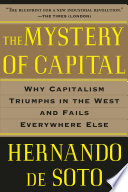
*The Mystery of Capital* by Hernando De Soto is a groundbreaking book that delves into the concept of unfulfilled economic potential, particularly in developing and post-communist countries. At its core, this idea refers to the enormous wealth hidden in the informal sectors and the inability of these nations to harness this capital for economic growth.
[](https://i0.wp.com/oecd-development-matters.org/wp-content/uploads/2017/08/informal-economy-shutterstock_681679318.jpg?resize=1920%2C768&ssl=1)
*The informal sector of the economy*
## The Core Concept and Relevance
The informal sector is a significant part of many developing and post-communist economies, encompassing the vast array of small businesses, individual property owners, and other economic activities that operate outside the formal legal system. In essence, these enterprises and properties exist, but the law does not recognize them as legal entities or assets. Consequently, they cannot be used as collateral for loans, nor can they be bought, sold, or leveraged like legal assets.
This results in the paradox of unfulfilled economic potential. Countries like Peru, Egypt, and Russia have a substantial amount of wealth held in the informal sector, yet they remain economically stagnant due to the inability to convert this wealth into capital. This situation is particularly relevant for college students to understand because it sheds light on the challenges and opportunities inherent in development economics, globalization, and financial systems.
### Practical Implications and Applications
#### Housing and Land Ownership
[![PDF\] CHAPTER 6 Housing Policy in Developing Countries : The ...](https://d3i71xaburhd42.cloudfront.net/a7d086fe76ba9082ee8b402c7b6ee57e183fc64f/12-Table1-1.png)](https://d3i71xaburhd42.cloudfront.net/a7d086fe76ba9082ee8b402c7b6ee57e183fc64f/12-Table1-1.png)
*Informal housing and land ownership in developing countries*
According to De Soto, one of the most significant barriers to unleashing the wealth in the informal sector is the lack of clear and enforceable property rights. For instance, an individual in the developing world may occupy and improve a plot of land for years or even decades but not officially own it due to bureaucratic or legal obstacles. As a result, this individual's investment and improvements cannot be used as collateral for loans, and the land's true value remains unrecognized by financial institutions.
This lack of legal recognition constrains the potential for economic growth. Access to formal credit would enable the individual to invest further in their property or business, lifting themselves and their communities out of poverty. When millions of individuals face similar issues, the overall economic impact can be significant.
De Soto's proposed solution for addressing this challenge involves formalizing property rights and establishing clear, streamlined processes for converting informal assets into legal ones. By empowering individuals to prove ownership and use their assets as collateral, potential becomes actual, and stagnant economies can grow.
#### Microfinance and the Informal Economy
[](https://upload.wikimedia.org/wikipedia/commons/f/f1/Grameen_Bank_logo_%28horizontal%29.png)
*Microfinance in action: Grameen Bank*
Microfinance has emerged as an essential tool in unlocking the economic potential of the informal sector. By providing small loans, savings opportunities, and other financial services to individuals and businesses in the informal sector, microfinance institutions (MFIs) help bridge the gap between the informal and formal economies.
Bangladesh's Grameen Bank, one of the most well-known MFIs, has successfully provided loans to millions of individuals with no collateral, using a group-based system of peer support and social pressure to ensure loan repayment. This innovative and inclusive approach demonstrates the power of microfinance in transforming the lives of those historically excluded from formal financial services.
The success of Grameen Bank has inspired numerous MFIs worldwide, emphasizing the need to tailor financial products and services to the unique needs of the informal market. By understanding the challenges faced by the unbanked and underbanked, microfinance institutions can create opportunities for meaningful financial and economic empowerment.
#### Unleashing the Wealth of the Unbanked
The unbanked population, or those without access to formal banking and financial services, presents a significant challenge and opportunity for unleashing economic potential. According to the World Bank, there are approximately 1.7 billion unbanked adults globally, primarily in developing countries. These individuals often rely on cash-based transactions, limiting their ability to save, invest, and participate in the formal economy.
[](https://media.licdn.com/dms/image/D5612AQEF07EqG7yqFQ/article-cover_image-shrink_720_1280/0/1709212893057?e=2147483647&v=beta&t=1hIo0PdZ-_v9RygW6Vm1lE_dGhZWzuTtyMR1KrpceWc)
*Emerging digital payment platforms*
Converting the informal assets of the unbanked into legal capital is critical for long-term economic growth. This process can be facilitated by digital technology, such as mobile banking and blockchain, which can authenticate and secure transactions. Indeed, emerging economies in Africa and Asia have witnessed the transformative power of mobile banking and digital payment platforms, such as M-Pesa in Kenya and GrabPay in Southeast Asia. These technologies enable the unbanked and underbanked to access financial services and products, thereby unlocking their hidden wealth and integrating them into the formal economy.
### Summarizing Key Insights and Further Exploration
De Soto's concept of unfulfilled economic potential highlights the importance of recognizing and integrating the informal sector into the formal economy. Through the formalization of property rights, the adoption of microfinance models, and the embracement of digital technologies for the unbanked, countries and individuals have the potential to unleash the wealth and potential of the informal sector.
To further explore the topic of unfulfilled economic potential, students may consider researching the following areas:
1. Innovative property rights formalization projects and their impact on economic growth
2. The role of women in the informal sector and the potential for financial empowerment
3. Case studies of successful MFIs working in developing countries
4. The use of blockchain and digital technologies for securing and legitimizing the informal economy
5. The potential of impact investing and social enterprises in addressing unfulfilled economic potential
[](https://assets.bwbx.io/images/users/iqjWHBFdfxIU/i96QWhE9ey1k/v0/-1x-1.jpg)
*Blockchain technology in the informal economy*
By delving into these topics and expanding their understanding of the informal economy, students and professionals can contribute to the ongoing efforts in unlocking the hidden wealth of nations and fostering inclusive and sustainable growth.
Last updated: 2024-06-22
Related Books
Related Knowledges