# Robustness vs. Antifragility: Exploring Concepts from *Antifragile* by Nassim Nicholas Taleb
## Introduction
In today’s rapidly evolving world, the concepts of robustness and antifragility have become immensely relevant. Originating from Nassim Nicholas Taleb's influential book, *Antifragile: Things That Gain from Disorder*, these concepts challenge our traditional understanding of how systems respond to stress, volatility, and shocks. While robustness refers to the ability of a system to resist change without adapting, antifragility goes a step further by describing systems that thrive and grow when exposed to volatility, randomness, and stressors. This nuanced difference carries profound implications for economics, business strategy, personal development, and beyond.
## Understanding Robustness and Antifragility
**Robustness** is a concept most are familiar with. It describes an object, system, or organism that can stand significant stress without changing its basic functioning or structure. Think of a robust coffee mug that can be dropped on a carpeted floor without breaking. It resists the shock, but its ability to resist is finite and does not improve the mug in any way.
[](https://m.media-amazon.com/images/I/71sM+qEaraL._AC_UF894,1000_QL80_.jpg)
*Robust coffee mug demonstration*
In contrast, **antifragility** is less about resisting and more about adapting and growing stronger. An antifragile entity not only survives chaos and uncertainty but also leverages these conditions to become stronger, more capable. Imagine a muscle that grows more robust with exercise-induced stress or an economy that innovates in response to financial crises.
[](https://i.insider.com/5fe0b6f8c910a400192e8a96?width=700)
*Muscle growth from exercise*
## Practical Implications and Examples
To deeply grasp these concepts, let’s explore their practical implications through diverse examples:
### Economic Systems
Economic crises illustrate the stark difference between robust and antifragile systems. A robust economy can withstand financial shocks without collapsing; however, an antifragile economy not only survives but becomes stronger after a crisis. The latter learns, adapts, and innovates, leading to new growth sectors, improved regulatory frameworks, and more resilient financial institutions. The Global Financial Crisis of 2008 could be seen as such a catalyst for certain economies and sectors within them, bringing new regulatory reforms and fostering the rapid growth of financial technology (fintech) startups designed to address systemic weaknesses exposed by the crisis.
[](https://m.media-amazon.com/images/I/81NfH3Bt05L._AC_UF1000,1000_QL80_.jpg)
*Economic growth after crisis*
### Biological Evolution
Nature provides perhaps the most vivid examples of antifragility. Through the process of evolution, species undergo random mutations, most leading to failure. However, some mutations confer advantages that allow those species to survive better in their environments, thus growing stronger in the face of stress and change. This trial-by-fire mechanism of evolution ensures that life itself is antifragile, constantly adapting to and thriving amidst the challenges it encounters.
[](https://i.ytimg.com/vi/rf5fKLd2bEs/maxresdefault.jpg)
*Evolution and natural selection*
### Personal Development and Psychology
On a personal level, antifragility translates into growth through adversity. Individuals who embrace challenges, learn from failures, and adapt to stress tend to grow stronger, more resilient, and capable. This is in stark contrast to avoiding stress altogether in the name of self-preservation, which might keep an individual safe but does not promote growth or improvement. For example, exposing oneself to controlled and manageable levels of stress through public speaking, competitive sports, or rigorous academic challenges can enhance personal capabilities and psychological resilience, showcasing the antifragile nature of human growth and learning.
[](https://experiencelife.lifetime.life/wp-content/uploads/2021/02/Through-the-Fire.jpg)
*Personal development through adversity*
### Technological and Business Innovation
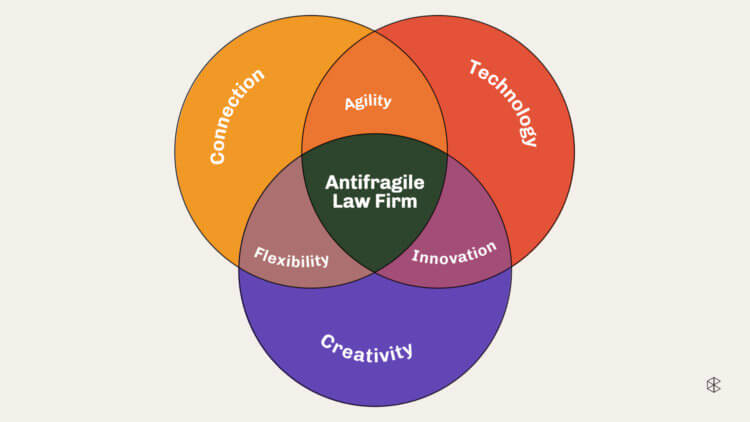
In the realm of technology and business, companies that adopt antifragile strategies often outperform their robust counterparts. Tech giants like Amazon and Google exemplify antifragility, continuously innovating and leveraging setbacks as opportunities for improvement. These organizations thrive in the face of uncertainty and change by fostering cultures of experimentation, risk-taking, and adaptation, thus not only surviving but thriving in dynamic market environments.
[](https://www.clio.com/wp-content/uploads/2022/10/Keynote_Key-Slides-Opening-Keynote-Clio-Con-2022-750x422.jpeg)
*Tech innovation and antifragility*
## Concluding Insights and Future Exploration
The exploration of robustness and antifragility reveals a critical insight: in a world marked by unpredictability and rapid change, merely being robust may no longer suffice. Instead, fostering antifragility—whether in economies, ecosystems, personal endeavors, or organizational cultures—can offer a more sustainable path to growth and resilience.
As we move forward, further exploration of these concepts can provide valuable insights into how we design our institutions, how we approach challenges and failures on a personal level, and how we might foster a more resilient and adaptable society. Future research might delve into specific strategies for building antifragility into various systems, the potential limits of antifragility, and how to balance the risks associated with embracing disorder and stress for growth.
Studying robustness and antifragility not only broadens our understanding of how systems respond to challenges but also empowers us to design better, more adaptable structures and strategies for navigating the complexities of the modern world. By embracing the lessons from Nassim Nicholas Taleb’s *Antifragile*, we can better prepare ourselves and our systems to not just survive but thrive in the face of inevitable change and chaos.
Last updated: 2024-06-30
Related Books

Related Knowledges