Respect the Unknown: Embracing Uncertainty with Antifragile Thinking
=====================================================================
Introduction
------------
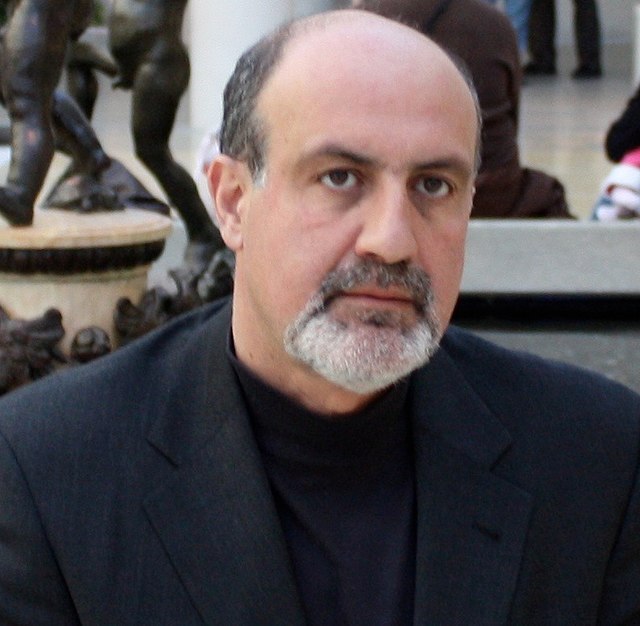
In today's fast-paced, interconnected world, we are constantly bombarded with information, seeking to understand and predict the events shaping our lives. While the pursuit of knowledge is crucial, it is equally important to recognize the limitations of our understanding. This concept lies at the core of Nassim Nicholas Taleb's Antifragile, in which the author introduces the idea of respecting the unknown and embracing uncertainty.
[](https://upload.wikimedia.org/wikipedia/commons/thumb/9/9b/Taleb_mug.JPG/640px-Taleb_mug.JPG)
*Nassim Nicholas Taleb*
The Unknown: A Core Concept in Antifragile
---------------------------------------------
[](https://kpopping.com/documents/d3/4/800/LE-SSERAFIM-2nd-Mini-Album-ANTIFRAGILE-Concept-Teasers-documents-2.jpeg?v=cfbb9)
*Antifragility Concept*
At its essence, antifragility encompasses systems or entities that thrive and become stronger under stress, uncertainty, and change. To truly comprehend antifragility, we must embrace epistemic humility, acknowledging that there are domains we cannot fully comprehend or predict. In such cases, we must respect the unknown, accepting its existence and its potential impact on our lives and decision-making processes.
The following sections will delve into diverse examples and applications to illustrate the practical implications of respecting the unknown.
### The Fragility of Financial Models
In the world of finance, complex mathematical models are often employed to predict market trends and manage risk. However, as Taleb highlights in the collapse of Long-Term Capital Management (LTCM) in 1998, such models often underestimate or outright ignore the role of the unknown. LTCM was a hedge fund that relied heavily on sophisticated mathematical models, ultimately leading to its downfall when the firm succumbed to unexpected market conditions.
[](https://www.federalreservehistory.org/-/media/Project/FedHistory/FedHistory/Images/near_failure_ltcm.jpg)
*Collapse of LTCM*
The founders and management of LTCM, including Nobel laureates, had a deep understanding of financial theory and models, yet the fund's failure underscores the fragility of these models when confronted with the inherent uncertainty and volatility of the markets. The collapse of LTCM would not have been as devastating had they respected the unknown and incorporated more conservative assumptions and stress tests into their models.
### Pandemics: The Unknown's Impact on Global Health
History has shown us that new and deadly diseases can emerge without warning, as seen with the COVID-19 pandemic. Despite advances in medicine and technology, predicting and containing pandemics remains a significant challenge due to the sheer complexity and unpredictability of viral evolution. In these situations, respecting the unknown and preparing for worst-case scenarios becomes critical.
[](https://www.ei-ie.org/image/c10bc.jpg/lead.jpg)
*COVID-19 Pandemic*
One lesson that emerges from studying pandemics is the need for greater investment in fundamental scientific research and public health infrastructure. Respecting the unknown entails acknowledging the ever-present risk of new diseases emerging, even when there are no immediate threats.
### The Impact of Black Swans
"Black Swan" is a term coined by Taleb in his book, "The Black Swan: The Impact of the Highly Improbable," to describe rare, unpredictable events with severe consequences. Black Swans are inherently linked to the concept of respecting the unknown, as we can never fully anticipate these events or their full implications.
[](https://www.investopedia.com/thmb/FTs7Cs_80lJHY8kNyU3fe3VGYBI=/1500x0/filters:no_upscale%28%29:max_bytes%28150000%29:strip_icc%28%29/Blackswan-f5daa1c10708423bbb218f9db5452eb0.jpg)
*Black Swan Events*
The 2008 financial crisis serves as an example of a Black Swan event. A complex web of factors, including risky financial instruments, lax regulations, and global economic interdependencies, resulted in a chain reaction of failures that led to a near-collapse of the global financial system. Respecting the unknown in this context would mean acknowledging the possibility of unforeseen, cascading Black Swan events resulting from seemingly unrelated factors.
Applications of Respecting the Unknown
-------------------------------------
Embracing uncertainty and respecting the unknown has several practical applications in different fields, including decision-making, innovation, and mental well-being.
### Creating Antifragile Organizations
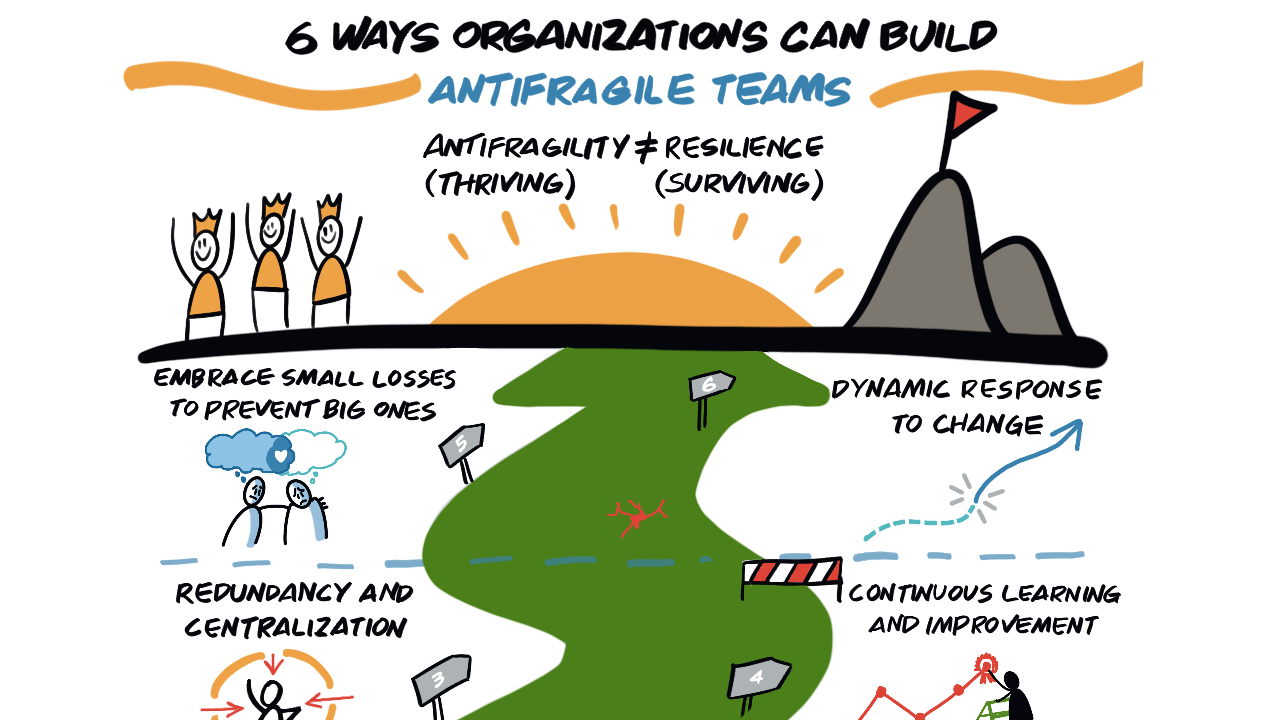
In a business context, antifragile organizations prioritize resilience and adaptability in the face of change. By incorporating uncertainty into their strategic planning, these organizations can better navigate shifting market conditions and thrive in turbulent environments.
[](https://media.licdn.com/dms/image/v2/D5612AQF-mLOjforFaw/article-cover_image-shrink_720_1280/article-cover_image-shrink_720_1280/0/1680103605094?e=2147483647&v=beta&t=J-AeC_Nl4jSPrhPT5YqfFq4u6u6J-FtxdnYg1uvD2ww)
*Antifragile Organizations*
To create an antifragile organization, decision-makers should be aware of the following steps:
1. Foster a culture that encourages experimentation and learning: Allow employees to explore and learn from failure by promoting a safe and supportive work environment.
2. Implement decentralized decision-making: Encourage self-organization and reduce hierarchy, enabling rapid responses to unforeseen events.
3. Emphasize optionality: Opt for flexible strategies and structures that allow for adaptation and growth under different scenarios.
### Encouraging a Growth Mindset
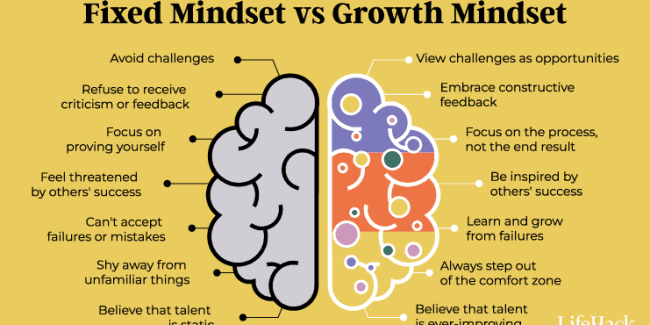
Psychologist Carol Dweck's work on mindset reveals that individuals with a growth mindset are more likely to embrace challenges, persist in the face of obstacles, and view failure as an opportunity for growth rather than a personal deficiency.
[](https://www.penbridgeschool.org.uk/site-newbridge/assets/files/4044/growth.650x325.png)
*Growth Mindset*
To cultivate a growth mindset, consider these strategies:
1. Emphasize effort over innate ability: Encourage a focus on learning and development rather than fixed abilities or intelligence.
2. Reframe failure as a learning opportunity: Model healthy response strategies and encourage self-reflection.
3. Encourage collaboration: Foster a supportive community that emphasizes mutual growth and development through constructive feedback and shared learning.
### Facing Climate Change: The Role of Uncertainty
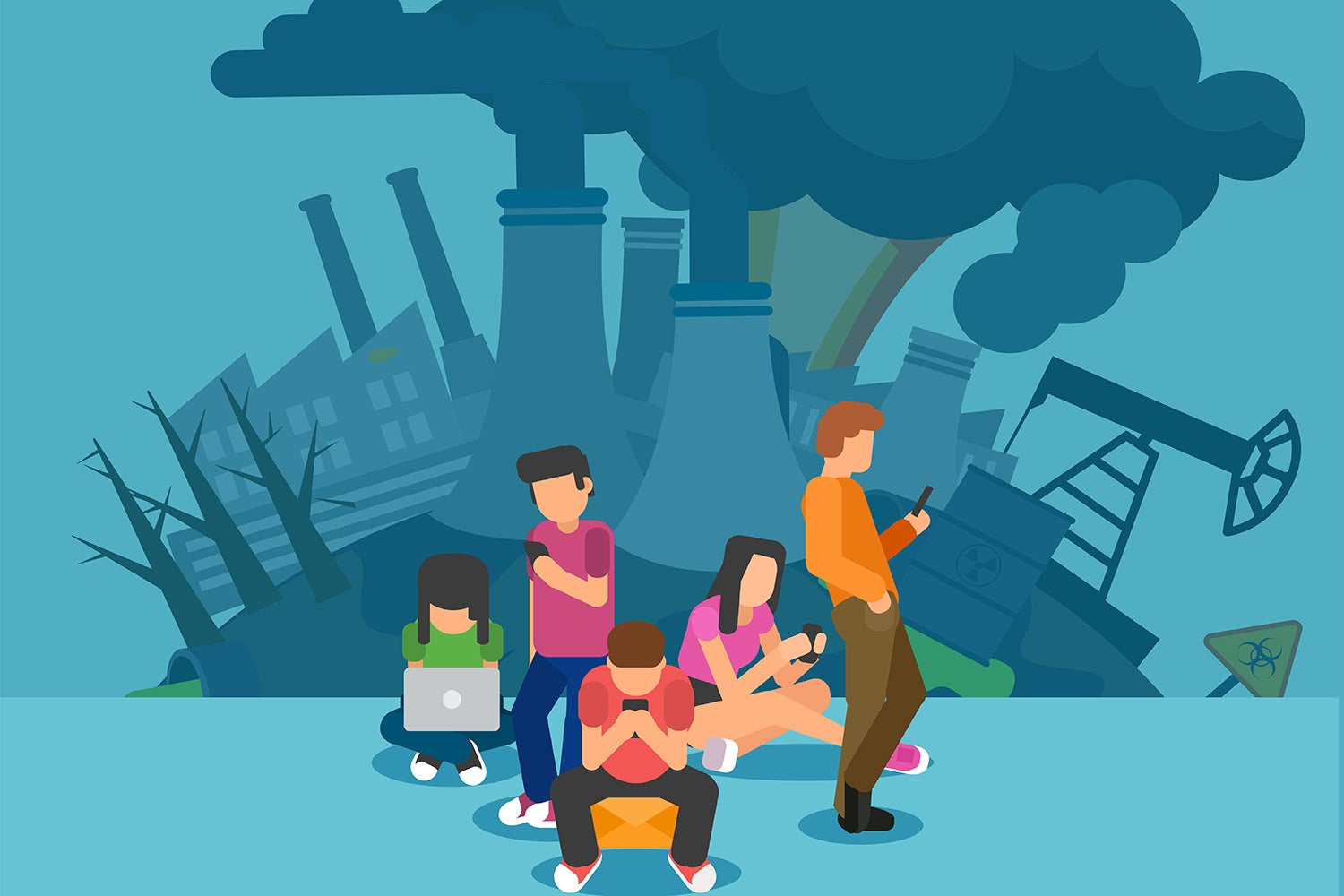
Climate change poses a significant threat to our planet's future, underscoring the importance of respecting the unknown. Despite the scientific consensus on climate change, there remains a great deal of uncertainty in predicting the precise impacts and timeline of climate change-related events. By respecting the unknown, climate scientists and policymakers can better prepare for a range of scenarios and make decisions that prioritize resilience and adaptation.
[](https://news.stanford.edu/__data/assets/image/0023/55805/Energy-use-and-greenhouse-gas-emissions-in-digital-news-media-and-carbon-footprint-of-the-internet.jpeg)
*Climate Change Uncertainty*
Key Insights and Further Exploration
------------------------------------
Embracing uncertainty and respecting the unknown is fundamental to building antifragile systems, fostering adaptive organizations, cultivating a growth mindset, and addressing complex challenges that confront us, such as climate change. By exploring these ideas further, college students can enhance their understanding of the limits of their knowledge, embrace the inherent uncertainty of our world, and develop tools and strategies to navigate the complexities of their personal and professional lives.
To further explore the concept of respecting the unknown, consider engaging in the following learning activities or research:
* Delve deeper into the philosophy of uncertainty and its implications for various disciplines (e.g. mathematics, economics, cognitive science, and environmental studies).
* Explore how other scholars grapple with the concept of uncertainty and the unknown in their work. Examples include philosopher Karl Popper's concept of falsifiability and mathematician Benoit Mandelbrot's fractal geometry.
* Examine how ancient wisdom and non-Western philosophies address uncertainty, such as the Buddhist concept of impermanence or the Taoist concept of wu wei (non-action).
* Analyze the role of technological progress and innovation in shaping our understanding of uncertainty and the unknown. Consider, for instance, the impact of artificial intelligence and big data on prediction and decision-making.
* Investigate approaches to teaching and learning that promote critical thinking, metacognition, and the ability to hold multiple perspectives, all of which are essential in navigating the complexities of the unknown.
By respecting the unknown, college students will be better equipped to succeed in a rapidly changing world, forge meaningful connections with others, and forge a lifetime of learning and personal growth.
Last updated: 2025-08-28
Related Books

Related Knowledges