### Conjectures and Refutations: The Engine of Scientific Discovery
In his seminal work, *The Open Society and Its Enemies*, philosopher Karl Popper introduced the concept of 'conjectures and refutations' as the driving force behind scientific progress. This idea, rooted in the philosophy of science, offers profound insights into the nature of knowledge acquisition and the growth of human understanding. In this exploration, we will delve into the core concepts of conjectures and refutations, illustrate their relevance through real-world examples, and discuss their implications for college students.

*Karl Popper, the philosopher behind the concept of conjectures and refutations.*
#### The Essence of Conjectures and Refutations
At its core, the concept of conjectures and refutations posits that scientific knowledge advances through a continuous cycle of hypothesis formation (conjectures) and empirical testing (refutations). Popper argued that scientific theories can never be proven true but can only be falsified, i.e., shown to be false through empirical observation. This approach emphasizes the importance of skepticism, critical thinking, and continuous learning in the scientific process.

*The cycle of conjectures and refutations in scientific discovery.*
#### Relevance of Conjectures and Refutations
Understanding conjectures and refutations is crucial for college students for several reasons:
1. **Promoting critical thinking:** By embracing the idea of conjectures and refutations, students learn to question established ideas, fostering a healthy skepticism that encourages deeper understanding and engagement with the subject matter.
2. **Fostering a growth mindset:** Recognizing that scientific theories are provisional and subject to revision promotes a growth mindset, empowering students to embrace challenges and learn from failures.
3. **Preparing for the future workforce:** As the job market evolves, employers increasingly seek individuals who can think critically, solve complex problems, and adapt to changing circumstances—skills inherent in the conjectures and refutations approach.
#### Practical Implications: Real-World Examples
To better understand the practical implications of conjectures and refutations, let's examine two real-world examples:
##### Example 1: The Shape of the Earth
The ancient Greeks proposed that the Earth was spherical based on their observations of the Earth's shadow during lunar eclipses. However, this conjecture was not proven true; rather, it was never disproven through empirical observation. Subsequent explorers, such as Ferdinand Magellan's crew, confirmed the spherical shape of the Earth by circumnavigating the globe.

*Illustration of spherical Earth and lunar eclipses.*
However, the spherical Earth conjecture was later refuted by more precise measurements, revealing that the Earth is not a perfect sphere but an oblate spheroid—slightly flattened at the poles and bulging at the equator. This refutation led to a deeper understanding of the Earth's structure and its dynamics.
##### Example 2: The Four Elements
For centuries, the Greek philosopher Empedocles' theory of the four elements (earth, water, air, and fire) was widely accepted as the foundation of matter. However, this conjecture was later refuted by the discovery of subatomic particles, which revealed that matter is composed of atoms and their constituent particles (protons, neutrons, and electrons). This refutation led to the development of modern chemistry and physics, providing a more accurate understanding of the composition and behavior of matter.
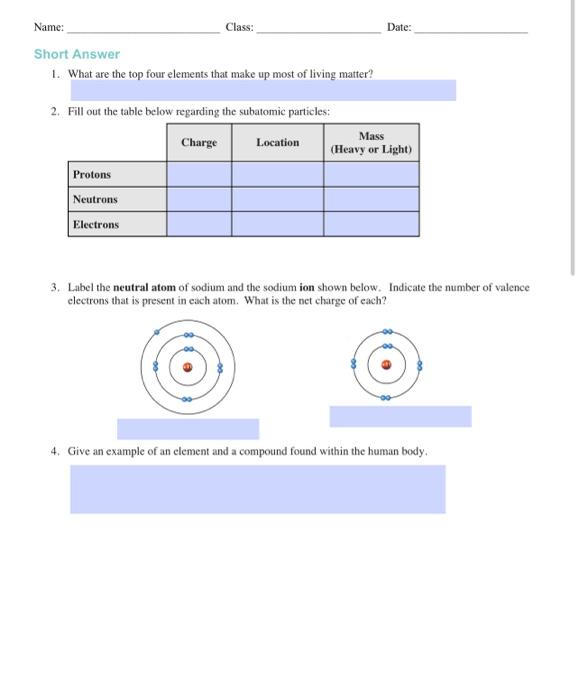
*Comparison between the concept of the four elements and the discovery of subatomic particles.*
#### Conclusion: Key Insights and Further Exploration
The concept of conjectures and refutations offers several key insights for college students:
1. **The importance of skepticism and critical thinking:** By embracing skepticism and critical thinking, students can engage more deeply with the subject matter, fostering a growth mindset and promoting continuous learning.
2. **The provisional nature of scientific theories:** Understanding that scientific theories are subject to revision and refutation encourages students to remain open-minded and adaptable in the face of new information.
3. **The value of failure and learning from mistakes:** Recognizing that failure is an inherent part of the scientific process can empower students to embrace challenges and learn from their mistakes.
To further explore the topic of conjectures and refutations, consider the following avenues:
1. **Delve deeper into Popper's philosophy:** Read more of Popper's works, such as *The Logic of Scientific Discovery* and *Conjectures and Refutations: The Growth of Scientific Knowledge*, to gain a more comprehensive understanding of his philosophy.
2. **Explore other philosophers' perspectives:** Investigate the views of other philosophers, such as Thomas Kuhn and his work on paradigm shifts in science, to broaden your understanding of the philosophy of science.
3. **Apply the concept to real-world issues:** Apply the concept of conjectures and refutations to contemporary issues, such as climate change or the COVID-19 pandemic, to better understand the role of scientific inquiry in addressing complex challenges.
By embracing the concept of conjectures and refutations, college students can cultivate critical thinking, foster a growth mindset, and develop the skills necessary to navigate an ever-changing world.
Last updated: 2024-03-20
Related Books

Related Knowledges