Idea of Society in The Open Society and Its Enemies by Karl Popper
==================================================================
[](https://images.newscientist.com/wp-content/uploads/2019/06/16160624/tan-3848164.jpg)
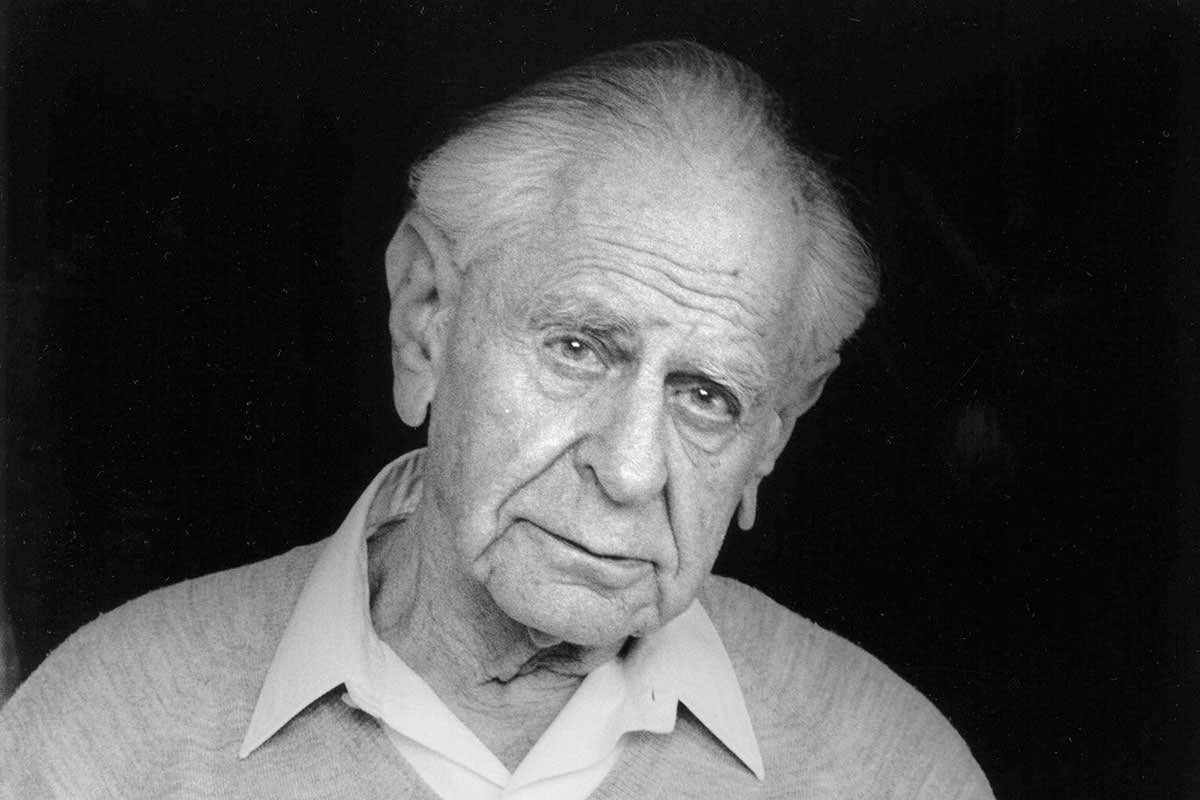
*Karl Popper*
_"The conscious and intelligent manipulation of the organized habits and opinions of the masses is an important element in democratic society. Those who manipulate this unseen mechanism of society constitute an invisible government which is the true ruling power of our country." – Edward Bernays_
In his groundbreaking work, _The Open Society and Its Enemies_, philosopher Karl Popper introduces the 'Idea of Society' as a dynamic, ever-evolving, and interconnected web of relationships, institutions, and ideas, subject to both gradual change and revolution. In this treatise, Popper posits that societies are not static entities but rather, are in a constant state of flux, driven by human actions and unpredictable events. In this context, the idea of an open society emphasizes critical rationalism, individual freedom, and piecemeal social engineering, underscoring the importance of fallibility, trial and error, and criticism as essential pillars for societal progress.
[](https://www.reproductivefacts.org/globalassets/_rf/news-and-publications/infographics/adoption/adoption3.png)
*Concept of Open Society*
Relevance of the Idea of Society
--------------------------------
The Idea of Society has significant implications for understanding the challenges and opportunities that confront contemporary societies. By embracing the reality that societies are not monolithic, predetermined structures, Popper invites us to consider the ways in which the actions of individuals and groups contribute to continuously shaping the very nature of the societies they inhabit. This insight lies at the core of what it means for a society to be 'open,' as opposed to 'closed,' wherein the latter is characterized by rigid ideologies, a disregard for individual rights and freedoms, and a tendency to suppress criticism and dissent.
### Practical Implications
As students grapple with the Idea of Society, it is worth reflecting on the practical implications of Popper's ideas in real-world contexts.
#### Immigration and Refugee Integration
One of the most pressing challenges that contemporary societies face is the integration of immigrants and refugees. As diverse populations enter and settle in new locales, traditional conceptions of national identity, culture, and values may be contested and transformed. Popper's Idea of Society, with its emphasis on the dynamic nature of social relationships, institutions, and ideas, offers a framework for understanding the evolving nature of these societies, and the adaptive strategies that may be necessary for integrating migrant populations and forging inclusive, cohesive communities.
#### Climate Change
Another pressing challenge that societies confront is climate change, which increasingly demands rapid, dramatic shifts in our social, political, and economic systems. Popper's ideas about human agency in shaping social processes underscore the necessity of concerted, collective action on behalf of governments, businesses, and individuals, in order to mitigate and adapt to a rapidly changing climate. In this context, the Idea of Society calls for creative, innovative, and unorthodox strategies that confront the limitations of existing social programs, institutions, and policies.
Diverse Examples and Applications
--------------------------------
By examining the ways in which the Idea of Society manifests in different contexts, we can better appreciate the diversity and nuance of this theoretical framework.
### China's "Social Credit System"
One example of a Society in contrast to Popper's ideas is China's Social Credit System (SCS). The SCS is a nationwide program aimed at monitoring and controlling the behavior of Chinese citizens and businesses. This system assigns a social credit score to individuals and entities based on their social and economic actions, penalizing those who engage in activities deemed 'untrustworthy' or 'undesirable' by the Chinese Communist Party (CCP).
[](https://www.visualcapitalist.com/wp-content/uploads/2019/09/china-social-credit-score-prev-1000x600.jpg)
*Social Credit System in China*
The SCS is an example of a _closed_ society, in which individual freedoms and rights are subordinated to the interests and objectives of the state. In this context, the system undermines critical rationalism and legitimizes the suppression of dissent and criticism, thereby undermining human agency and development.
### Open Source Software Communities
Contrasting the Chinese example, one illustration of an open society can be found in open-source software (OSS) communities. These decentralized networks comprise individuals and groups that collaborate on the development, maintenance, and distribution of software and related resources.
[](https://d3i71xaburhd42.cloudfront.net/54b4ca1503146afac9edb9d54dcfbb12634f99e9/13-Figure1-1.png)
*Open Source Software Community*
OSS communities embody many of the Idea of Society's core principles, including the fluidity of relationships, institutions, and ideas, as well as the emphasis on human agency. In these communities, members work collectively to adapt, revise, and refine software, engaging in ongoing processes of trial and error, criticism, and iteration.
Key Insights and Further Exploration
------------------------------------
By engaging with the Idea of Society, college students can cultivate a more nuanced understanding of the complex and dynamic nature of societies. Some key insights from Popper's perspective include:
* Societies are not monolithic structures but, rather, are complex systems in a constant state of flux, subject to both gradual and revolutionary change.
* Human agency is a fundamental driving force behind the evolution and adaptation of societies, underpinned by individual freedom and critical rationalism.
* Open societies rely on fallibility, trial and error, and criticism as cornerstones for social progress, while closed societies stifle dissent and promote rigid ideologies and the suppression of individual freedoms.
For students seeking further exploration of the Idea of Society and its practical implications, the following resources and avenues merit consideration:
* Engage with literature and scholarship on the dynamics of social systems, including works by sociologists, anthropologists, and political scientists.
* Examine case studies of societies undergoing rapid change or transformation, such as post-communist Europe or post-apartheid South Africa.
* Investigate contemporary challenges and debates around immigration, integration, and social cohesion, particularly as they relate to the integration of immigrants and refugee populations in diverse societies.
* Explore the ways in which human agency can contribute to the mitigation of and adaptation to climate change.
In conclusion, by examining the Idea of Society in The Open Society and Its Enemies, students are invited to cultivate a deeper appreciation of the complexity and interconnectedness of social relationships, institutions, and ideas. In doing so, students are better positioned to engage in meaningful dialogue, deliberation, and debate about the nature and trajectory of our societies, guided by the critical rationalism, individual freedom, and creativity that are the hallmarks of open societies.
Last updated: 2024-05-22
Related Books

Related Knowledges