### Unfalsifiability: The Crux of Karl Popper's Epistemology
[](https://images.newscientist.com/wp-content/uploads/2019/06/16160624/tan-3848164.jpg)
*Karl Popper*
Karl Popper, an influential 20th-century philosopher, is renowned for his asymmetric theory of verification and falsification. At the core of his epistemology lies the idea of 'unfalsifiability' or 'falsifiability.' This concept challenges the traditional verification method, proposing that a hypothesis can never be proven true but can be proven false or 'falsified' by empirical evidence.
Unfalsifiability holds immense relevance for college students and academics alike, for it revolutionized the philosophy of science and knowledge generation. By understanding this concept, students hone their critical thinking, differentiate sound theories from pseudoscience, and engage in constructive intellectual discourse.
#### Unfalsifiability: Core Concept and Relevance
Unfalsifiability addresses the age-old question: can we ever truly 'know' anything? Popper argues that human knowledge is inherently conjectural, continually evolving through falsification. A theory becomes scientific only after exposure to rigorous testing and possible falsification. Through this process, a theory's domain of applicability (DOA) is established. For example, Newton's Laws of Motion have a wide DOA, accurately describing various phenomena, except at extremely high velocities and small scales (e.g., quantum mechanics).
[](https://www.simplypsychology.org/wp-content/uploads/inductive-deductive.jpg)
*Process of Falsification*
In contrast, unfalsifiable statements, or 'pseudoscientific' claims, lack the ability to be proven wrong. These propositions often employ ambiguous language or metaphysical entities, immunizing themselves from falsification. For instance, astrology often invokes 'celestial energies' to explain its inaccuracies, rather than revising or abandoning its core tenants.
#### Illustrative Examples
##### Example 1: Evolution vs. Creationism
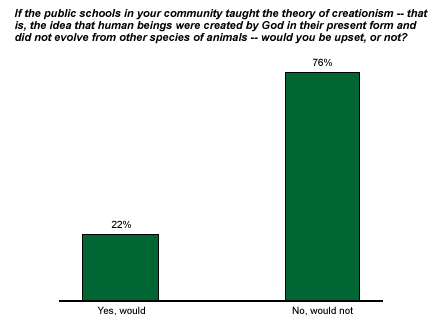
Evolution and creationism starkly contrast unfalsifiability's implications for knowledge. Evolution, being falsifiable, posits that species change over time via natural selection. This hypothesis undergoes constant testing, refinement, and sometimes rejection. In contrast, creationism claims that a divine entity created the universe and its fundamental laws, making it unassailable through empirical means. Consequently, creationism is considered nonscientific.
[](https://media.gallup.com/GPTB/goverPubli/20050524_1.gif)
*Evolution vs. Creationism*
##### Example 2: Psychoanalysis
Psychoanalysis, famously criticized by Popper, illustrates another salient example. Psychoanalysis hinges on concepts like the unconscious, repression, or the Oedipus complex. However, these concepts are unfalsifiable—for instance, an adherent could claim an observed behavior results from unconscious motivations rather than accepting alternative explanations.
[](https://www.verywellmind.com/thmb/xdLW95QvemuecYS6K_oohLxQ_X0=/1500x0/filters:no_upscale%28%29:max_bytes%28150000%29:strip_icc%28%29/GettyImages-515296504-81e4865310b14a229157e7d9ab151634.jpg)
*Psychoanalysis Concept*
#### Applications and Practical Implications
Unfalsifiability has several real-world implications for college students, researchers, and policymakers:
1. **Science Education**: Instructors can use unfalsifiability to distinguish valid scientific ideas from pseudoscience, promoting critical thinking and ensuring students' comprehension of the nature of scientific progress.
2. **Pseudoscience Identification**: Identifying unfalsifiable claims helps individuals discern potentially deceptive or misleading information, from alternative medicine to climate change denial.
3. **Public Policy**: Encouraging falsifiability through evidence-based policy making can help governments iterate and refine their approaches, reducing wasted resources, enhancing public trust, and optimizing outcomes.
#### Concluding Thoughts and Further Exploration
Understanding unfalsifiability and its implications is fundamental to comprehending the ethos of scientific progress and the pitfalls of obfuscated, unfalsifiable claims. This knowledge grants college students the power to scrutinize information, make informed decisions, and actively participate in intellectual discourse.
To further deepen one's understanding and critical engagement with unfalsifiability, consider the subsequent avenues for exploration:
* Analyzing other disciplines or theories that display characteristics of unfalsifiability (e.g., string theory, some aspects of Marxism, or even certain economic models)
* Delving into Popper's other contributions to philosophy, such as his thoughts on the 'democratic transition' and the 'open society'
* Examining instances where unfalsifiability intersects with social issues, like politics, culture, or education policies
By mastering unfalsifiability, not only will students solidify their grasp of Popper's landmark theories but, more importantly, develop their critical thinking skills to navigate our increasingly complex world.
Last updated: 2024-04-04
Related Books

Related Knowledges