Historicist Error and its Implications
=====================================
In his seminal work, *The Open Society and Its Enemies*, philosopher Karl Popper introduced the concept of 'historicism error' to describe a mode of thinking that has had profound implications for the development of human societies. At its core, historicism is the belief that historical events and human behavior are predetermined by immutable laws, much like the laws of physics govern the natural world.
[](https://upload.wikimedia.org/wikipedia/commons/8/82/Photo_of_Karl_Popper.jpg)
*Karl Popper*
Historicism is a pervasive and persistent error in human thought, and it has been used to justify some of the most oppressive and destructive political ideologies in history. By understanding the historicist error, we can better appreciate the dangers of dogmatic thinking and the importance of critical engagement with the world around us.
Understanding the Historicist Error
---------------------------------
Historicism is the belief that historical events are predetermined by immutable laws, much like the laws of physics govern the natural world. This mode of thinking is often associated with a deterministic view of history, in which the course of human events is seen as inevitable and preordained.
At its core, historicism is a form of reductionism, in which complex social phenomena are reduced to simple, deterministic laws. This reductionism is often based on a flawed understanding of historical causation, in which complex social phenomena are seen as the inevitable result of a small number of underlying causes.
The historicist error is particularly dangerous because it can lead to a fatalistic view of history, in which human agency is denied and the future is seen as predetermined. This fatalism can have profound implications for the way we think about politics, society, and our own lives.
Historicism and Totalitarianism
-------------------------------
One of the most dangerous implications of the historicist error is its association with totalitarianism. Totalitarian regimes often rely on historicist thinking to justify their actions and to deny the possibility of alternative futures.
[](https://cdn2.opendemocracy.net/media/images/1024px-Hitler_and_Mussolini_June_1940.max-760x504.jpg)
*Totalitarian regimes*
For example, the Nazi regime in Germany relied heavily on historicist thinking to justify its genocidal policies. The Nazis believed that the German people were destined to rule the world, and that the extermination of Jews, homosexuals, and other "undesirables" was a necessary step towards achieving this goal.
Similarly, the Soviet regime in Russia relied on historicist thinking to justify its repressive policies. The Soviets believed that the communist revolution was the inevitable result of historical forces, and that the establishment of a communist utopia was the ultimate goal of history.
In both cases, historicist thinking was used to deny the possibility of alternative futures and to justify the suppression of dissent. By denying the possibility of change, totalitarian regimes are able to maintain their power and to suppress opposition.
Historicism and Progress
------------------------
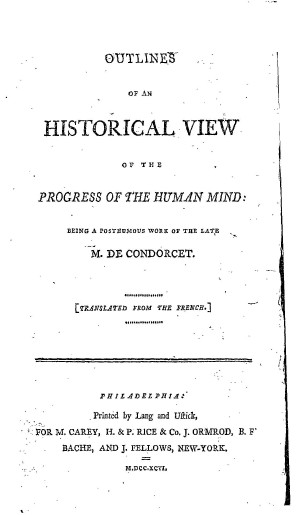
Another dangerous implication of the historicist error is its association with the idea of progress. The belief in progress is the idea that human history is moving in a positive direction, towards a better future.
[](https://oll-resources.s3.us-east-2.amazonaws.com/oll3/store/titles/1669/0878_TP.jpg)
*The concept of progress*
While the idea of progress can be a powerful force for good, it can also be used to justify oppression and inequality. For example, the belief in progress has often been used to justify colonialism and imperialism, on the grounds that "primitive" societies are destined to be replaced by more "advanced" ones.
Similarly, the belief in progress has often been used to justify inequality and oppression, on the grounds that certain groups are "behind" others in terms of their historical development.
In both cases, the belief in progress is based on a flawed understanding of historical causation, in which complex social phenomena are reduced to simple, deterministic laws. By denying the complexity and diversity of human societies, the belief in progress can lead to a narrow and dogmatic view of the world.
Historicism and Human Agency
----------------------------
One of the most dangerous implications of the historicist error is its denial of human agency. By denying the possibility of alternative futures, historicist thinking undermines the ability of individuals to shape their own lives and to make a difference in the world.
This denial of human agency can have profound implications for the way we think about politics, society, and our own lives. By denying the possibility of change, historicist thinking can lead to a fatalistic view of the world, in which human beings are seen as passive victims of historical forces.
This fatalism can have a paralyzing effect on individuals and societies, leading to a sense of powerlessness and despair. By denying the possibility of change, historicist thinking can lead to a sense of hopelessness and resignation, in which people feel that they are unable to make a difference in the world.
Conclusion
----------
The historicist error is a pervasive and persistent error in human thought, and it has had profound implications for the development of human societies. By understanding the historicist error, we can better appreciate the dangers of dogmatic thinking and the importance of critical engagement with the world around us.
The historicist error is based on a flawed understanding of historical causation, in which complex social phenomena are reduced to simple, deterministic laws. This reductionism can have dangerous implications, leading to a fatalistic view of history and a denial of human agency.
The historicist error is particularly dangerous because it can lead to a fatalistic view of history, in which human agency is denied and the future is seen as predetermined. This fatalism can have profound implications for the way we think about politics, society, and our own lives.
To avoid the historicist error, it is important to adopt a critical and nuanced view of history, one that recognizes the complexity and diversity of human societies. By rejecting the reductionism and determinism of historicist thinking, we can create a more open and inclusive society, one that values human agency and the possibility of change.
For further exploration of the topic, I would recommend reading more of Popper's work on historicism, as well as other critiques of deterministic thinking in the social sciences. Additionally, I would recommend studying the history of totalitarian regimes, such as Nazi Germany and the Soviet Union, to better understand the dangers of historicist thinking in practice.
Last updated: 2024-03-23
Related Books

Related Knowledges