# Markets Efficient: Debunking Myths and Unveiling the Truth with Morgan Housel
**Introduction**
[](https://m.media-amazon.com/images/S/amzn-author-media-prod/rtoaal9u1721n93pmiqkl7s1u1.jpg)
*Morgan Housel*
Morgan Housel, a two-time winner of the Best in Business award from the Society of American Business Editors and Writers, has penned insightful articles and books that bridge the gap between economics and psychology. His work focuses on the behavioral aspects of finance and wealth management, frequently highlighting the concept of markets' efficiency. While the Efficient Market Hypothesis (EMH) has been the cornerstone of modern financial theory for decades, Housel offers a deeply introspective view on its intricacies. His work inspires us to look beyond the surface-level understanding of markets' efficiency to unfold the psychological and behavioral nuances that come into play.
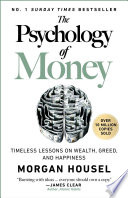
The EMH posits that financial markets are efficient because stock prices reflect all available information. Thus, no investor can consistently outperform the market because all information is already incorporated into security prices. However, Housel argues that while the hypothesis offers valuable insights, understanding its shortcomings is essential for college students and investors alike. As Housel stated in his book, "The Psychology of Money," markets are not always "efficient," especially when investor psychology and behavioral biases hinder clear judgment.
[](https://i0.wp.com/tejimandi.com/wp-content/uploads/2022/06/3f191eb6-7f26-4050-b690-01f78d889a89-photo-2.png?fit=7001%2C3938&ssl=1)
*Efficient Market Hypothesis*
**Understanding the Limitations of EMH**
Housel delves into the idea that markets are not always efficient due to the following reasons:
1. New Information: Markets can only be efficient in processing new information if they have adequate time to do so. However, rapid-fire stock trading and constant news cycles complicate this concept, making it challenging for information to be fully absorbed and analyzed.
[](https://www.investopedia.com/thmb/hZ3xeJmbLmUBZtzunJrrMCmT5QI=/1500x0/filters:no_upscale%28%29:max_bytes%28150000%29:strip_icc%28%29/s1-5bfd932246e0fb0051865e0f)
*Stock Market Trading*
2. Irrational Behavior: Emotional investors tend to overreact to news, causing stock prices to become overvalued or undervalued relative to their fundamentals. These deviations from rational pricing may persist for extended periods, making markets inefficient.
3. Herd Mentality: The tendency for investors to mimic their peers' actions can cause market prices to deviate from their intrinsic values. Herd behavior often leads markets away from efficiency, giving rise to bubbles and crashes.
**Examples Illustrating Markets' Inefficiency**
Housel's exploration of markets' efficiency draws upon several historical instances of market madness:
* The Dot-Com Bubble: The late 1990s saw the emergence of the internet and its promising potential for businesses. Investors extrapolated the industry's growth rate and bid up stock prices of tech and internet companies well beyond fundamentally justifiable valuations. The bubble eventually burst in 2000, wiping out billions in wealth and underscoring the limitations of EMH. This example demonstrates both herd mentality and irrational exuberance that led to inefficient pricing.
[](https://upload.wikimedia.org/wikipedia/commons/8/84/Nasdaq_Composite_dot-com_bubble.svg)
*Dot-Com Bubble*
* The Housing Bubble: During the mid-2000s, fueled by the proliferation of risky mortgage instruments and the belief that housing prices would never decline, the U.S. housing market experienced exponential growth. This period was marked by a fundamental divergence between housing prices and underlying economic factors. As with the Dot-Com Bubble, the housing market imploded, with devastating consequences for the overall economy. These instances underline the role of psychology and behavior in inefficient markets.
[](https://substackcdn.com/image/fetch/f_auto,q_auto:good,fl_progressive:steep/https%3A%2F%2Fbucketeer-e05bbc84-baa3-437e-9518-adb32be77984.s3.amazonaws.com%2Fpublic%2Fimages%2Fe2725fd2-73dd-41c6-a703-e060cec87dd7_2016x1440.png)
*Housing Bubble*
**Key Insights and Conclusion**
Upon examining Housel's exploration of market efficiency and its limitations, several crucial insights emerge that can guide college students and investors:
* **Market Inefficiencies create Opportunities:** Deviations from intrinsic values can create short-term opportunities for savvy investors to outperform the market. However, it must be noted that predicting market behavior is no simple feat, given the complex interplay of psychological factors and constantly evolving information.
* **Long-Term Outperformance is Rare:** Successfully exploiting market inefficiencies to outperform the market over an extended period is challenging. It requires a deep understanding of industries, companies, and economic cycles.
* **Understanding Behavioral Biases:** Behavioral finance, which intertwines psychology and economics, offers tools to recognize biases driving market inefficiencies. College students and investors alike can employ these frameworks to rationalize market behavior better, allowing them to make more informed decisions.
[](https://infographicjournal.com/wp-content/uploads/2012/04/does-birth-order-influence-financial-behavior.jpg)
*Behavioral Finance*
Further exploration of this topic can include researching seminal works on behavioral finance, such as "Thinking, Fast and Slow" by Daniel Kahneman and "Behavioral Finance: Psychology, Decision-Making, and Markets" by Lucy Ackert and Richard Deaves. Engaging with these resources will equip students with a deeper understanding of the intricacies of financial markets, where rationality and irrationality often dance in an intriguing tango.
Last updated: 2024-04-23
Related Books
Related Knowledges