# Coalition Formation: Understanding the Art of Political Alliances
## Introduction
Coalition formation is a fundamental concept in political science, which refers to the process by which political actors come together to form alliances in order to achieve their goals. This process is crucial in understanding the dynamics of political systems, as it shapes the distribution of power and the policy-making process. In this unit, we will delve into the intricacies of coalition formation, drawing on insights from the book 'The Dictator's Handbook' by Bruce Bueno de Mesquita and Alastair Smith.

*Illustration of political coalition formation*
'The Dictator's Handbook' provides a unique perspective on coalition formation, emphasizing the role of political survival in shaping the behavior of political actors. According to the authors, political leaders are primarily concerned with maintaining their grip on power, and they will form alliances with other actors only if such alliances serve their survival interests. This approach highlights the importance of understanding the incentives and constraints that shape the behavior of political actors in coalition formation.
## Core Concepts and Relevance
Coalition formation is relevant to understanding political systems at various levels, from international relations to domestic politics. At the international level, the formation of alliances and coalitions is crucial in understanding the dynamics of conflict and cooperation among states. At the domestic level, coalition formation is central to understanding the functioning of legislative bodies, where political parties must form alliances to pass legislation and govern.
The concept of political survival is central to the analysis of coalition formation in 'The Dictator's Handbook'. Political leaders are assumed to be rational actors who seek to maintain their power and position. In this context, coalition formation is seen as a strategic tool for achieving this goal. Political leaders will form alliances with other actors only if such alliances enhance their political survival.
Another key concept in the analysis of coalition formation is the distribution of power within coalitions. Political leaders will seek to form alliances that maximize their influence and control over the coalition. This can lead to a variety of power-sharing arrangements, from equal partnerships to hierarchical structures.
## Examples and Applications
To illustrate the practical implications of coalition formation, let us consider some examples and applications.
### International Relations: The North Atlantic Treaty Organization (NATO)
The North Atlantic Treaty Organization (NATO) is a prime example of coalition formation at the international level. NATO is a military alliance of 30 North American and European countries, established in 1949 in response to the perceived threat of the Soviet Union. The alliance is based on the principle of collective defense, where an attack on one member state is considered an attack on all.
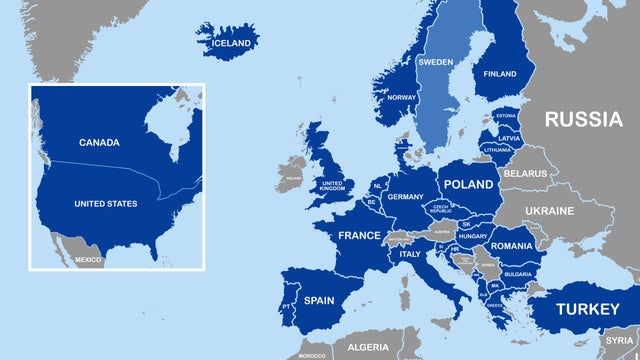
*NATO member countries*
The formation of NATO can be understood in terms of the core concepts of political survival and power distribution. The member states of NATO formed the alliance as a means of enhancing their collective security and survival in the face of a common threat. The distribution of power within NATO is based on a hierarchical structure, with the United States as the leading power and the other member states as junior partners.
### Domestic Politics: The U.S. Congress
Coalition formation is also central to understanding the functioning of legislative bodies, such as the U.S. Congress. In the U.S. Congress, political parties must form alliances to pass legislation and govern. The distribution of power within these alliances can vary, from equal partnerships to hierarchical structures.
For example, during the 111th Congress (2009-2011), the Democratic Party held a majority in both the House of Representatives and the Senate. However, the party was divided into two factions: the Blue Dog Coalition, a group of moderate and conservative Democrats, and the Progressive Caucus, a group of liberal Democrats. In order to pass legislation, the Democratic leadership had to form alliances with both factions, balancing their competing interests and demands.
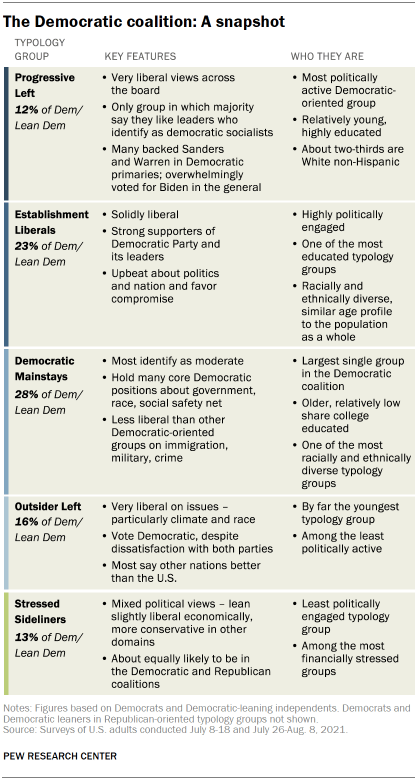
*US Congress coalition example*
The distribution of power within these alliances was based on a delicate balance of power. The Democratic leadership had to accommodate the demands of both factions in order to maintain their support and pass legislation. This example illustrates the complexity of coalition formation and the importance of understanding the incentives and constraints that shape the behavior of political actors.
## Conclusion
In conclusion, coalition formation is a crucial concept in understanding the dynamics of political systems. The analysis of coalition formation, as presented in 'The Dictator's Handbook', highlights the role of political survival and power distribution in shaping the behavior of political actors. By understanding these core concepts, we can gain valuable insights into the functioning of political systems at various levels.
For further exploration of the topic, students are encouraged to consider the following questions:
* How does the distribution of power within coalitions shape the behavior of political actors?
* How do the incentives and constraints of political survival influence the formation and stability of coalitions?
* How does the analysis of coalition formation apply to other political systems, such as parliamentary democracies or authoritarian regimes?
By delving deeper into these questions, students can gain a more nuanced understanding of the complex dynamics of coalition formation and their implications for political systems.
Last updated: 2024-03-20
Related Books

Related Knowledges