### Regime Survival: An In-depth Look at the Core Concepts and Relevance
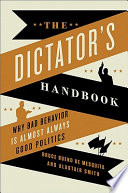
*Regime Survival* is a central concept in the groundbreaking book *The Dictator's Handbook*, written by Bruce Bueno de Mesquita and Alastair Smith. The authors present a unique perspective on politics, both in autocratic and democratic systems, by examining the strategies that political leaders employ to maintain power and control. The book's primary insight is that political leaders, regardless of their political environment, are fundamentally motivated by the desire to stay in power.
[![PDF\] What Drives States to Support the Development of Productive ...](https://d3i71xaburhd42.cloudfront.net/8b79bb6f54a17cc213a8cc9a5c0003ab5ffc38d9/11-Figure1-1.png)](https://d3i71xaburhd42.cloudfront.net/8b79bb6f54a17cc213a8cc9a5c0003ab5ffc38d9/11-Figure1-1.png)
*Concepts of Regime Survival*
At its core, *Regime Survival* refers to the strategies, tactics, and mechanisms employed by political leaders to preserve their political control and prevent their removal from office. The concept highlights the importance of understanding the complex dynamics between political leaders, their supporters, and opponents. By analyzing these relationships and the factors that influence them, the authors provide valuable insights into the decision-making processes of political leaders and the outcomes of their actions.
The concept of *Regime Survival* is crucial for understanding global politics, as it offers a unique and practical lens through which to analyze and predict the behavior of political leaders. Students of political science, international relations, and related disciplines can benefit significantly from mastering this concept and its applications.
#### Real-world examples and applications
##### 1. Venezuela's Hugo Chavez and Regime Survival
Hugo Chavez, the late Venezuelan president, exemplified the concept of *Regime Survival* throughout his 14-year rule. Chavez relied on a combination of tactics, including:
- Co-optation of key institutions: Chavez systematically replaced the heads of military, judicial, and electoral institutions with loyalists, ensuring their commitment to his political agenda and bolstering his hold on power.
- Redistribution of wealth: Chavez implemented social programs and oil subsidies targeting lower-income Venezuelans, securing their political support and undermining the opposition's credibility.
- Repression of dissent: Chavez utilized various methods to suppress dissent, including censorship, intimidation, and arrests of political opponents, ensuring that opposition voices remained marginalized.
[](https://upload.wikimedia.org/wikipedia/commons/8/8a/Hugo_Rafael_Ch%C3%A1vez_Fr%C3%ADas.jpeg)
*Hugo Chavez and Regime Survival*
Chavez's strategies for *Regime Survival* enabled him to maintain control over Venezuela's political landscape, despite persistent challenges from the opposition and economic difficulties.
##### 2. Egypt's Hosni Mubarak: A Case Study in Regime Survival and Failure
Hosni Mubarak, the former Egyptian president, ruled Egypt for nearly three decades before being overthrown during the Arab Spring protests in 2011. Mubarak's *Regime Survival* strategies included:
- Network of loyalists: Mubarak maintained a network of loyalists within the military, intelligence services, and the ruling National Democratic Party, ensuring their support in suppressing dissent and maintaining his grip on power.
- Divide-and-conquer tactics: Mubarak fostered divisions within the opposition, co-opting some groups and isolating others, thereby preventing the emergence of a unified front against his regime.
- Manipulation of elections: Mubarak's regime orchestrated elections to give the appearance of democratic legitimacy while ensuring his continued rule through manipulation and fraud.
Despite these efforts, Mubarak's regime ultimately succumbed to the popular uprising during the Arab Spring, revealing the limitations of his *Regime Survival* strategies when faced with widespread, determined opposition.
[](https://www.aljazeera.com/wp-content/uploads/2020/02/219d496a5073456380cb21b3842f2b04_18.jpeg)
*Hosni Mubarak and the Arab Spring*
#### Concluding remarks and further exploration
The concept of *Regime Survival* is a powerful tool for understanding the behavior of political leaders, their decision-making processes, and the outcomes of their actions. By examining the strategies and tactics employed by political leaders in various contexts, students can deepen their understanding of international politics and enhance their ability to analyze and predict political developments.
For further exploration of the topic, students can examine additional case studies from both autocratic and democratic regimes to identify patterns and variations in *Regime Survival* strategies. In addition, students can explore the implications of the concept for policy-making, diplomacy, and conflict resolution. Delving into the ethical dimensions of *Regime Survival* and its consequences for human rights, democracy, and the rule of law can also provide valuable insights into the complexities of global politics.
Last updated: 2024-05-29
Related Books
Related Knowledges