# The Iron Law and its Implications: An In-depth Analysis
## Introduction
"The Iron Law" is a fundamental concept introduced by political scientists Bruce Bueno de Mesquita and Alastair Smith in their book *The Dictator's Handbook*. At its core, the Iron Law explains the dynamics of governance and leadership in political systems, both democratic and authoritarian. It posits that **political survival is the ultimate goal of any leader, irrespective of the political ideology or the formal institutions in place**.
[](https://static.independent.co.uk/s3fs-public/thumbnails/image/2013/11/02/18/p40cameronPA.jpeg)
*The Iron Law of political survival*
The Iron Law highlights the trade-off between a leader's *loyalty* to their coalition (the group of individuals who help the leader gain and maintain power) and *performance* in providing public goods (e.g., infrastructure, healthcare, education). In essence, the law states that **leaders will allocate resources to ensure their political survival, rather than maximizing public welfare**.
## Examples and Applications
### Example 1: The Resource Curse
A classic example of the Iron Law can be observed in countries rich in natural resources, often referred to as the "Resource Curse" phenomenon. In such cases, leaders of resource-rich countries typically allocate a disproportionate share of resources to their coalition members instead of investing in public goods. These coalition members often include the military, cronies, and other influential groups that keep the leader in power. As a result, despite the country's wealth, the population at large may experience widespread poverty, underdevelopment, and political instability.
[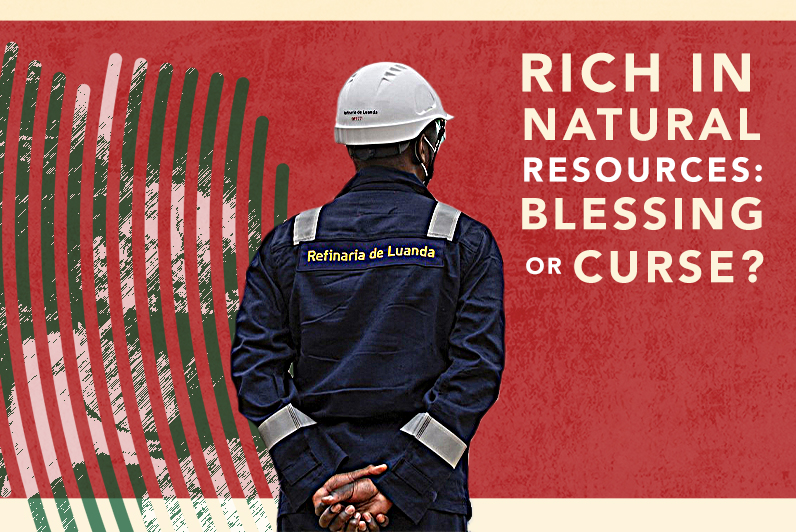](https://digitalmallblobstorage.blob.core.windows.net/wp-content/2021/02/GGA_RCurse_10Feb_FeatureImage.jpg)
*Resource Curse example*
Nigeria, a country with vast oil reserves, serves as a case in point. Despite being Africa's largest oil exporter, Nigeria has consistently ranked low in human development indexes due to corruption, mismanagement, and unequal distribution of resources. The ruling elite, in an effort to maintain power, have historically prioritized the allocation of oil revenues to their coalition members, leading to the persistence of widespread poverty and underdevelopment.
### Example 2: Populist Leaders and the Iron Law
The Iron Law also sheds light on the rise of populist leaders and their tactics for maintaining power. Populist leaders often capitalize on popular grievances by promising to address the needs of the "common people." Once in power, these leaders typically prioritize the interests of their coalition members over the broader population.
[](https://demos-h2020.eu/uploads/images/fotok%20%28website%2C%20conference%2C%20social%20event%2C%20tk%20building%29/oliver-martin-policy-parties2.png)
*Populist leaders and political strategies*
For instance, former Brazilian President Jair Bolsonaro gained popularity by positioning himself as an outsider who would "clean up" corruption and defend traditional values. However, once in power, he surrounded himself with like-minded allies and prioritized the interests of his coalition, often at the expense of the broader population. This included relaxing environmental regulations, favoring agribusiness interests, and weakening institutions that could hold him and his allies accountable for wrongdoing.
## Conclusion
The Iron Law offers a compelling framework for understanding political dynamics and leadership behaviors. It highlights the inherent tension between a leader's desire for political survival and the provision of public goods. The law demonstrates that, irrespective of the political system, leaders will prioritize their coalition's interests over those of the broader population.
Exploring the Iron Law can lead to further insights into the nature of political power and the complex interplay between leaders and their supporting coalitions. By deepening our understanding of the Iron Law, we can better anticipate and respond to the dynamics of political systems, informing meaningful policy interventions and institutional reforms.
### Further Exploration
For those interested in delving deeper into the Iron Law and its implications, consider the following avenues:
- Analyzing other case studies that illustrate the dynamics of the Iron Law in various political contexts (e.g., case studies of successful social welfare systems that prioritize public goods)
- Examining the role of institutions and governance structures (both formal and informal) in shaping the behavior of leaders and their coalitions
- Investigating the potential for policy interventions and institutional reforms that could mitigate the adverse effects of the Iron Law
- Exploring the role of civil society and public awareness in influencing political priorities and holding leaders accountable for their actions
By engaging in these and other related topics, students can broaden their understanding of political dynamics and contribute to a more informed, equitable, and accountable political landscape.
Last updated: 2024-06-01
Related Books

Related Knowledges