### External Factors: The Overlooked Power in The Dictator's Handbook
[](https://m.media-amazon.com/images/I/71iufTdpaEL._AC_UF1000,1000_QL80_.jpg)
*The Dictator's Handbook book cover*
_The Dictator's Handbook_, written by Bruce Bueno de Mesquita and Alastair Smith, sheds light on the often misunderstood world of political power dynamics. The book explores the idea that political leaders are primarily motivated by the maintenance and expansion of their personal power. In this context, understanding 'External Factors' is crucial, as they significantly influence the calculus of political leaders and how they wield power.
##### Core Concepts
External factors are elements that lie outside the direct control of a political leader but still significantly impact their decision-making calculus. These factors encompass:
[](https://media.licdn.com/dms/image/C4E12AQEkI6gBT5RrWg/article-cover_image-shrink_600_2000/0/1520222845125?e=2147483647&v=beta&t=96grWpGei5VyjO7wCckzC8C33PainkgJeYUhocp7pl4)
*Global economic influence on politics*
1. **International pressure**: The influence of foreign governments, international organizations, and global public opinion that encourages or discourages certain actions by domestic political leaders.
2. **Economic conditions**: The health of a nation's economy, including resource availability, global market forces, and international trade relationships that may either empower or constrain a leader's choices.
3. **Geographic features**: Physical attributes of a country, such as borders, terrain, and natural resources that can impact a leader's strategic decision-making.
4. **Social movements and public opinion**: The collective beliefs, attitudes, and actions of a population, both within and beyond a country's borders, that a leader must consider in their decision-making.
##### Relevance of External Factors
An in-depth understanding of external factors is essential for comprehending the choices, strategies, and foreign policies of political leaders. External factors form a vital component of the complex interactions between a leader and their supporting coalition, with significant implications for political stability and regime longevity. Ignoring external factors can lead to incomplete or flawed analysis of political scenarios, outcomes, and potential policy interventions.
##### Example 1: Iran's Nuclear Program and International Sanctions
Iran's pursuit of a nuclear program exemplifies the power of external factors. Throughout the 2000s and early 2010s, Iran was subject to multiple rounds of international sanctions imposed by the United Nations Security Council, the United States, and the European Union. These sanctions aimed to deter Iran from developing nuclear weapons by targeting its economy, including energy, financial, and shipping industries.
These international pressures can be considered an external factor that influenced the decision-making calculus of Iranian political leaders. As a direct consequence of the sanctions, the Iranian government faced significant economic challenges, including inflation, unemployment, and reduced oil exports. External pressure from international actors, such as the United States and the European Union, gave Iranian political leaders two clear options: either abandon the nuclear program and receive sanctions relief or continue the nuclear program and face devastating economic consequences.
[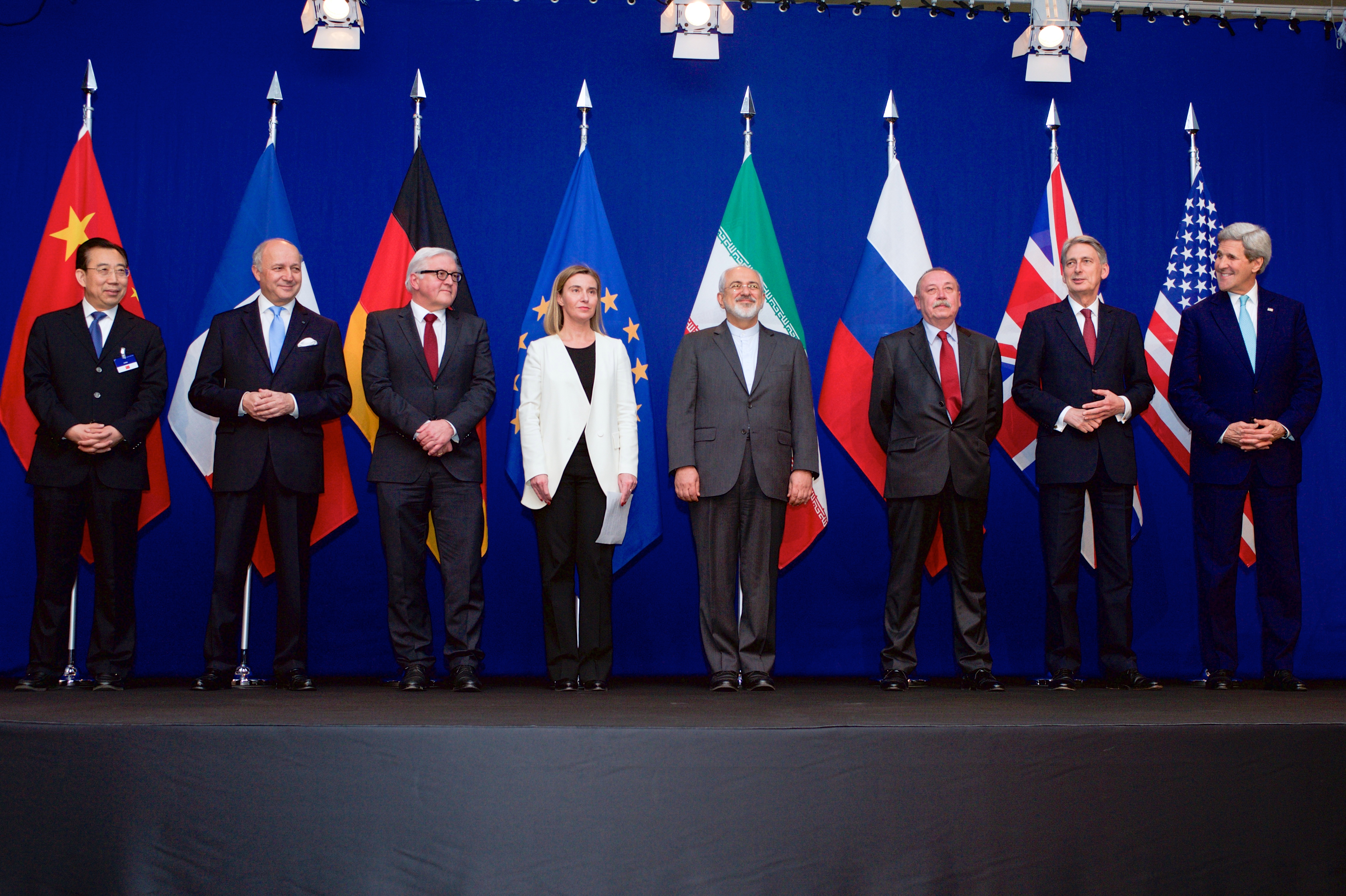](https://upload.wikimedia.org/wikipedia/commons/4/4a/Negotiations_about_Iranian_Nuclear_Program_-_the_Ministers_of_Foreign_Affairs_and_Other_Officials_of_the_P5%2B1_and_Ministers_of_Foreign_Affairs_of_Iran_and_EU_in_Lausanne.jpg)
*Iran nuclear deal negotiations*
In 2015, the Joint Comprehensive Plan of Action (JCPOA), or the Iran nuclear deal, was reached between Iran and the P5+1 group (United States, United Kingdom, France, China, Russia, and Germany). Iran agreed to restrict its nuclear program in return for partial sanctions relief. However, in 2018, the United States unilaterally withdrew from the JCPOA under the Trump administration, reimposing sanctions on Iran. Consequently, the Iranian economy once again bore the brunt of international pressure, causing Iran to adopt a more aggressive and expansionist foreign policy in the region and restart its nuclear program.
##### Example 2: Venezuela's Decline Amidst Political and Economic Crises
Venezuela's descent into political chaos, humanitarian crises, and economic collapse under President Hugo Chávez and his successor, Nicolás Maduro, provides another useful illustration of the impact of external factors. At the heart of Venezuela's downfall was a toxic mix of political mismanagement, unchecked populism, misplaced economic policies, and external factors.
The global oil market dynamics and economic mismanagement were significant external factors shaping Venezuela's crisis. As a major oil exporter, Venezuela's economy heavily relied on the revenue generated from oil sales. However, fluctuations in global oil prices impacted the government's revenue generation and income distribution policies. When global oil prices started plummeting in 2014, the Venezuelan government faced a severe revenue shortfall that prompted Chávez's successor, Maduro, to adopt a series of disastrous economic policies, including strict currency controls and massive public spending, to maintain political power.
[](https://cdn.cfr.org/sites/default/files/styles/immersive_image_3_2_desktop_2x/public/image/2024/07/VenezuelaOil_BG.webp)
*Venezuela economic crisis*
Another influential external factor was international political opposition. In 2015, the Venezuelan opposition won a parliamentary supermajority in the National Assembly, threatening Maduro's political power base. This newfound opposition majority gained the international community's support in their attempt to remove Maduro from office. As a response, Maduro and his supporters within the military and judiciary, undermined the democratically elected National Assembly, suspended the recall referendum process, and created a rival legislative body, the Constituent Assembly.
Subsequently, Venezuela faced devastating economic consequences. Hyperinflation, widespread poverty, food shortages, and mass migration drove Venezuelans to seek better opportunities and escape the escalating humanitarian crisis. In response to the unfolding political and humanitarian crises, international actors imposed sanctions and freezing assets, further restricting Venezuela's access to global markets and economic assistance.
##### Further Exploration
To deepen students' understanding of 'External Factors,' it is recommended they consider the following avenues for further exploration:
1. **Case studies**: Analyze the impact of external factors in various political contexts and periods, such as the Arab Spring protests and their aftermath, Russia's annexation of Crimea, and China's Belt and Road Initiative.
2. **Comparative analyses**: Compare and contrast the responses of different political leaders facing similar external factors. An example would be exploring the contrasting strategies employed by North Korea's Kim Jong-un and Iran's political leaders amidst international sanctions and military threats.
3. **Simulation exercises**: Encourage students to engage in role-playing exercises or simulations to replicate political scenarios in which external factors play a significant role. This experiential learning approach may help to solidify their understanding of external factors' influence on political decision-making.
4. **Expert interviews**: Arrange for video conferences or Q&A sessions with experts in the fields of political science, international relations, and diplomacy. Inquire about their perspectives on the most critical external factors influencing contemporary political dynamics.
In conclusion, a deep understanding of external factors in the context of political dynamics is essential for navigating the intricate and interconnected world in which we live. External factors play a crucial role in shaping the motivations, strategies, and outcomes of political leaders and the systems they rule. By analyzing and accounting for the complexities of these forces, students can augment their critical thinking and analytical abilities, preparing them to address pressing global issues competently and confidently.
Last updated: 2024-10-25
Related Books
Related Knowledges