## Coercive Means: Understanding the Power Dynamics in Politics through The Dictator's Handbook
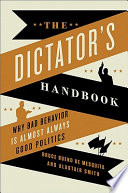
*Coercive means* is a fundamental concept in the study of politics and power dynamics. According to Bruce Bueno de Mesquita and Alastair Smith in their groundbreaking book *The Dictator's Handbook: Why Bad Behavior is Almost Always Good Politics*, coercive means refer to the tools and strategies used by political leaders to maintain their rule and control over a population, primarily through the manipulation and intimidation of key individuals or groups.
[](https://freedomhouse.org/sites/default/files/2022-02/FIW_2022_Photo_Myanmar_Salute_Protest_WEB.jpg)
*Coercive means in politics*
This concept is crucial for understanding how political systems function, particularly in authoritarian regimes. The ability of leaders to wield coercive means shapes the incentives and behavior of those within the political system, ultimately determining the stability and longevity of the regime.
### The Core Concept of Coercive Means
At its core, the concept of coercive means revolves around the control of valuable resources and the ability to use threats and violence to maintain this control. Coercive means can take various forms, including:
1. **Military and police forces:** These institutions serve as the primary enforcers of a leader's will, ensuring compliance and maintaining order through force if necessary.
2. **Intelligence agencies:** These organizations gather information on potential threats and dissenters, allowing leaders to preemptively neutralize opposition and control the narrative.
3. **Legal systems:** Leaders can manipulate the legal system to punish or reward individuals or groups, further reinforcing their control.
4. **Economic leverage:** Through the control of valuable resources or the ability to grant or withhold financial benefits, leaders can create dependencies and alliances that shore up their power base.
[](https://m.media-amazon.com/images/I/715rmDp6ysL._AC_UF1000,1000_QL80_.jpg)
*Types of coercive means*
### Practical Implications and Examples
To illustrate the practical implications of coercive means, let us examine a few real-world examples.
#### Case Study 1: North Korea
North Korea's totalitarian regime has long relied on coercive means to maintain power. The ruling Kim family has employed a vast network of surveillance and repression, including:
- A pervasive security apparatus responsible for monitoring and suppressing any signs of dissent.
- A brutal prison camp system where perceived enemies of the state are detained and punished.
- A state-controlled propaganda machine that relentlessly promotes the cult of personality surrounding the Kim family, while also suppressing any information that could undermine their rule.
[](https://dims.apnews.com/dims4/default/d9e7a8d/2147483647/strip/true/crop/6000x4000+0+0/resize/599x399!/quality/90/?url=https%3A%2F%2Fassets.apnews.com%2Fe0%2Fe7%2F509ea327f63ad244c2eeff2ce0cf%2Fa382b508936d48f2a8b4565f552382be)
*North Korea surveillance and repression*
These coercive measures have allowed the Kim regime to maintain its grip on power for decades, despite widespread poverty, political isolation, and international sanctions.
#### Case Study 2: Russia under Vladimir Putin
Under Vladimir Putin's rule, Russia has increasingly relied on coercive means to maintain control both domestically and internationally. At home, the Kremlin has:
- Manipulated elections and cracked down on opposition figures, effectively silencing dissent.
- Utilized state-owned media outlets and online propaganda campaigns to shape public opinion and discredit critics.
- Employed punitive measures, such as imprisonment and harassment, to intimidate and control political opponents, non-governmental organizations, and the business community.
Abroad, Russia has resorted to various coercive measures to project its power and influence, including:
- Cyberattacks and disinformation campaigns aimed at destabilizing democratic institutions in Western countries.
- The annexation of Crimea and involvement in the ongoing conflict in eastern Ukraine, demonstrating Russia's willingness to use military force to achieve its geopolitical objectives.
- Economic pressure and energy blackmail, particularly against neighboring countries in Eastern Europe and Central Asia, to secure political concessions and advance Russian interests.
[](https://fox59.com/wp-content/uploads/sites/21/2024/03/65f4ef51d0b628.54464632.jpeg?w=2560&h=1440&crop=1)
*Russia under Vladimir Putin*
These examples demonstrate how leaders can employ coercive means to manipulate and control their domestic populations and extend their influence globally.
### Conclusion and Further Exploration
Understanding the concept of coercive means is essential for making sense of power dynamics in political systems. Through the manipulation and control of valuable resources and the use of threats and violence, leaders can maintain their hold on power, suppress dissent, and pursue their objectives. The examples of North Korea and Russia under Putin illustrate the various forms that coercive means can take and the practical implications of their use.
To further explore the topic of coercive means and its role in political systems, consider the following avenues of inquiry:
- Investigate the relationship between coercive means and political legitimacy, examining how leaders balance the use of force with the need to maintain popular support.
- Analyze the historical development and evolution of coercive means throughout history, from ancient empires to modern nation-states.
- Explore the ethical and moral implications of coercive means, considering the human costs of authoritarian rule and the challenges of promoting democracy and human rights in repressive regimes.
- Examine the role of international relations and global governance in addressing the use of coercive means by authoritarian leaders, considering the potential for diplomacy, sanctions, and military intervention to curb abuses of power.
By deepening your understanding of coercive means and its role in political systems, you can gain valuable insights into the complex and dynamic world of power and politics.
Last updated: 2024-05-29
Related Books
Related Knowledges