Deterrence Strategy: Preventing Adversaries from Taking Undesirable Actions
=========================================================================
Introduction
------------
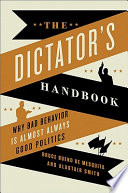
Deterrence strategy is a crucial concept in political science and international relations. At its core, deterrence strategy involves preventing adversaries from taking undesirable actions by credibly threatening to retaliate with sufficiently unacceptable costs if they do so. In "_The Dictator's Handbook_," authors Bruce Bueno de Mesquita and Alastair Smith delve into the intricacies of deterrence by explaining how leaders make strategic decisions in the face of potential aggression.
The concept of deterrence is particularly relevant in today's globalized world, where nations and non-state actors continuously interact and compete for resources, power, and influence. Deterrence strategy serves as a cornerstone in maintaining international peace, security, and stability. Understanding the nuances of deterrence is essential for policymakers, diplomats, military strategists, and scholars of international relations.
Core Concepts and Components
----------------------------
Effective deterrence relies on three core components:
1. **Credible threat:** Firm resolve and commitment from the deterring party to impose unacceptable costs if the adversary takes undesirable actions.
2. **Capability:** The deterring party's demonstrated or perceived ability to impose costs on the adversary.
3. **Communication:** An unambiguous message from the deterring party that the costs of aggression would be severe.
These components help ensure that the adversary perceives the risks and potential costs of their actions as outweighing the potential benefits, thus deterring them from taking undesirable acts.
Practical Implications and Examples
---------------------------------
### 1. Nuclear Deterrence: The Cold War Era
The most well-known example of successful deterrence is the Cold War between the United States and the Soviet Union. Both superpowers relied on nuclear deterrence to prevent the other from launching a nuclear attack. As both nations had (and still have) substantial nuclear arsenals, they were (and continue to be) capable of imposing unacceptable costs on each other. Additionally, the threat was credible, as both the US and the Soviet Union made it clear that they would retaliate with devastating force in the event of a nuclear attack. The communication of this intent was explicit and consistent, forming the basis of mutual deterrence during the Cold War.
### 2. Conventional Deterrence: The Korean Peninsula
Although the Korean Peninsula remains technically in a state of war, the Korean Demilitarized Zone (DMZ) has served as a successful conventional deterrence mechanism since the end of the Korean War. South Korea, together with the United States, possesses a significant advantage in conventional military capabilities. This superiority, coupled with the U.S. extended deterrence commitment, has led North Korea to conclude that any large-scale military aggression would result in unacceptable losses. Thus, the credible threat, capability, and communication components of deterrence have contributed to maintaining a fragile peace on the Korean Peninsula. However, North Korea's pursuit of nuclear weapons and long-range missile capabilities could undermine the stability of the Korean Peninsula, as the political dynamics might shift from relying on conventional to nuclear deterrence.
### 3. Deterrence Failure: Munich Agreement and Hitler's Invasion of Poland
The notorious example of a failed deterrence strategy occurred in 1938 with the Munich Agreement, where France and the United Kingdom appeased Adolf Hitler by granting him control over Czechoslovakia's Sudetenland. In this case, the Western powers underestimated the intent, ambition, and ruthlessness of the Nazi regime. The appeasement strategy neglected the critical components of credible threat and communication. The Allies failed to convey their commitment and ability to stop German aggression in its tracks, leading Hitler to believe that he could continue his expansionist policies at minimal cost. As military historians often emphasize, the Munich Agreement served as a lesson in the potential dangers of miscalculating aggressive dictators' intentions, ambitions, and resolve.
Key Insights and Further Exploration
-----------------------------------
To realize a successful deterrence strategy, a deterring party must employ the three core concepts (credible threat, capability, and communication) effectively. Failure to perform all three may result in deterrence failure, as in the case of the Munich Agreement. Understanding deterrence is essential for decision-makers and scholars alike, to prevent potential miscalculations in international relations that may lead to devastating consequences.
For college students interested in exploring further, here are some avenues for further research:
1. Study the literature on deterrence theory, including seminal works by Thomas Schelling, Glenn Snyder, and Robert Jervis.
2. Examine specific historical and contemporary cases of deterrence, such as Cold War nuclear deterrence between the United States and the Soviet Union, the Cuban Missile Crisis, the Sino-Indian border dispute, and the South China Sea territorial disputes.
3. Investigate the role of extended deterrence in the protection of allies and its implications for regional security.
4. Analyze the implications of emerging technologies, such as cyber weapons, artificial intelligence, and autonomous systems, on deterrence strategies.
5. Assess the relevance of deterrence concepts in addressing non-state threats, like transnational terrorism, cyber-terrorism, and international criminal organizations.
Last updated: 2024-04-07
Related Books
Related Knowledges