### Reforms Necessary: A Critical Analysis of Financial Regulation
In the book "Too Big to Fail," Andrew Ross Sorkin provides a comprehensive and engaging account of the 2008 financial crisis, focusing on the government's response to the collapse of several major financial institutions. Among the many critical issues discussed in the book, one of the most prominent themes is the need for substantial reforms in financial regulation. This article will delve into the core concepts of 'Reforms Necessary,' its relevance in today's financial landscape, and examples of its practical implications.
[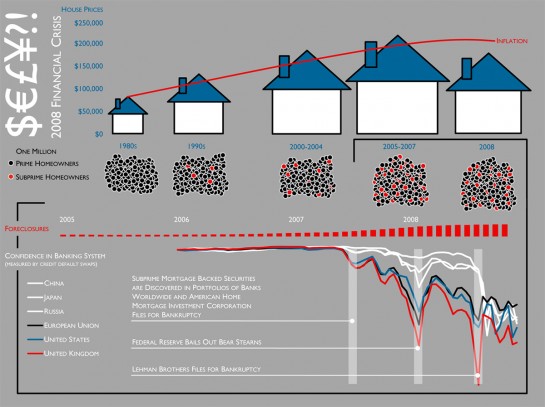](https://flowingdata.com/wp-content/uploads/2009/03/aler-recession-fullsize-545x407.jpg)
*2008 Financial Crisis*
#### Introduction to Reforms Necessary
The 2008 financial crisis exposed numerous vulnerabilities in the financial system, prompting a heated debate on the need for regulatory reforms. Reforms Necessary entails a thorough reevaluation of financial regulations to address these vulnerabilities and prevent future crises. This concept encompasses several key areas, such as:
1. Strengthening capital and liquidity requirements for financial institutions
2. Implementing robust risk management practices
3. Addressing systemic risk through improved oversight and resolution mechanisms
4. Enhancing transparency and disclosure requirements
5. Promoting market discipline through appropriate incentives and penalties
These reforms have become increasingly relevant in the post-crisis era, shaping the regulatory landscape and fostering a more resilient financial system.
#### Systemic Risk and Oversight Mechanisms
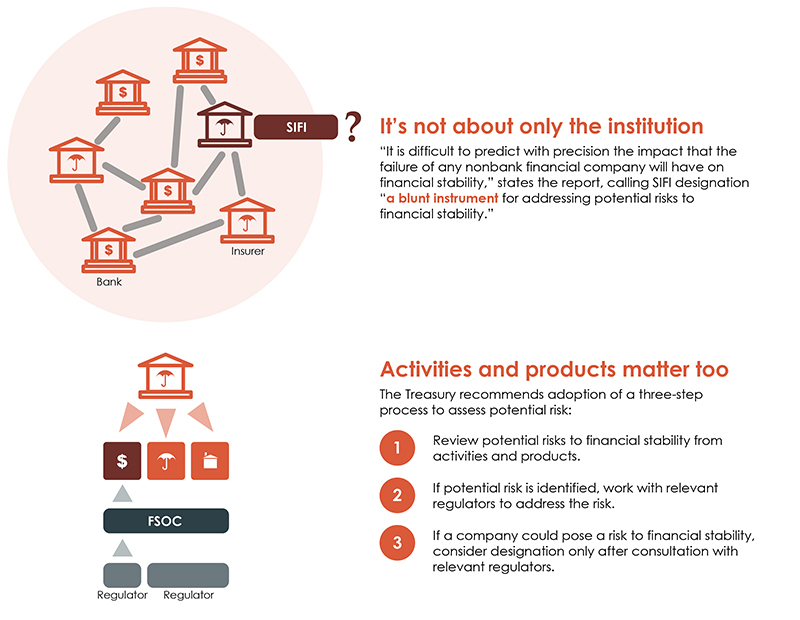
One of the most significant challenges highlighted in "Too Big to Fail" is the issue of systemic risk. Systemic risk refers to the potential for a single institution's failure to trigger a cascade of failures throughout the financial system, with severe consequences for the broader economy. To address this challenge, regulatory reforms have focused on enhancing oversight mechanisms and resolution tools.
[](https://www.kramerlevin.com/a/web/34497/8qfxUk/kl-fsoc-sifi-infographic-72-dpi-thumbnail.jpg)
*Systemic Risk Explained*
For instance, the Dodd-Frank Wall Street Reform and Consumer Protection Act established the Financial Stability Oversight Council (FSOC), a body responsible for monitoring systemic risk and promoting financial stability. By identifying and monitoring systemically important financial institutions (SIFIs), the FSOC can ensure that these entities are subject to heightened scrutiny and stricter regulations. In addition, the Orderly Liquidation Authority (OLA) was created to facilitate the orderly resolution of SIFIs without causing widespread disruption.
Another example of addressing systemic risk is the introduction of Total Loss-Absorbing Capacity (TLAC) requirements. TLAC requires global systemically important banks (G-SIBs) to maintain a minimum amount of debt that can be converted into equity during resolution. This buffer ensures that G-SIBs have sufficient resources to absorb losses and recapitalize without destabilizing the financial system.
#### Capital and Liquidity Requirements
Strengthening capital and liquidity requirements is another critical aspect of Reforms Necessary. The financial crisis revealed that many financial institutions were undercapitalized and held insufficient liquid assets, exacerbating the panic and hindering their ability to weather the storm.
Basel III, an international regulatory framework developed in response to the crisis, significantly raised the capital and liquidity requirements for financial institutions. For instance, it introduced a new capital conservation buffer, a countercyclical capital buffer, and a leverage ratio to ensure banks maintain a more robust capital base. Additionally, Basel III established a liquidity coverage ratio (LCR) and a net stable funding ratio (NSFR) to improve banks' resilience to liquidity stress.
[](https://www.investopedia.com/thmb/6U0UTpEvQ2XO2G-bqblcTmDXXEI=/1500x0/filters:no_upscale%28%29:max_bytes%28150000%29:strip_icc%28%29/basell-iii-final-dac3d358ac6847b2b8387ba62d15eb26.jpg)
*Basel III Framework Overview*
#### Incentives and Discipline
Reforms Necessary also focuses on promoting market discipline by aligning incentives and establishing appropriate penalties. This involves addressing the "too big to fail" problem, where certain institutions are perceived as being implicitly backed by the government, leading to moral hazard and excessive risk-taking.
One proposed solution is the introduction of a tax on leverage, which would discourage financial institutions from becoming overly reliant on debt. Additionally, the implementation of living wills, or resolution plans, would force financial institutions to develop credible strategies for their orderly resolution in the event of distress. This would help minimize the potential for systemic disruption and ensure that institutions, rather than taxpayers, bear the costs of their failures.
#### Case Studies: Implementing Reforms Necessary
To illustrate the practical implications of Reforms Necessary, consider the following case studies:
1. **Washington Mutual's Collapse**: The demise of Washington Mutual, once the largest savings and loan association in the United States, underscores the need for heightened scrutiny and oversight. The bank's aggressive lending practices, inadequate risk management, and insufficient capital led to its failure. Implementing reforms such as enhanced prudential standards and stress tests could have identified and addressed these vulnerabilities before they resulted in a systemic crisis.
2. **The Lehman Brothers Bankruptcy**: The bankruptcy of Lehman Brothers serves as a stark reminder of the importance of effective resolution mechanisms. Had a resolution authority like the OLA been in place, Lehman's collapse might have been managed in a more orderly fashion, mitigating the fallout and reducing the impact on the broader financial system.
[](http://cdn.statcdn.com/Infographic/images/normal/15454.jpeg)
*Case Study: Lehman Brothers Bankruptcy*
#### Conclusion: Key Insights and Further Exploration
Reforms Necessary remains a vital aspect of financial regulation, addressing the key vulnerabilities exposed by the 2008 financial crisis and fostering a more resilient financial system. By strengthening capital and liquidity requirements, enhancing oversight mechanisms, promoting market discipline, and addressing systemic risk, regulators aim to prevent future crises and protect the broader economy.
For further exploration, students are encouraged to research the following topics:
1. The role of credit rating agencies in the financial crisis and proposed reforms to enhance their accountability and transparency.
2. The impact of the Volcker Rule on proprietary trading and the potential unintended consequences for market liquidity and financial stability.
3. The implications of the EU's Banking Union, including the Single Supervisory Mechanism and the Single Resolution Mechanism, for financial stability and cross-border cooperation.
By delving deeper into these issues, students can gain a more comprehensive understanding of the complexities and challenges associated with implementing Reforms Necessary.
Last updated: 2024-06-24
Related Books

Related Knowledges