# The Federal Reserve as the Lender of Last Resort
## Introduction
[](https://upload.wikimedia.org/wikipedia/commons/4/49/Ec_8_%2826088200676%29.jpg)
*Federal Reserve Building*
The Federal Reserve, colloquially known as "the Fed," is the central banking system of the United States, responsible for conducting monetary policy and supervising financial institutions. Among its multiple roles and responsibilities, the Fed is often perceived as the "lender of last resort." This phrase, coined by Sir Walter Bagehot in his 1873 book *Lombard Street: A Description of the Money Market*, refers to a lender that extends credit during times of financial crisis, when other lenders are unwilling or unable to do so. In this educational content, we will delve into the intricacies of the Fed's role as the lender of last resort, exploring its historical applications, practical implications, and the controversies that surround it.
### Core Concepts and Relevance
The role of the lender of last resort is crucial in maintaining financial stability during times of distress. As market uncertainties increase and financial institutions struggle to obtain funding from other sources, the Fed may intervene by extending credit to stabilize the financial system. The relevance of the Fed's role as the lender of last resort is particularly salient in the context of the 2008 financial crisis, as comprehensively documented in Andrew Ross Sorkin's *Too Big to Fail*. By understanding the mechanisms behind the Fed's lending practices and its implications on the overall economy, students can gain valuable insights into the complex interplay between central banks, financial institutions, and financial crises.
## Applications of the Fed's Role as the Lender of Last Resort
### The Great Depression and the Birth of the Fed's Expanded Role
The Great Depression (1929-1939) provides an instructive historical backdrop for understanding the importance of the lender of last resort. Prior to the disaster, the Federal Reserve exhibited reluctance in extending credit as the lender of last resort during the early stages of the crisis. As a result, the banking system suffered from a rapid wave of bank failures, ultimately culminating in the loss of one-third of the nation's banks. It took over a decade for the United States to fully recover from the catastrophic economic downturn.
[](http://www.federalreservehistory.org/-/media/images/banking_panic_1930_31_3_720x450.jpg)
*The Great Depression Banking Crisis*
The Federal Reserve Act of 1932 significantly expanded the central bank's authorities, endowing it with the mandate to serve as the lender of last resort for the nation's financial institutions. This marked a departure from the earlier notion of the "Real Bills Doctrine," which asserted that the central bank ought to exclusively facilitate the discounting of self-liquidating commercial loans. The pivotal shift in the legislative landscape solidified the Federal Reserve's role as the lender of last resort, thereby laying the groundwork for addressing future financial crises.
### The 2008 Financial Crisis: A Case Study
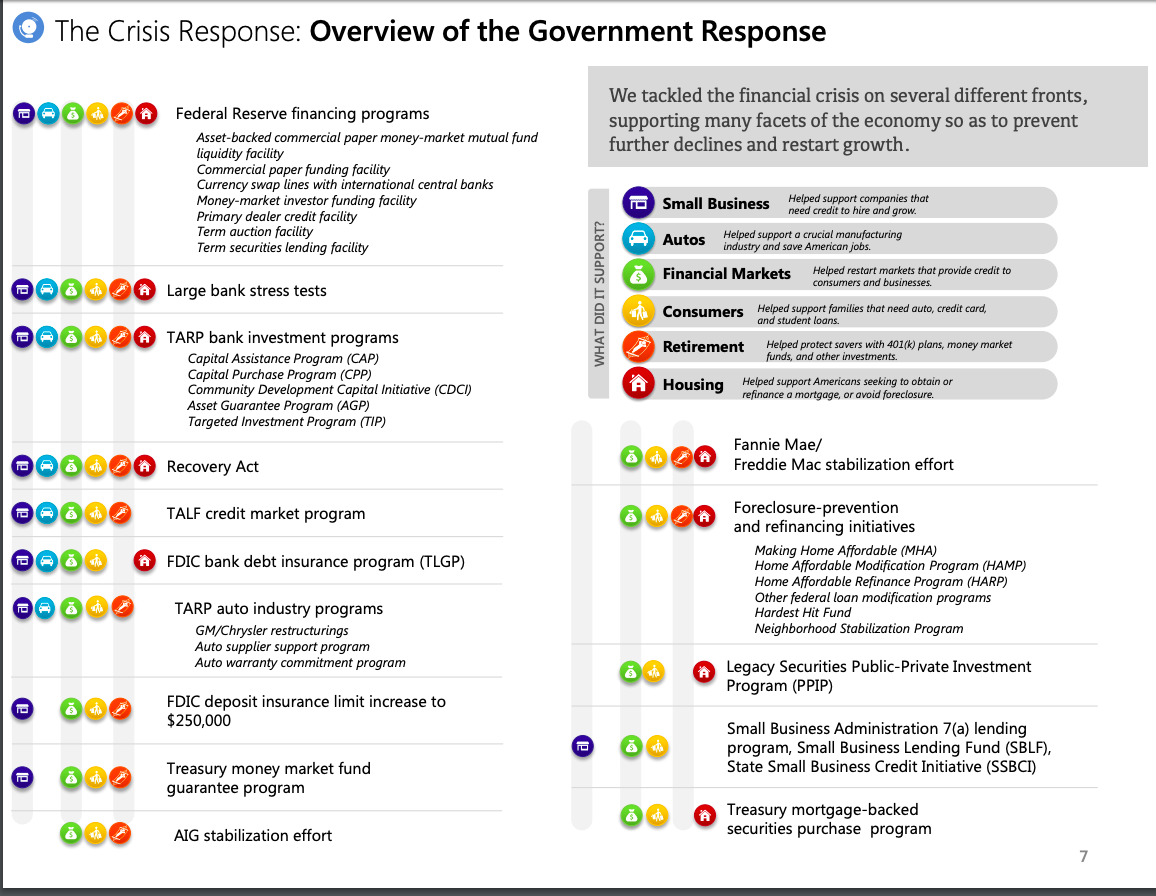
The 2008 financial crisis, comprehensively documented in Andrew Ross Sorkin's *Too Big to Fail*, offers a recent example of the Federal Reserve's role as the lender of last resort. Faced with the collapse of Lehman Brothers in September 2008 and the potential unraveling of the global financial system, the Federal Reserve, in conjunction with other central banks and financial regulators, intervened with a series of aggressive measures.
[](https://ypfs.som.yale.edu/sites/default/files/inline-images/Chart1_US%20Gov%20Response.png)
*2008 Financial Crisis Intervention*
First, the Federal Reserve swiftly responded by establishing multiple liquidity facilities aimed at alleviating the strains in the money markets and ensuring the smooth functioning of financial institutions. Examples of such facilities include the Term Auction Facility (TAF) and the Primary Dealer Credit Facility (PDCF). These programs allowed financial institutions to borrow funds directly from the Federal Reserve, effectively serving as the lender of last resort and potentially averting the onset of a full-blown financial panic.
Second, the Federal Reserve, along with other central banks, provided substantial liquidity to the global financial system via coordinated swap lines. This unprecedented collaboration facilitated the exchange of foreign currency between participating central banks in a concerted effort to alleviate the strains in the global financial markets. Consequently, these measures contributed to the stabilization of the global financial system and mitigated the potential spillovers of the crisis onto the broader economy.
### Controversies and Criticisms Surrounding the Fed's Role as the Lender of Last Resort
Despite its seemingly indispensable role in preserving financial stability, the Federal Reserve's role as the lender of last resort remains the subject of vigorous debate and criticisms. Critics argue that the Fed's lending practices may induce moral hazard, the tendency for market participants to engage in imprudent behavior in the presence of a perceived safety net. By providing a "backstop" for financial institutions during financial crises, the Federal Reserve's actions may inadvertently encourage market actors to take on excessive risks, essentially perpetuating the very conditions that may engender future crises.
Furthermore, critics underscore the potential adverse implications of the Fed's lending practices on income and wealth distributions. By extending credit to the largest and most influential financial institutions, the Federal Reserve may ultimately exacerbate prevailing disparities in resources and influence, thereby reinforcing the "too big to fail" phenomenon.
In conclusion, the Federal Reserve's role as the lender of last resort constitutes a crucial aspect of its broader mandate as the nation's central bank. By providing a vital source of liquidity during times of financial distress, the Fed can contribute to the stability and continuity of the financial system. However, the complexities and controversies surrounding the Federal Reserve's involvement in the financial system underscore the need for careful deliberation and assessment of its lending practices.
As students of economics and finance, further exploration of the topic can entail an examination of alternative policies and strategies adopted by other central banks in fulfilling their role as the lender of last resort, as well as potential reforms and adjustments in the legislative and regulatory landscape to optimize the Fed's lending practices. Additionally, a comparative analysis of the relative merits and drawbacks of various lender of last resort doctrines can shed light on the evolving nature of central banking and its critical role in promoting financial stability.
Last updated: 2024-04-17
Related Books

Related Knowledges