Too Big to Fail: The Core Concept and Relevance
==============================================
The term "Too Big to Fail" (TBTF) refers to the idea that certain financial institutions are so interconnected and critical to the global financial system that their failure could cause unprecedented economic chaos. As a result, governments feel compelled to bail out these institutions during a crisis to prevent systemic collapse.
[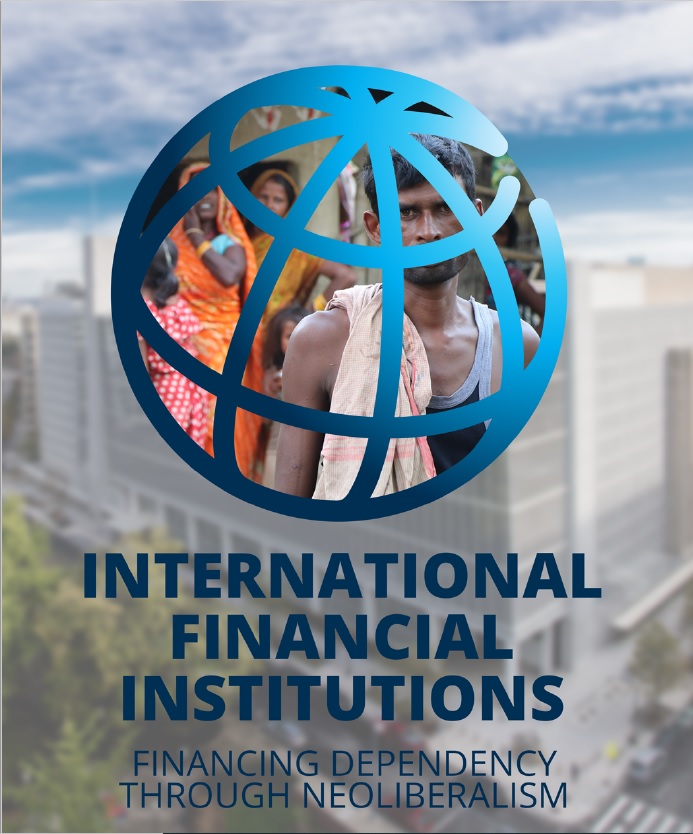](https://realityofaid.org/wp-content/uploads/2020/05/IFIs.jpg)
*Major Financial Institutions*
"Too Big to Fail" is a central theme in Andrew Ross Sorkin's Pulitzer Prize-winning book, "Too Big to Fail: The Inside Story of How Wall Street and Washington Fought to Save the Financial System—and Themselves." Sorkin's book focuses on the 2008 financial crisis and the bailout of several TBTF institutions, including Bear Stearns, Lehman Brothers, AIG, and others.
The concept of TBTF remains incredibly relevant today, as many financial institutions still hold systemic importance. This topic is essential for college students to understand, as it has far-reaching implications in economics, business, and public policy.
Understanding the TBTF Problem: Examples and Applications
=======================================================
1. The 2008 Financial Crisis
---------------------------
[](https://www.investopedia.com/thmb/HMCFEBHaSf1a-Zyc82DhzyAhT44=/1500x0/filters:no_upscale%28%29:max_bytes%28150000%29:strip_icc%28%29/dotdash_INV-final-Stock-Market-Crash-July-2021-01-88a96c7bec2846dd9986a5777c089417.jpg)
*2008 Financial Crisis Timeline*
The 2008 financial crisis demonstrated the consequences of TBTF institutions' risk-taking behavior and the moral hazard that arises when these institutions are bailed out.
In the early 2000s, financial institutions engaged in risky subprime mortgage lending, securitization, and derivatives trading. These practices led to an asset price bubble, which eventually burst because of the unsustainable nature of the underlying mortgages and securities. AIG, Lehman Brothers, and Bear Stearns were at the center of this crisis.
* **AIG:** The federal government bailed out AIG, the world's largest insurer, in September 2008 with an $85 billion loan that eventually grew to $182 billion. AIG's collapse would have caused a chain reaction of insolvency for many counterparties that relied on AIG's creditworthiness.
* **Lehman Brothers:** Lehman Brothers filed for bankruptcy on September 15, 2008—a pivotal moment in the 2008 financial crisis. As a major player in the global financial markets, Lehman's insolvency caused significant losses to many other financial institutions and contributed to a severe market panic.
* **Bear Stearns:** The federal government facilitated JPMorgan Chase's acquisition of Bear Stearns in March 2008 through a $29 billion loan from the Federal Reserve. The collapse of Bear Stearns triggered concerns regarding the resilience of the financial system and was a warning sign of the broader crisis that unfolded in the following months.
2. Shadow Banking and Systemic Risk
-----------------------------------
[](https://www.investopedia.com/thmb/1Wx6_XGxET33huFYE9jHiXtRnCI=/1500x0/filters:no_upscale%28%29:max_bytes%28150000%29:strip_icc%28%29/shadow-banking-system.asp-FINAL-2655898ea406468ca0378018428158a8.png)
*Shadow Banking System Overview*
Another application of the TBTF problem is the shadow banking sector, which includes non-bank financial intermediaries like money market funds, hedge funds, and broker-dealers. While these entities do not have the same level of federal protection as traditional banks, their interconnections and substantial asset holdings can pose significant systemic risks.
For example, the Reserve Primary Fund, a large U.S. money market fund, "broke the buck" in September 2008 when its net asset value (NAV) fell below $1. This event caused panic among investors and exacerbated the 2008 financial crisis. Although the Reserve Primary Fund was not a TBTF institution, its failure highlighted the systemic risks posed by the shadow banking sector.
3. Potential Solutions: Increasing Market Discipline and Implementing Structural Reforms
--------------------------------------------------------------------------------------
[](https://www.investopedia.com/thmb/JthOm5S57POQRUsXBr1cttVgZDM=/1500x0/filters:no_upscale%28%29:max_bytes%28150000%29:strip_icc%28%29/too-big-to-fail.asp-Final-3058aadb7f4643a1a3b0fdcc27ef8d58.jpg)
*Solutions to the TBTF Problem*
### Increasing Market Discipline
One potential solution to the TBTF problem is increasing market discipline and reducing moral hazard. This can be achieved by:
* **Ending government guarantees:** Complete elimination of TBTF status and government guarantees may promote more responsible risk-taking by financial institutions.
* **Implementing higher capital requirements:** Demanding that institutions hold more capital can protect the financial system by creating a buffer for losses, reducing the likelihood of insolvency, and increasing market discipline.
### Implementing Structural Reforms
Structural reforms can also address TBTF concerns. These reforms may include:
* **Separating commercial and investment banking:** Proponents argue that restoring the Glass-Steagall Act's provisions, which originally separated commercial and investment banking, can help mitigate TBTF risks.
* **Establishing orderly liquidation authority (OLA):** The Orderly Liquidation Authority, introduced by the Dodd-Frank Act, enables the Federal Deposit Insurance Corporation (FDIC) to resolve failing TBTF institutions. It allows for the orderly unwinding of these firms without causing significant disruption to the larger financial system.
Key Insights and Further Exploration
====================================
Understanding the "Too Big to Fail" phenomenon highlights the significance of the moral hazard TBTF institutions pose and the urgent need for reforms. The TBTF designation can lead to excessive risk-taking, distorted market competition, and negative consequences for taxpayers and the broader economy.
College students can explore TBTF-related subjects by:
* Comparing TBTF policies in different countries
* Examining the effect of TBTF on income and wealth inequality
* Investigating the impact of TBTF on government debt levels
* Debating potential solutions to the TBTF problem, such as resurrecting Glass-Steagall or promoting greater financial market competition
By examining these topics, students deepen their understanding of the TBTF problem and its implications for the economy, business, and public policy.
Last updated: 2024-04-06
Related Books

Related Knowledges