Moral Hazard: Core Concepts and Relevance
=========================================
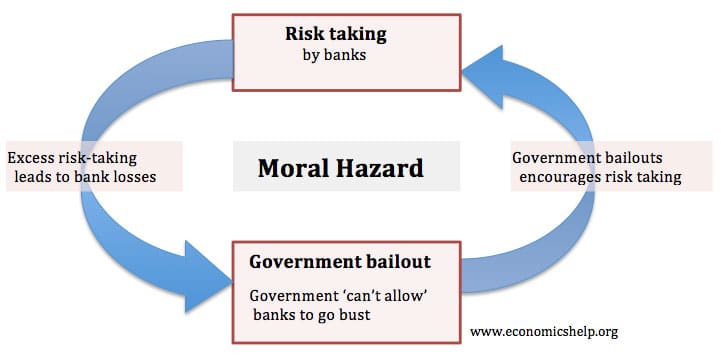
*Illustration of moral hazard in economics*
Moral hazard is a fundamental concept in economics and finance, which refers to the phenomenon where individuals or institutions engage in riskier behavior as they are protected from the full consequences of their actions. This concept is particularly relevant in the context of financial institutions and markets, as it highlights the potential for excessive risk-taking when institutions believe they are insulated from the negative outcomes of their decisions.
The concept of moral hazard has gained significant attention in the aftermath of the 2008 financial crisis, as it played a crucial role in shaping the behavior of financial institutions and regulatory bodies. The book "Too Big to Fail" by Andrew Ross Sorkin provides a detailed account of the 2008 financial crisis and highlights several instances where moral hazard contributed to the escalation of the crisis.
Examples and Applications of Moral Hazard
---------------------------------------
### 1. The 2008 Financial Crisis and the Role of Government Guarantees
One of the most prominent examples of moral hazard can be observed during the 2008 financial crisis. Financial institutions, such as investment banks and insurance companies, engaged in increasingly risky behavior as they believed that the government would bail them out in case of failure. This belief was reinforced by the existence of government guarantees, such as those provided by the Federal Deposit Insurance Corporation (FDIC) and the Federal Reserve.
As a result, financial institutions took on excessive leverage and invested in risky assets, such as mortgage-backed securities (MBS). When the housing market collapsed, these institutions were left with large losses and insufficient capital to absorb the shock. Consequently, the government was forced to intervene with massive bailout packages to prevent the collapse of the financial system.

*Government bailouts during the 2008 financial crisis*
### 2. The Role of Derivatives and Credit Default Swaps (CDS)
Another example of moral hazard can be observed in the use of derivatives and credit default swaps (CDS). These financial instruments were designed to help institutions manage risk by allowing them to transfer credit risk to other parties. However, the widespread use of CDS contributed to moral hazard by creating a false sense of security among financial institutions.
Financial institutions believed that they were protected against potential losses, as they could simply purchase CDS to offset the risk of default. This belief led institutions to engage in increasingly risky behavior, as they were no longer concerned about the potential consequences of their actions. However, when the housing market collapsed, the issuers of CDS were unable to meet their obligations, leading to a cascade of defaults and exacerbating the financial crisis.

*Credit Default Swaps as financial instruments*
### 3. The Role of Regulatory Capture and Lax Oversight
Moral hazard can also be observed in the relationship between financial institutions and regulatory bodies. Regulatory capture occurs when regulatory bodies become overly influenced by the institutions they are supposed to regulate. This can lead to lax oversight and a failure to enforce appropriate safeguards, allowing financial institutions to engage in increasingly risky behavior.
In the context of the 2008 financial crisis, regulatory capture played a significant role in enabling moral hazard. Regulatory bodies, such as the Securities and Exchange Commission (SEC) and the Office of the Comptroller of the Currency (OCC), failed to adequately supervise financial institutions and enforce appropriate risk management practices. This lack of oversight allowed institutions to engage in risky behavior, such as the creation and sale of complex financial instruments, without facing appropriate consequences.

*The concept of regulatory capture in financial oversight*
Key Insights and Further Exploration
----------------------------------
Moral hazard is a critical concept in understanding the behavior of financial institutions and the potential for excessive risk-taking. By examining the examples and applications discussed in this article, it becomes clear that moral hazard played a significant role in shaping the behavior of financial institutions during the 2008 financial crisis.
To further explore the topic of moral hazard, students can engage in the following activities:
1. Research and analyze other historical instances of moral hazard in financial markets, such as the savings and loan crisis of the 1980s or the Asian financial crisis of the 1990s.
2. Examine the role of moral hazard in the context of the European debt crisis and the potential for moral hazard in the future of the Eurozone.
3. Investigate the impact of moral hazard on the behavior of individuals and institutions in other industries, such as healthcare or insurance.
4. Consider the potential implications of moral hazard for the design and implementation of financial regulations and the role of government intervention in mitigating moral hazard.
By engaging in these activities, students will not only deepen their understanding of moral hazard but also develop critical thinking and analytical skills that are essential for success in college and beyond.
Last updated: 2024-03-19
Related Books

Related Knowledges