# Dual Inheritance Theory: The Interplay of Genetic and Cultural Evolution
## Introduction
The dual inheritance theory (DIT) posits that human behavior and cognition are shaped by two distinct yet interconnected evolutionary processes: genetic evolution and cultural evolution. This perspective, developed by psychologists Robert Boyd and Peter Richerson, allows for a more comprehensive understanding of human behavior and cognition by acknowledging the critical role of culture in shaping human minds and societies. In their book, *The Enigma of Reason*, authors Hugo Mercier and Dan Sperber delve into the intricacies of the dual inheritance theory and its implications for our understanding of human rationality.
At its core, DIT asserts that organisms inherit both genetic traits and culture from their ancestors. Genetic evolution shapes traits that provide a survival and reproductive advantage, while cultural evolution allows for the accumulation and transmission of ideas, skills, and values among individuals in a group. Consequently, genetic and cultural evolution co-evolve over time, with each exerting selective pressures on the other.
[](https://media.springernature.com/m685/springer-static/image/art%3A10.1038%2Fs41467-019-10293-y/MediaObjects/41467_2019_10293_Fig1_HTML.png)
*Genetic vs. Cultural Evolution*
## Genes, Culture, and Co-evolution
Human culture, as a product of cultural evolution, possesses distinct features:
1. **Descent with modification:** Cultural traits can be altered, leading to divergence from ancestral traits.
2. **Differential fitness:** Cultural traits can affect an individual's reproductive success, influencing the spread of the trait.
3. **Interaction and competition:** Cultural traits can interact, with some traits becoming dominant over others.
These features enable culture to function as an independent evolutionary process in its own right.
[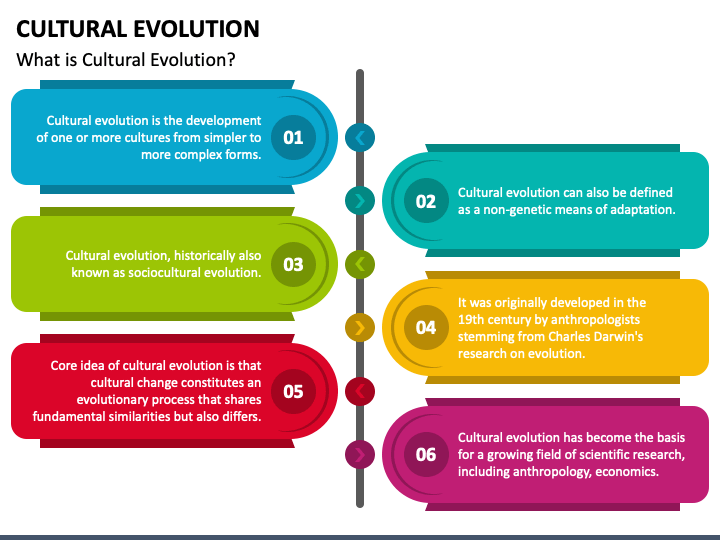](https://cdn.sketchbubble.com/pub/media/catalog/product/optimized1/3/5/359d66348cbbe391cebb55e7961bcb3b5f52cdd82c02bd45152316b79a38d055/cultural-evolution-mc-slide1.png)
*Cultural Evolution Features*
Meanwhile, the co-evolution between genes and culture can occur in several manners:
1. **Genetic assimilation:** Culture drives the selection of genetic traits that facilitate the adoption or performance of a specific cultural trait.
2. **Gene-culture co-evolution:** Cultural traits directly influence gene frequencies and, in turn, the selection of genetic traits.
[](https://media.springernature.com/m685/springer-static/image/art%3A10.1038%2Fs41467-019-10293-y/MediaObjects/41467_2019_10293_Fig1_HTML.png)
*Gene-Culture Co-evolution*
## Practical Implications of Dual Inheritance Theory
### The Role of Reason in Human Cognition
Conventional views on human rationality posit that reason serves as a tool for objective problem-solving and decision-making. However, the dual inheritance theory, as discussed by Mercier and Sperber, presents an alternative perspective: reason functions primarily to persuade others, adapt arguments, and win social interactions.
For example, consider the phenomenon of "myside bias," in which individuals tend to assess arguments more favorably if they align with their preexisting beliefs. This bias is not simply a matter of cognitive limitation, but rather a result of evolved cognitive mechanisms designed to facilitate social interactions and persuasion.
### The Development of Moral Norms
The dual inheritance theory offers a novel lens for understanding the evolution of moral norms and values. Sociologists and anthropologists have long documented the vast diversity of moral codes around the world. In many cases, these codes appear to defy a simple, universal explanation.
Drawing upon the dual inheritance theory, we can view the evolution of moral norms as a confluence of genetic and cultural influences. Genetic predispositions, such as those related to empathy and altruism, set the stage for the evolution of cooperative behavior. Meanwhile, cultural evolution allows for the creation and dissemination of specific moral norms that regulate social interactions and promote group cohesion.
[](https://ars.els-cdn.com/content/image/1-s2.0-S0148296319308069-ga1.jpg)
*Evolution of Moral Norms*
Consider the example of blood feuds in societies such as those in the Balkans or southern Italy. While the practice of seeking vengeance for perceived wrongs may appear, at first glance, to be maladaptive from a genetic standpoint—given the risk of violence and potential costs of death or injury—it fulfills essential social functions. Blood feuds help define social relationships and maintain order, serving as a form of "rough justice" when formal legal institutions are absent or ineffective.
### Meme Transmission and Pop Culture
Dual inheritance theory can also shed light on the dynamics of pop culture and the spread of ideas in contemporary society. Memetics, the study of memes as cultural replicators, draws upon the concept of meme transmission as an evolutionary process analogous to genetic evolution.
The dual inheritance perspective allows us to understand the various factors influencing meme transmission:
* Factors related to the meme itself, such as its attractiveness, simplicity, or compatibility with existing cultural norms.
* Factors related to the environment, such as the dissemination channels available (e.g., social media, word of mouth).
* Factors related to the recipient, such as their receptiveness, social status, or cultural background.
This framework helps explain the varying success of memes and patterns of popular culture.
[](https://i.pinimg.com/474x/da/90/b5/da90b58f30315448662d9f4ee92e0690.jpg)
*Meme Transmission in Pop Culture*
## Conclusion
The dual inheritance theory, with its emphasis on the interplay between genetic and cultural evolution, offers a nuanced understanding of human behavior, cognition, and culture. By exploring the ways in which genes and culture co-evolve, we can gain critical insights into phenomena ranging from the development of moral norms to the spread of memes in pop culture.
To continue your exploration of the dual inheritance theory, consider delving into related fields, such as sociobiology, cultural evolutionary theory, and memetics. Moreover, consider the implications of this understanding in fields such as education, public policy, and intercultural communication. The dual inheritance theory offers a powerful tool for navigating our complex, interconnected world.
Last updated: 2024-05-06
Related Books
Related Knowledges