# Reasons Serve Social Roles: A Deep Dive into the Arguments of Mercier and Sperber
[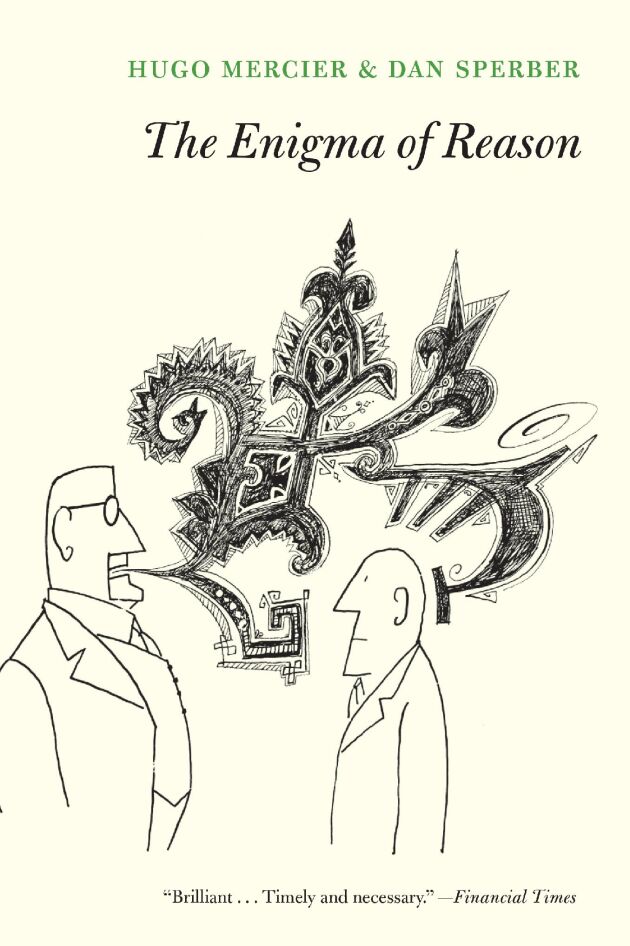](https://www.hup.harvard.edu/img/feeds/jackets/9780674237827.png?fm=jpg&q=80&fit=max&w=630)
*Cover of \*The Enigma of Reason\* by Hugo Mercier and Dan Sperber*
In the groundbreaking work, *The Enigma of Reason*, cognitive scientists Hugo Mercier and Dan Sperber argue that reason is fundamentally a social phenomenon. Here, we delve into their thesis that reasons serve primarily social roles, exploring its core concepts, real-life ramifications, and further avenues for reflection.
## Core Concepts
[](https://miro.medium.com/v2/resize:fit:1400/1*12WpXqon4nLG7HU57Z8-zg.png)
*Illustration of social reasoning in cognitive science*
Mercier and Sperber assert that reason, rather than functioning as an objective tool for evaluating truth-claims, primarily acts as a means to justify our beliefs and persuade others in social contexts. They maintain that:
1. *Reasoning is often motivated*: Reasoning is seldom, if ever, neutral or dispassionate. Instead, it is usually driven by personal motivations or group affiliations.
2. *Reasoning aims for epistemic vigilance*: People use reasoning to gauge others' credibility and intentions to maintain cognitive hygiene in their social networks.
3. *Reasoning is inherently argumentative*: The primary function of reasoning is dialogical, designed primarily for persuading or convincing others in social settings.
## Relevance
[](https://www.ceeol.com/api/image/getissuecoverimage?id=picture_2017_34332.jpg)
*Implications of social reasoning for philosophy and cognitive science*
By casting light on the social underpinnings of reasoning, Mercier and Sperber challenge traditional notions of reason as an objective or authoritative means of establishing truths. Their work has significant implications for disciplines ranging from the philosophy of mind and language to sociology and political science, necessitating reevaluation of foundational assumptions.
## Real-life Ramifications
[](https://images.ctfassets.net/rvt0uslu5yqp/3fIVsB1EITl9zfOqmp1vKf/9a1b32c513ae1213467b76c7d50b608c/55ADEAD5-E690-43C1-AD30-098B8E9B6A97.jpeg)
*Example of group decision-making dynamics*
Exploring the practical ramifications of Mercier and Sperber's argument reveals its true power. Consider these two examples:
### 1. Group Decision-making
Imagine a corporate board meeting where executives are deciding whether to invest heavily in a new project. While each member might individually consider the venture's merit, they are more likely to scrutinize arguments presented by their colleagues and allies and align their reasoning accordingly. Here, reason serves as a mediator for social dynamics and affiliations, influencing decision-making processes and shaping the group's conclusions.
### 2. Political Discourse
[](https://media.springernature.com/full/springer-static/cover-hires/book/978-1-137-30990-7)
*Political discourse influenced by social reasoning*
Mercier and Sperber's theory also sheds light on the rancorous state of political discourse. In political debates, persuasion and self-justification often overshadow objective fact-finding. Reasoning serves not to arrive at the best possible decision but to preserve and bolster existing beliefs or alignments.
## Key Insights
Mercier and Sperber's arguments emphasize three indispensable insights:
1. *Social cognition*: Reason is primarily a product of social cognition rather than a standalone cognitive ability.
2. *Persuasion*: Reasoning excels at creating compelling narratives and influencing opinions instead of objective truth-seeking.
3. *Context*: Reason should be examined and understood within context rather than in isolation.
## Further Exploration
[](https://static.euronews.com/articles/stories/07/46/85/74/1536x864_cmsv2_7d8f5eb3-65c0-59cc-bebc-c8cb9148757c-7468574.jpg)
*Group dynamics in scientific debate*
Incorporating *The Enigma of Reason* into academic discourse can foster fresh thinking in various fields. For instance, researchers might reconsider the following:
- The impact of group dynamics on scientific debate and consensus-building
- The interplay between reason, trust, and social hierarchies in political and legal systems
- The effect of individual motivations and social pressures in shaping moral judgments.
In summary, Mercier and Sperber's claim that reasons serve social roles offers profound insights into the nature and function of reason. College students and academics pursuing deeper comprehension of these issues will undoubtedly benefit from reflecting upon and applying the core concepts and ramifications of the authors' arguments.
Last updated: 2025-05-24
Related Books
Related Knowledges