### Ingroup Bias: Understanding our Tendency to Favor the Familiar {#ingroup-bias}
In their groundbreaking book *The Enigma of Reason*, cognitive scientists Hugo Mercier and Dan Sperber explore the intricacies of human reasoning, including various biases and heuristics that influence our decision-making processes. One such cognitive tendency is *ingroup bias*: our propensity to favor members of our own group over those who belong to other groups. This phenomenon has profound implications for social dynamics, political ideologies, and interpersonal relationships. In this comprehensive guide, we will delve into the concept of ingroup bias, its core components, and its practical implications in diverse contexts.
[](https://www.frontiersin.org/files/Articles/293378/fnhum-11-00632-HTML/image_m/fnhum-11-00632-g001.jpg)
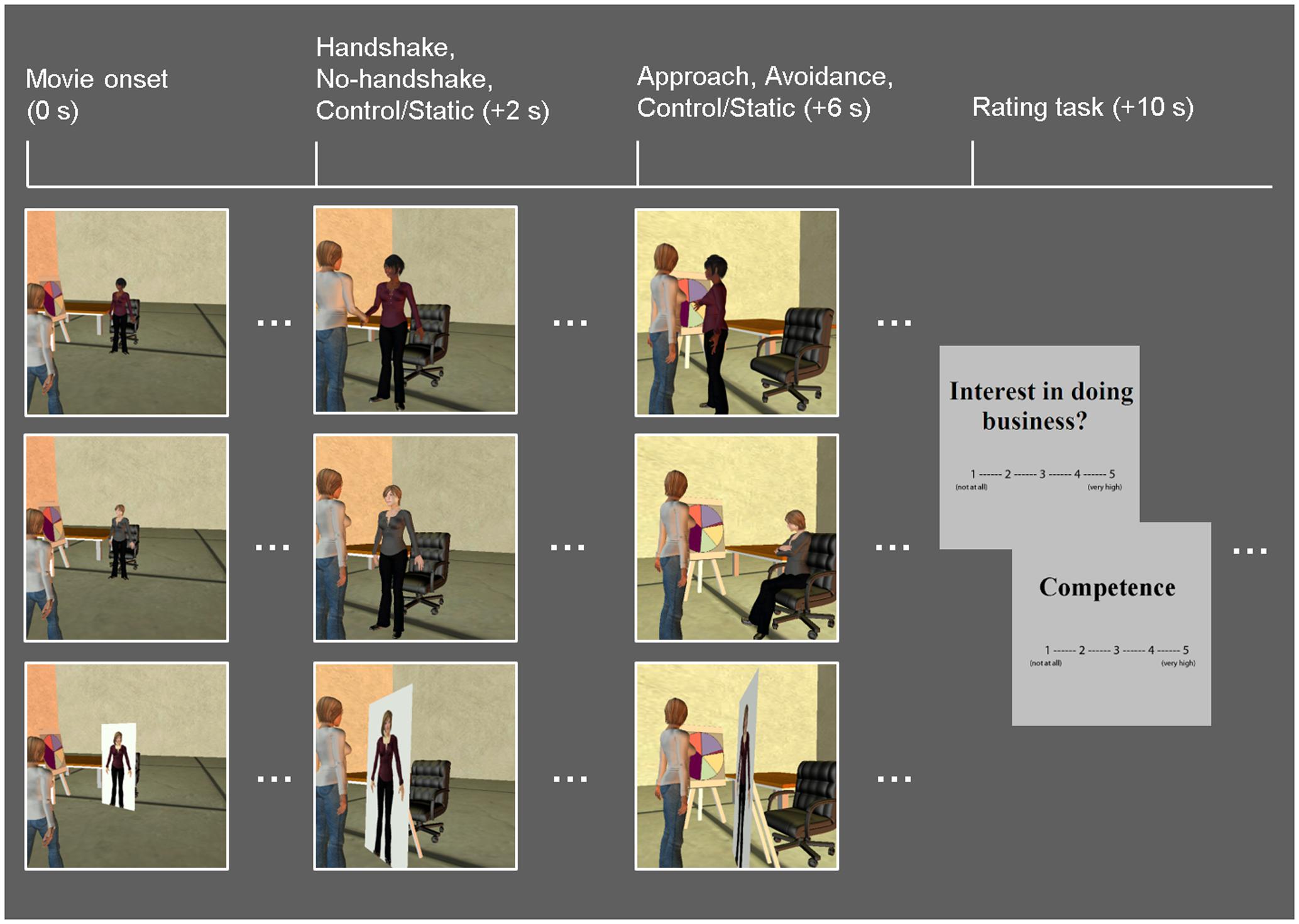
*Illustration of ingroup bias in various social contexts*
#### What is Ingroup Bias? {#what-is-ingroup-bias}
Ingroup bias, also known as *ingroup favoritism*, is a cognitive tendency to favor members of one's own social group over those who belong to different groups (*outgroups*){gergely2015ingroups}. This preference can manifest in various domains, including:
- *Interpersonal relationships*: Preferring to associate with, trust, and help individuals from within one's ingroup.
- *Cognitive processes*: Allocating greater mental resources to processing information about ingroup members, often leading to more accurate judgments.
- *Social behavior*: Displaying preferential treatment toward ingroup members in contexts such as resource distribution, conflict resolution, and coalition formation.
Ingroup bias arises from several psychological mechanisms, including:
- *Social categorization*: Our innate tendency to categorize individuals into groups based on shared characteristics, such as race, ethnicity, nationality, or shared interests.
- *Social identity*: Our need to maintain a positive self-concept by associating with ingroups that we perceive as valuable and prestigious.
- *Ingroup projection*: The attribution of our group's values, norms, and behaviors to other groups, often leading to overgeneralization and stereotyping.
[](https://i0.wp.com/www.optimisticlearner.com/wp-content/uploads/2018/07/different-nationalities-resized.jpg?resize=780%2C470&ssl=1)
*Examples of ingroup and outgroup categorization*
#### Practical Implications of Ingroup Bias {#practical-implications}
Ingroup bias has tangible consequences on an individual and societal level, influencing numerous aspects of our lives:
1. **Intergroup conflicts**: Ingroup bias can fuel prejudice, hostility, and discrimination against outgroups, exacerbating intergroup conflicts and social tensions.
[](https://images.prismic.io/thedecisionlab/2d4b0898-e2bc-4020-9cf7-9471e07d4d78_In-Group-Bias.jpg?auto=compress,format)
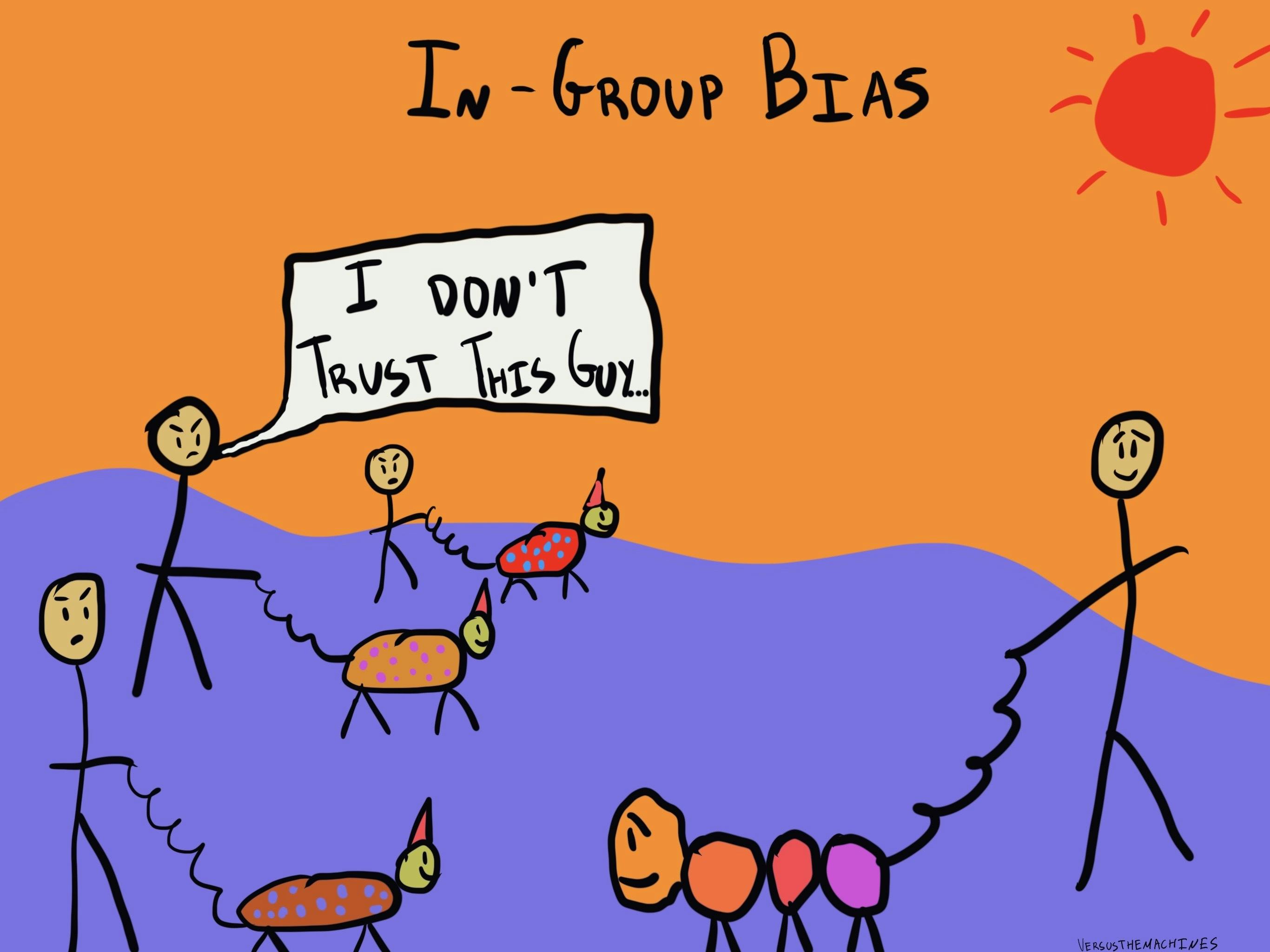
*Impact of ingroup bias on intergroup conflicts*
*Example*: Research has found that heightened ingroup bias contributes to negative attitudes toward immigrant communities, potentially leading to discriminatory policies and practices{esses2001ingroup}.
2. **Political ideologies**: Ingroup bias can manifest in partisan politics, with individuals favoring policies that benefit their ingroup at the expense of other groups.
*Example*: In the United States, studies have shown that political polarization is driven in part by increased ingroup bias among both Democrats and Republicans{iyer2012ingroup}.
3. **Workplace dynamics**: Ingroup bias can hinder collaboration, creativity, and innovation in the workplace when individuals favor colleagues from their ingroups over more qualified or competent outgroup members.
*Example*: A study examining the selection process for orchestra musicians found that blind auditions significantly increased the likelihood of female musicians being selected, as auditioners were less influenced by ingroup bias and focused solely on the candidates' musical abilities{goldin2000orchestrating}.
#### Mitigating Ingroup Bias: Potential Strategies {#mitigating-ingroup-bias}
Understanding ingroup bias and its implications enables us to devise strategies for mitigating its negative consequences. Here are some evidence-based techniques for reducing ingroup bias:
- **Decategorization**: Encourage individuals to focus on their unique characteristics rather than their group memberships.
*Example*: In educational settings, teachers can use individualized learning plans and personalized feedback to emphasize students' unique strengths, abilities, and potential.
- **Mutual differentiation**: Encourage members of different groups to recognize and value their unique qualities and contributions.
*Example*: In intergroup dialogues, facilitators can create structured activities that allow participants to share their diverse perspectives, experiences, and expertise, fostering mutual understanding and respect.
- **Common ingroup identity**: Foster a superordinate identity that encompasses both ingroup and outgroup members.
*Example*: In multicultural organizations, leaders can emphasize shared values, goals, and visions that transcend individual group affiliations.
[](https://framerusercontent.com/images/wXdRaNwVJAnfV48XnvUkbapuJ8.jpg)
*Strategies for mitigating ingroup bias in diverse settings*
#### Conclusion and Further Exploration {#conclusion-further-exploration}
Ingroup bias is a pervasive and consequential cognitive tendency that influences our social interactions, political beliefs, and workplace dynamics. By recognizing its core components and practical implications, we can cultivate a deeper understanding of human behavior and devise strategies for mitigating its negative consequences. Further exploration of ingroup bias can lead to more profound insights into the psychological underpinnings of human sociality, ultimately fostering more inclusive, equitable, and harmonious societies.
Last updated: 2024-04-27
Related Books

Related Knowledges