### Conservatism Bias: Embracing the Known and Overlooking the Unknown
#### Introduction
"Conservatism bias," a concept coined by psychologists Daniel Kahneman and Amos Tversky, refers to our innate tendency to overestimate the likelihood of known events or information while underestimating the likelihood of unknown or uncertain events. This cognitive bias can significantly impact our decision-making, leading us to place excessive weight on familiar information at the expense of new information. In this context, being 'conservative' doesn't necessarily relate to political ideology; rather, it involves clinging to the known and being cautious about embracing the unknown.
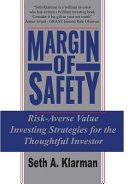
Understanding conservatism bias is crucial in various disciplines, such as economics, finance, psychology, and management. In his renowned book "Margin of Safety," Benjamin Graham provides valuable insights into the dangers of conservatism bias and its consequences in investment decisions. This essay delves into the concept of conservatism bias, using Graham's ideas and supplementary examples to illustrate its real-world implications.
#### Conservatism Bias in Action
1. Benjamin Graham and Portfolio Management
Benjamin Graham repeatedly warns investors against the dangers of conservatism bias in the book "Margin of Safety." By fixating on historical results and data, investors often fail to account for new developments and potential future events. This bias can result in overvaluing 'safe' investments and undervaluing or ignoring promising alternatives.
Graham strongly advocates for a 'margin of safety' approach to investment, prioritizing caution and risk management. By requiring a significant discount from the intrinsic value of a security, investors can mitigate the consequences of errors, including those caused by conservatism bias.
1. The Dot-Com Bubble
A classic example of conservatism bias can be found in the late-1990s Dot-Com Bubble. The rise of the internet in the 1990s provided an exciting new market for investors. However, the hype surrounding internet stocks led many to overvalue their true potential and ignore the inherent risks. Experienced investors and analysts, in particular, displayed a reluctance to stray from their traditional methods of stock valuation, leading them to overestimate the long-term growth potential of dot-com companies.
As a result, stocks with no history of profits or even revenues experienced extreme price appreciation, while value stocks offering more modest growth prospects languished. This behavior displayed classic symptoms of conservatism bias: a preference for the familiar and an underestimation of the risks presented by uncharted territory.
The ensuing burst of the bubble in 2000, following a sharp reversal of investor sentiment, taught many a valuable lesson about the dangers of conservatism bias.
#### Navigating Conservatism Bias
To mitigate the impact of conservatism bias on decision-making, consider the following strategies:
1. Seek Diverse Perspectives: Encouraging collaboration and openness toward opposing opinions and viewpoints can help identify potential blind spots generated by conservatism bias.
2. Challenge Assumptions: Regularly questioning and challenging long-held assumptions allows one to view situations objectively and without preconceptions.
3. Emphasize Learning from Failures: Understanding past mistakes and errors can help reveal the presence of biases, enabling a more accurate assessment and productive response to similar situations in the future.
4. Use of Objective Metrics: Utilizing quantitative, unbiased measures can help eliminate subjectivity and foster informed and balanced decision-making.
#### Conclusion
In conclusion, conservatism bias is a powerful cognitive driver of decision-making, affecting various aspects of our personal and professional lives. By acknowledging and understanding the potential hazards associated with conservatism bias, individuals can apply the appropriate strategies to counteract its influence and make more effective and informed decisions. Reading "Margin of Safety" and other thought-provoking works can help sharpen our understanding of the nuances of our cognitive biases and aid us on the path toward better decision-making.
For further reading and research into the topic, consider the following:
* "Thinking, Fast and Slow" by Daniel Kahneman
* "The Art of Thinking Clearly" by Rolf Dobelli
* "The Psychology of Intelligence Analysis" by Richards J. Heuer
* "Influence: The Psychology of Persuasion" by Robert Cialdini
These resources will further enhance your comprehension of cognitive biases, decision-making, and techniques for counteracting suboptimal outcomes.
Last updated: 2024-04-07
Related Books
Related Knowledges