# Risk Reduction: A Comprehensive Examination
## Introduction
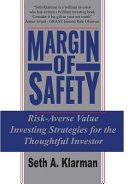
Risk reduction is an essential concept when discussing investments and financial management. The primary goal of investing is to generate profits; however, the inherent risk in investments cannot be ignored. In the book *Margin of Safety* by Seth Klarman, risk reduction plays a critical role in achieving successful long-term investment results. In this educational content, we will delve into the core concepts of risk reduction, its relevance, and its applications in the real world.
## Core Concepts and Relevance
Risk reduction is the process of identifying, assessing, and mitigating potential risks that could negatively impact an investment's performance. Reducing risk is crucial to preserving capital, ensuring long-term investment success, and preventing catastrophic losses. Risk reduction is relevant to all types of investors, from individual investors to institutional investors.
The margin of safety is a central concept in Klarman's book, and it is intrinsically linked to risk reduction. The margin of safety is the difference between the intrinsic value of an investment and its market price. The larger the margin of safety, the lower the investment risk. Adequate risk reduction enables investors to achieve their financial goals while minimizing the potential for substantial losses.
## Practical Implications: Diverse Examples
Risk reduction can be implemented in various ways, and its applications are vast. Here are a few examples to illustrate its practical implications:
### Value Investing
Value investing is an investment strategy that focuses on buying stocks at a discount to their intrinsic value. This approach inherently incorporates risk reduction since it seeks to limit downside risk by investing in companies with a wide margin of safety. Value investors, such as Warren Buffett, have historically achieved superior long-term investment results using this risk reduction strategy.
### Diversification
Diversification is a risk reduction strategy that involves spreading investments across various asset classes, sectors, and geographic regions. By diversifying, investors can minimize the impact of underperforming investments on their overall portfolio. Diversification reduces the risk of overconcentration, which could lead to substantial losses if a single investment performs poorly.
### Downside Protection
Downside protection is a risk reduction strategy that aims to limit the potential for significant losses. This can be achieved by using various financial instruments, such as options or stop-loss orders. For example, an investor might purchase a put option as a form of downside protection. The put option gives the investor the right to sell the underlying security at a predetermined price, thus limiting potential losses.
### Circular Investing
Circular investing is a risk reduction strategy that involves investing in companies that operate in complementary industries. By investing in complementary industries, investors can reduce the risk of a single sector underperforming since the industries tend to have a cyclical relationship. For example, investing in both automobile manufacturers and tire manufacturers can provide a form of circular investing, as both industries are interdependent.
## Conclusion
In conclusion, risk reduction plays a critical role in achieving successful investment outcomes. By implementing various risk reduction strategies, such as value investing, diversification, downside protection, and circular investing, investors can minimize potential losses and preserve capital. Understanding the core concepts and applications of risk reduction is essential for college students pursuing a career in finance or seeking to manage their personal investments.
Further exploration of the topic of risk reduction can include studying modern portfolio theory, behavioral finance, and advanced risk management techniques. Examining the historical performance of various investment strategies that incorporate risk reduction, such as value investing, can provide valuable insights into the effectiveness of these approaches. Additionally, conducting case studies on companies that have successfully implemented risk reduction strategies can offer practical examples of these concepts in action.
Last updated: 2024-04-07
Related Books
Related Knowledges