# Opportunity Cost: The Unseen Price of Choice
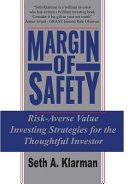
Opportunity cost is a fundamental concept in economics, which refers to the value of the best alternative given up when making a decision. It highlights the unavoidable trade-offs inherent in our choices and underscores the importance of considering the potential gains forgone in the decision-making process. In the book *Margin of Safety* by Seth A. Klarman, the author emphasizes the significance of understanding opportunity cost for investors and decision-makers.
In real-world scenarios, opportunity cost plays out in various ways, influencing personal and professional choices. By grasping the implications of opportunity cost, individuals can make more informed decisions and optimize their outcomes.
## Everyday Examples
### Choosing a College Major
Deciding on a college major is a perfect example of opportunity cost. Suppose a student is considering between majoring in finance and engineering. After careful consideration, the student opts for finance. In this case, the opportunity cost of choosing finance is the value of the forgone education, skills, and career opportunities in engineering.
This decision might lead to a fruitful and lucrative finance career, but the student will never know the potential benefits of being an engineer. However, the student can still pursue engineering if they feel the benefits outweigh the costs, or if their preferences change.
### Investment Strategies
Investing is a fertile ground for the concept of opportunity cost. Assuming an investor has $10,000 available for investment, they can allocate the funds into different investment vehicles such as stocks, bonds, or real estate. Suppose the investor decides to put all the money into stocks, and the selected stocks yield a 10% return over a year.
The opportunity cost in this scenario relates to the lost earnings from the alternatives, namely bonds or real estate. Assuming bonds returned 5% during the same period, the investor gave up a 5% return (i.e., $500) by choosing stocks over bonds.
## Business Applications
### Production Possibilities Frontier (PPF)
Opportunity cost is vividly illustrated using the Production Possibilities Frontier (PPF), a graph that displays the combination of outputs a company can produce with its given resources. By examining the PPF, firms can effectively allocate resources and optimize output based on the opportunity cost.
Graph: Production Possibilities Frontier

In the illustration above, the PPF denotes the production options for a firm manufacturing both bicycles and motorcycles. When the firm focuses on bicycle production, it can make 1,000 bicycles and 0 motorcycles. However, when the firm shifts its resources to manufacturing motorcycles, it can produce 400 motorcycles and no bicycles.
Any given point on the PPF represents a different mix of production. At point A, producing 500 bicycles and 250 motorcycles, the opportunity cost of each bicycle produced is 0.5 motorcycles. This relationship indicates the trade-off in production: each additional bicycle comes at the expense of 0.5 motorcycles.
### Outsourcing Decisions
Companies face opportunity costs when making outsourcing decisions, as it entails balancing the trade-offs between benefiting from specialized work from another firm versus maintaining the control, the costs of production, and the impact on workers/other stakeholders.
Consider a manufacturing company deciding whether to produce components in-house or source them from an external supplier. In the former, the company maintains quality control and vertical integration, ensuring a reliable input for the final product. However, the in-house production could lead to a lower overall output due to the company's relative inefficiency in non-core areas.
If the company chooses the external supplier, it can allocate its resources and workers in areas where it has a competitive advantage. However, this option comes with potential drawbacks, such as the risk of receiving lower-quality goods or encountering supply chain disruptions.
## Key Insights and Further Exploration
Opportunity cost plays a critical role in shaping rational and well-informed decisions in finance, business, and everyday life. By internalizing opportunity cost and its impact, individuals can:
- Maximize returns in investments
- Optimize resources allocation in personal and professional spheres
- Understand and compare various alternatives in decision-making
- Foster strategic thinking and better weigh consequences of choices
Further investigations on opportunity cost can delve into additional domains such as:
- Government policymaking: Opportunity cost helps evaluate various policies, balancing allocation of financial resources and addressing social issues.
- International trade: In global commerce, countries face opportunity costs when choosing trade policies and partnerships, including whether to specialize and import goods or maintain domestic industries.
- Utilization of technology: In today's digital age, the decision to adopt new technology, software, and tools often poses opportunity costs, weighing the benefits of innovation against the risks related to implementation and potential workforce impact.
Last updated: 2024-04-07
Related Books
Related Knowledges