# Equality vs. Autocracy: Reflecting on Power and Inequality through Animal Farm
[](https://edsitement.neh.gov/sites/default/files/styles/teaser/public/2019-05/animalfarmcovercrop3_1.jpg?itok=8OeVEqQT)
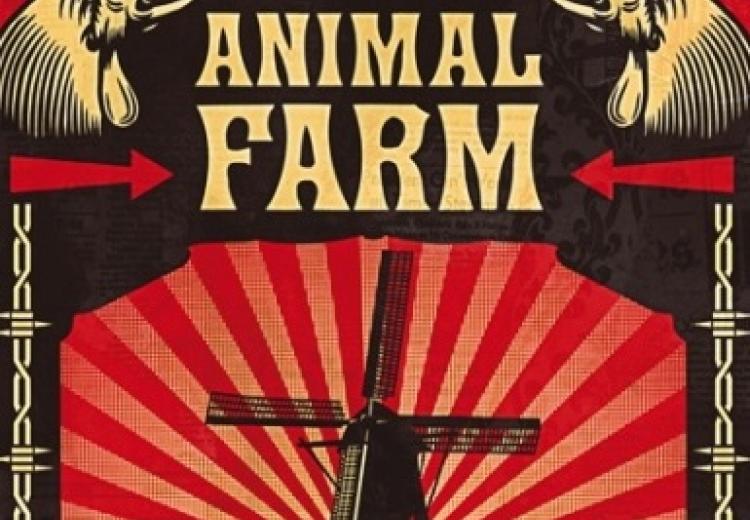
*Illustration of Animal Farm allegory*
George Orwell’s renowned work, *Animal Farm*, serves as a powerful allegory of the Russian Revolution and the rise of the Soviet Union. As we explore the novel, we encounter intricate themes that resonate with global politics and society, particularly in relation to the concepts of equality and autocracy. By examining the book closely and understanding the implications of the characters and events within, we can deepen our comprehension of these two key ideologies.
## I. Understanding Core Concepts
### A. Equality
[](https://c8.alamy.com/comp/2D27TR0/gender-equality-concept-icon-with-text-2D27TR0.jpg)
*Equality concept illustration*
Equality, as an ideal, denotes the belief that everyone should have equal rights, opportunities, and power, regardless of their social, economic, or political status. In a truly egalitarian society, no individual or group has undue advantages or disadvantages based on ascribed or achieved characteristics.
### B. Autocracy
[](https://study.com/cimages/videopreview/xxm1n0741t.jpg)
*Autocracy concept illustration*
In contrast, autocracy refers to a system of governance where supreme power is concentrated in the hands of an individual or a small group of people, often unencumbered by legal restraints, oversight, or balances. In autocratic systems, decision-making power is centralized, and dissent and opposition are typically not tolerated.
In *Animal Farm*, Orwell masterfully explores the tension between these two concepts through the story of a group of farm animals who rebel against their human farmer, Mr. Jones, hoping to create a society based on the seven commandments of "Animalism," including "All animals are equal" and "No animal shall kill any other animal." As the story unfolds, we observe the gradual erosion of these ideals and the emergence of a rigid autocracy under the leadership of the pigs Snowball and Napoleon.
## II. Examples and Applications
### A. From Equality to Autocracy: Napoleon's Rise to Power
[](https://study.com/cimages/videopreview/videopreview-full/dv0bshqw5w.jpg)
*Napoleon's rise in Animal Farm*
After the successful rebellion, the animals initially strive to establish equality. They implement a collective labor system, share resources, and dismantle social hierarchies based on species. However, Napoleon gradually amasses power by exploiting the other animals' trust, using propaganda, fear, and manipulation. Napoleon and his fellow pigs, Squealer and Minimus, eventually rewrite the seven commandments to suit their interests, culminating in the famous revision, "All animals are equal, but some animals are more equal than others."
This shift from equality to autocracy in *Animal Farm* has direct parallels with historical events, such as the rise of Stalin in the Soviet Union. Under Stalin, the communist ideal of equality gradually gave way to a rigid autocracy marked by purges, censorship, and repression. This shift from collective decision-making to centralized authoritarianism serves as a stark warning against the allure of unchecked power and the dangers of allowing individuals to redefine the principles that underpin a society.
### B. The Seduction of Power and the Corruption of Ideals
[](https://images-wixmp-ed30a86b8c4ca887773594c2.wixmp.com/f/8af1580e-3cc8-4211-9edc-62aaf1f98ea7/df15mny-c756a4af-d377-484c-9d11-bfe40fac7843.png?token=eyJ0eXAiOiJKV1QiLCJhbGciOiJIUzI1NiJ9.eyJzdWIiOiJ1cm46YXBwOjdlMGQxODg5ODIyNjQzNzNhNWYwZDQxNWVhMGQyNmUwIiwiaXNzIjoidXJuOmFwcDo3ZTBkMTg4OTgyMjY0MzczYTVmMGQ0MTVlYTBkMjZlMCIsIm9iaiI6W1t7InBhdGgiOiJcL2ZcLzhhZjE1ODBlLTNjYzgtNDIxMS05ZWRjLTYyYWFmMWY5OGVhN1wvZGYxNW1ueS1jNzU2YTRhZi1kMzc3LTQ4NGMtOWQxMS1iZmU0MGZhYzc4NDMucG5nIn1dXSwiYXVkIjpbInVybjpzZXJ2aWNlOmZpbGUuZG93bmxvYWQiXX0.DzdMGYJEz7v6pB0wXTTEddJoziukc3fbWQ6stoijNLs)
*Boxer the horse in Animal Farm*
The character of Boxer, the loyal and hardworking cart-horse, underscores the insidious nature of power and its corrupting influence. Despite his unwavering commitment to the ideals of Animalism, Boxer remains ignorant of the shifts in power and the corrosion of the seven commandments. Manipulated by the pigs' propaganda and empty promises, Boxer ultimately serves as a sacrificial lamb, working himself to exhaustion to finance the construction of the windmill—a symbol of progress—before being sold to the knacker's yard and ultimately meeting a tragic end.
Boxer's story reminds us of the importance of staying vigilant in the face of seductive ideologies or powerful leaders. It also highlights the potential for blind allegiance and self-delusion to undermine the very ideals we seek to uphold. By reflecting on the implications of Boxer's experience, college students can develop a nuanced understanding of the complex relationship between power, ideology, and individual responsibility.
## III. Key Insights and Further Exploration
In *Animal Farm*, Orwell brilliantly exposes the tension between equality and autocracy, shedding light on the ways in which power can corrupt and subvert even the noblest of ideals. By examining the novel's characters and events through a critical lens, college students can extract valuable insights on the following topics:
1. *The nature of power and its corrupting influence*: By exploring how the pigs gradually subvert the ideals of Animalism to further their own interests, students can reflect on the ethical implications of unchecked power and the importance of accountability mechanisms.
2. *The role of propaganda and manipulation in shaping public opinion*: Delving into the ways that the pigs use propaganda and censorship to manipulate the other animals' perceptions, students can examine the connection between information dissemination and societal attitudes, ultimately deepening their understanding of the role of media and education in shaping political and social views.
3. *The potential for collective action and resistance in the face of authoritarianism*: As the animals confront the growing autocracy of Napoleon and the pigs, students can study the various strategies employed by the animals, such as the attempted rebellion of the hens and the defiant actions of Benjamin and Clover. These examples of resistance offer insights into grassroots organizing, strategic alliances, and the potential for collective action in the face of oppressive systems.
In conclusion, Orwell's *Animal Farm* provides a rich and thought-provoking exploration of the themes of equality and autocracy, offering college students a nuanced understanding of the complexities of power, ideology, and social change. By delving into the novel's rich examples and applications, students can deepen their comprehension of these critical concepts, ultimately enriching their perspectives on global politics and society.
Last updated: 2024-06-23
Related Books
Related Knowledges