# Patient Capital: The Outsider's Approach to Long-Term Investing
## Introduction
[](https://media.ycharts.com/charts/1c5442710a71e9523716911c84a96172.png)
*Illustration of long-term investing vs short-term investing*
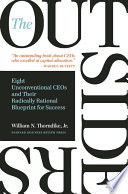
In *The Outsiders: Eight Unconventional CEOs and Their Radically Rational Blueprint for Success*, William N. Thorndike Jr. explores the concept of 'patient capital' through the success stories of eight exceptional CEOs. Patient capital signifies a long-term investment approach that prioritizes the value-building potential of a company over the short-term returns. By fostering a culture of patience and discipline, the CEOs discussed in the book managed to generate extraordinary corporate performance and shareholder value over extended periods. This article will present the core concepts and relevance of patient capital to help college students expand their understanding of long-term investing and strategic management.
## Patient Capital: Core Concepts and Relevance
The concept of patient capital emphasizes the importance of a long-term focus when managing investments and businesses. It encourages leaders to focus on the intrinsic value of a company and to make strategic decisions based on value-building potential, even if it means delaying immediate gains. The following aspects outline the core concepts and relevance of patient capital:
[](https://d3g6lgu1zfs2l4.cloudfront.net/assets/Key%20concepts%20-%20small%20screen.svg)
*Key aspects of patient capital*
- **Long-term focus**: Patient capital encourages investors and managers to prioritize long-term horizons when making decisions. This focus helps create a disciplined approach and avoids knee-jerk reactions based on short-term market fluctuations. As a result, it fosters a resilient corporate culture that can effectively handle challenges and capitalize on opportunities.
- **Value-building potential**: A patient capital approach primarily considers the value-building potential of a company. It assesses management quality, business models, competitive advantages, and growth prospects to determine the long-term value creation of the enterprise. By concentrating on these factors, investors and managers can make rational decisions that foster intrinsic value and mitigate downside risks.
- **Risk management**: By focusing on the long-term, patient capital also helps manage risk. Short-term market fluctuations and shallow analyses can often lead to hasty decisions, negatively impacting returns. A patient capital approach embraces rationality and offers a structured framework for overseeing investments throughout various market cycles.
- **Alignment of interests**: Patient capital promotes the alignment of interests between managers, investors, and other stakeholders. This alignment fosters collaboration, trust, and a shared vision that helps ensure the long-term success of a company. Ultimately, a patient capital approach encourages an owners' mentality that unites all parties involved in the value creation process.
## Practical Implications and Applications
To illustrate the practical implications and applications of patient capital, we will examine two case studies of companies discussed in *The Outsiders*: General Cinema and The Washington Post.
### Case Study 1: General Cinema
[](https://ia801004.us.archive.org/BookReader/BookReaderImages.php?zip=/12/items/generalcinemacorpannualreports/generalcinema1964_jp2.zip&file=generalcinema1964_jp2/generalcinema1964_0001.jp2&id=generalcinemacorpannualreports&scale=4&rotate=0)
*Richard S. Smith Jr. and General Cinema*
General Cinema, under the leadership of Richard S. Smith Jr., provides a prime example of the patient capital approach in action. From 1968 to 1986, Smith transformed General Cinema from a movie theater business into a diversified conglomerate with an impressive record of shareholder returns. Some key steps and decisions taken by General Cinema include:
- **Investment in untapped potential**: Smith and General Cinema had a keen eye for businesses with intrinsic value and untapped potential. By carefully analyzing fundamentals and intrinsic value, Smith created diversified investments ranging from real estate to consumer goods. Notably, the conglomerate's growth was buoyed by the acquisition of the Consolidated Foods Corp., which later became the Sara Lee Corporation.
- **Active ownership and alignment of interests**: Smith and General Cinema never held a majority stake in their acquired companies. Nevertheless, the conglomerate actively participated in the management of its investments while maintaining the entrepreneurial drive of the operating companies. Such an approach fostered unity and encouraged the alignment of interests among all stakeholders.
- **Long-term flexibility**: Smith was known for his deep understanding of business cycles and the importance of liquidity. He leveraged General Cinema's balance sheet defensively by raising and allocating capital when needed and maintaining financial flexibility. By doing so, Smith and General Cinema sustained long-term performance while navigating the often unpredictable business environment.
### Case Study 2: The Washington Post
[](https://upload.wikimedia.org/wikipedia/commons/6/65/Katharine_Graham_927-9432_%28cropped_retouched%29.jpg)
*Katharine Graham and The Washington Post*
The Washington Post, led by Katharine Graham, provides another inspiring case study of patient capital. Under Graham's stewardship from 1963 to 1991, the company navigated challenges in the publishing industry and redefined its path to create a powerful media empire by:
- **Maintaining strategic focus**: Katharine Graham chose to focus on the core business of The Washington Post, instead of diversifying the company's portfolio. Despite the media industry's challenges, she pursued a long-term strategy, concentrating on the high-quality journalism and ethical standards that defined the company. This strategic focus allowed The Washington Post to become one of the most respected voices in American journalism.
- **Intelligent capital allocation**: Graham was known for her prudent and intelligent capital allocation. Her decisions were guided by the value-building potential of the company and its investments. For instance, she resisted the temptation to sell the Kaplan entity in the 1970s, even though the education business did not seem to fit well within the printing and publishing industry. Ultimately, Kaplan morphed into a significant revenue source for The Washington Post.
- **Navigating transformation**: Graham navigated the transformation of The Washington Post skillfully despite immense challenges during her tenure. When she took over, the company was grappling with a difficult financial situation and the loss of its charismatic and strong-willed leader, her husband Phil Graham. Her confidence and perseverance enabled the company to overcome the loss and redefine its role in the digital age.
## Conclusion
The concept of patient capital, explored in *The Outsiders* by William N. Thorndike Jr., offers a remarkable perspective on long-term investing and strategic management. Patient capital underscores the importance of a value-building potential focus and long-term vision, demonstrating that effective decision-making can contribute to extraordinary corporate performance despite short-term market fluctuations.
After exploring the core concepts, examples, and applications presented in this article, college students can integrate the key insights derived from patient capital into various fields, including investing, finance, and strategic management. Encouraging students to read *The Outsiders* would offer a solid foundation for understanding the practical implications of patient capital and the intricacies of value-building potential analysis.
Moreover, incorporating case studies and real-life examples into a curriculum can enhance the learning experience. By doing so, students can grasp the nuances of long-term value creation and gain a deeper understanding of the strategic management and investment principles discussed in *The Outsiders*.
Last updated: 2024-05-29
Related Books
Related Knowledges