Long-term Thinking: Key Lessons from "The Outsiders" by William N. Thorndike Jr.
=============================================================================
Introduction
------------

*Cover of "The Outsiders" by William N. Thorndike Jr.*
"The Outsiders: Eight Unconventional CEOs and Their Radically Rational Companies" by William N. Thorndike Jr. explores the success stories of eight CEOs who achieved remarkable results by focusing on long-term thinking. The book emphasizes the importance of strategic decision-making, capital allocation, and avoiding the pressures of short-termism. In this educational content, we will delve into the core concepts of long-term thinking and its relevance in business and personal life.
Core Concepts and Relevance
---------------------------
Long-term thinking is a strategic approach that prioritizes long-term goals and objectives over short-term gains. It involves making decisions that may not yield immediate benefits but contribute to the organization's long-term success. Long-term thinking is crucial for businesses as it enables them to:

*Illustration of long-term strategic planning in business.*
1. Focus on sustainable growth: Prioritizing long-term goals helps businesses build a solid foundation for sustainable growth, ensuring long-term profitability and resilience.
2. Make better capital allocation decisions: Long-term thinking encourages strategic capital allocation, enabling businesses to invest in growth opportunities, research and development, and infrastructure.
3. Attract and retain talent: A long-term vision can help businesses attract and retain top talent by fostering a culture of innovation, learning, and growth.
Examples and Applications
------------------------
### Example 1: Henry Singleton and Teledyne
Henry Singleton, the CEO of Teledyne, is a prime example of long-term thinking. Singleton focused on acquiring undervalued companies and investing in research and development. He also implemented a unique stock option plan that aligned the interests of management and shareholders. As a result, Teledyne's market value grew from $30 million in 1963 to $3 billion in 1990, outperforming the S&P 500 by a significant margin.
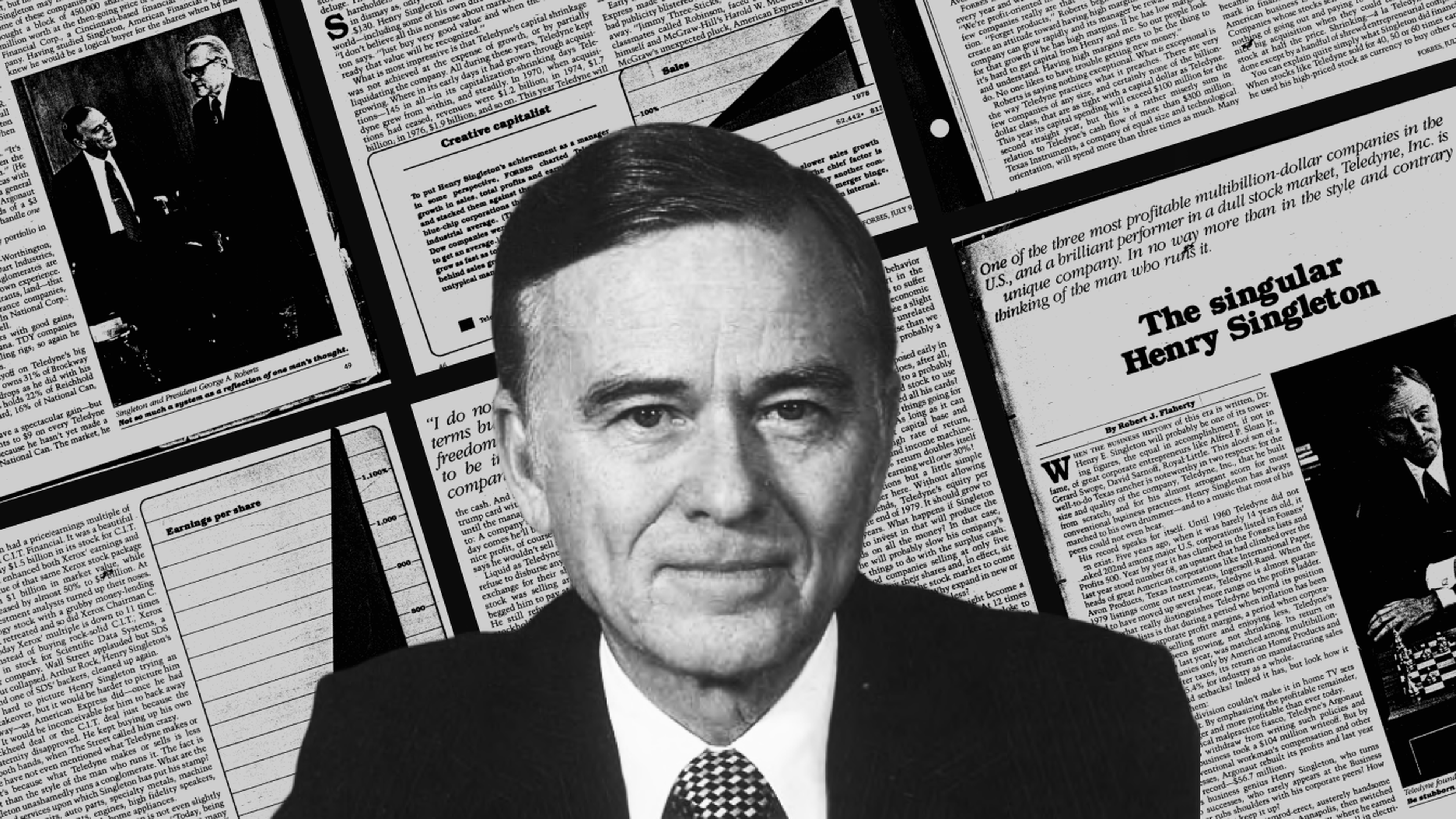
*Henry Singleton and the growth of Teledyne.*
#### Key Insights:
- Acquiring undervalued companies and investing in R&D can create long-term value.
- Aligning the interests of management and shareholders can foster a long-term perspective.
### Example 2: John Malone and Tele-Communications Inc. (TCI)
John Malone, the CEO of TCI, was another proponent of long-term thinking. He focused on building a strong network and acquiring content rights, enabling TCI to become the largest cable operator in the US. Malone's strategic decisions, such as investing in technology and content, helped TCI outperform the market and eventually led to its acquisition by AT&T in 1999.

*John Malone and the expansion of TCI.*
#### Key Insights:
- Investing in technology and content can create a competitive advantage.
- Building a strong network and strategic partnerships can contribute to long-term success.
Conclusion
----------
Long-term thinking is a powerful tool for businesses seeking sustainable growth and long-term profitability. By focusing on strategic decision-making, capital allocation, and avoiding the pressures of short-termism, businesses can create a solid foundation for success. The examples of Henry Singleton and Teledyne, as well as John Malone and TCI, demonstrate the practical implications of long-term thinking and its impact on business performance.
For further exploration, consider researching additional case studies of companies that have successfully implemented long-term thinking. Additionally, examine the challenges and barriers to long-term thinking, such as short-term investor pressure and economic fluctuations. By understanding these challenges, you can develop strategies to overcome them and foster a long-term perspective in your personal and professional life.
Last updated: 2024-03-19
Related Books
Related Knowledges