# New Technology Diffusion: Understanding the Spread and Impact of Technological Innovations
Technological innovations have been a driving force behind the progress of human civilization. However, it is not enough for a society to simply produce new technologies. The diffusion of these technologies, or the process by which they spread from one society to another, plays a crucial role in determining their overall impact on historical and contemporary developments. In his renowned book, *Guns, Germs, and Steel*, Jared Diamond sheds light on the factors that influence the diffusion of new technologies and their consequences on various societies.
At its core, new technology diffusion refers to the process by which innovations are disseminated and adopted across different societies, leading to changes in their economic, social, and political structures. Diamond emphasizes that the geographical and environmental factors, as well as the historical and cultural contexts of societies, significantly influence the speed and extent of technology diffusion.
To better understand the concept of new technology diffusion, let's explore two examples from *Guns, Germs, and Steel*: the diffusion of domesticable plants and animals and the spread of steel weapons.
### Example 1: The Diffusion of Domesticable Plants and Animals
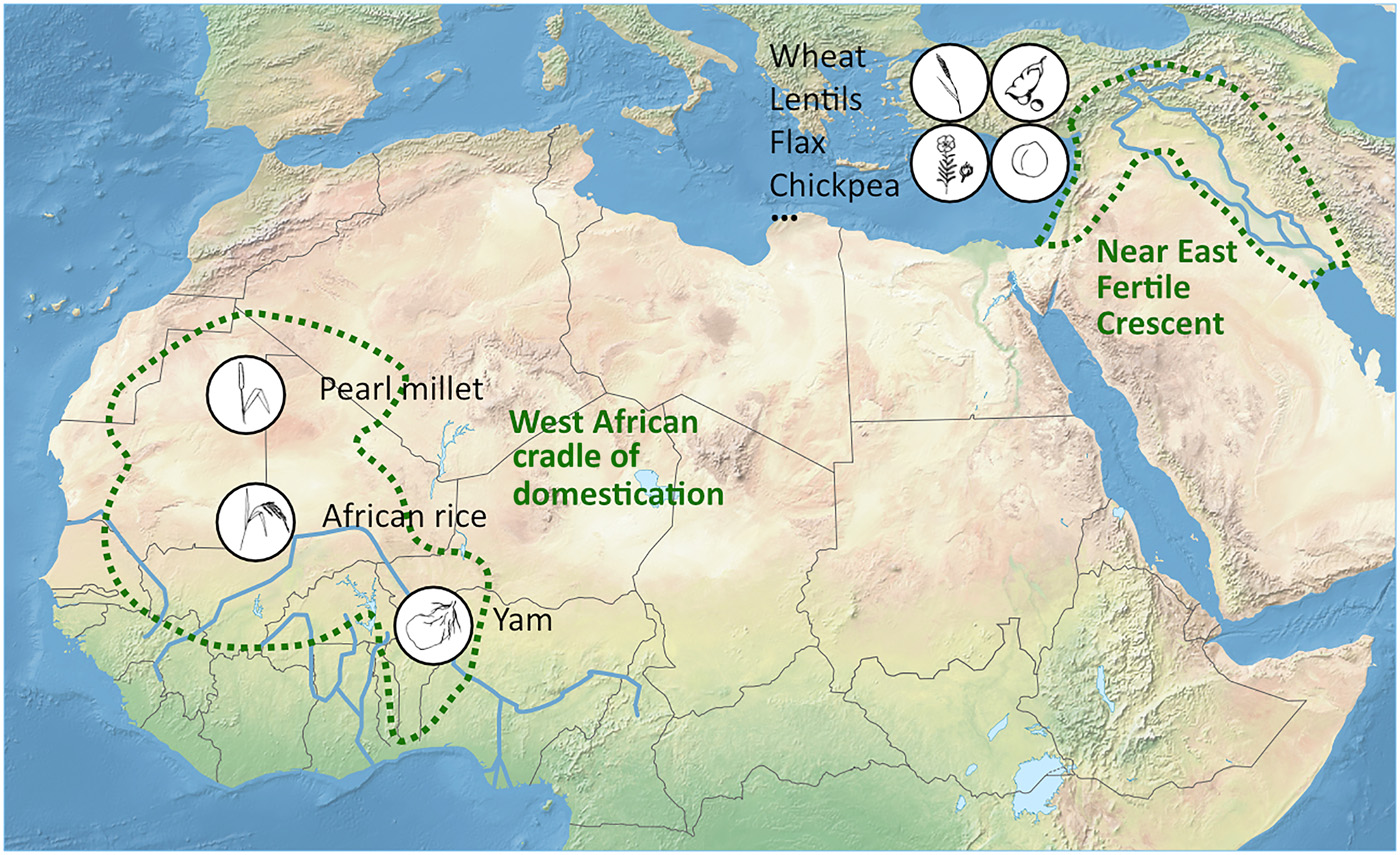
One of the key insights from *Guns, Germs, and Steel* is the role of geography and ecology in determining the suitability of plants and animals for domestication. Diamond explains that certain regions, such as the Fertile Crescent, were home to a high number of wild plant and animal species that could be domesticated. As a result, these societies experienced an agricultural revolution, which led to the development of more efficient food production methods and, consequently, population growth.
[](https://plantae.org/wp-content/uploads/2019/05/Yam-domestication.jpg)
*Map of the Fertile Crescent showing the domestication of plants and animals*
However, the diffusion of these domesticated plants and animals to other regions was not straightforward. Climate, geographical barriers, and the presence of existing agricultural practices in receiving societies all played a role in determining the success of technology diffusion. For example, the diffusion of crops such as wheat and barley from the Fertile Crescent to Europe was facilitated by the similar climate and geography between the two regions. In contrast, the diffusion of these crops to sub-Saharan Africa was hindered by the region's tropical climate and the presence of existing agricultural practices based on root crops and livestock herding.
The diffusion of domesticable animals also followed a similar pattern. The horse, for instance, was domesticated in the Eurasian steppes and diffused to other societies, such as those in China and the Middle East, where it significantly impacted warfare, transportation, and agriculture. However, the lack of suitable animal species for domestication in regions like Australasia and the Americas meant that the development of these societies was influenced more by the availability of wild plant resources.
### Example 2: The Spread of Steel Weapons
Another crucial technological innovation discussed in *Guns, Germs, and Steel* is the development and diffusion of steel weapons. Steel production, which requires significant technological know-how and resources, was initially concentrated in a few societies in Eurasia, such as China and the Middle East. The ability to produce steel weapons conferred a significant military advantage to these societies, enabling them to dominate and conquer less technologically advanced societies.
[](http://www.historyofswords.com/images/historyofswords/picture-of-cold-steel-sword.jpg)
*Evolution of steel weapons over time*
However, the spread of steel weapons was not merely a one-sided process. Societies that adopted steel weapons often developed new strategies and tactics to counteract the military superiority of their adversaries. For instance, the Japanese adapted to the introduction of guns by innovating new infantry formations and tactics that allowed their armies to maintain their military prowess despite the diffusion of superior weaponry. Similarly, the indigenous peoples of the Americas adopted steel weapons and horses from European colonizers, using this new technology to resist colonial domination.
These examples illustrate the complex dynamics underlying the diffusion of new technologies and their impact on various societies. Geographical, environmental, and cultural factors all play crucial roles in shaping the adoption and adaption of technological innovations.
### Further Exploration and Key Insights
New technology diffusion is a multifaceted concept that has significant implications not only for historical studies but also for understanding contemporary issues. To further explore this topic, consider the following questions:
* How do globalization and digitalization influence the diffusion of new technologies in the modern world?
* What are the ethical implications of technology diffusion, particularly in the context of intellectual property rights and technological sovereignty?
* How can societies balance the benefits and risks associated with technology diffusion, taking into account issues like cultural homogenization and environmental sustainability?
By understanding the core concepts and practical implications of new technology diffusion, college students can develop a more nuanced perspective on the role of technological innovations in shaping human history and the contemporary world. Delving deeper into this topic will not only improve students' critical thinking skills but also equip them with the knowledge and insights required to engage with ongoing debates and discussions surrounding technological progress and its societal impact.
In conclusion, new technology diffusion is a vital concept that sheds light on the factors that influence the spread and impact of technological innovations on human societies. By examining the historical and contemporary examples of technology diffusion and its implications, students can gain a deeper understanding of the complex dynamics at play in the process of technological progress and its consequences. This knowledge can help students appreciate the importance of considering the context, as well as the benefits and challenges, associated with the adoption of new technologies in various societies.
Last updated: 2024-06-30
Related Books

Related Knowledges